
Last Updated: October 26, 2026
Quick Summary
To claim for stolen storage unit items, secure the unit, photograph the scene without touching anything, and call the police for a report number before lodging with your insurer. Then notify the facility, gather your evidence file, and check your policy’s off-premises cover and limits.
- Photograph the unit from the doorway before touching anything inside.
- Insurers ask for the police report number on almost every claim.
- Ask the facility in writing to preserve CCTV footage and the access log.
- Check your policy schedule for off-premises cover and its limits.
- If a claim is denied, request the decision and reason in writing.
Table of Contents
- Storage Unit Break-In: What to Do in the First 24 Hours
- Does Home Contents Insurance Off-Premises Cover Apply to Your Unit?
- Building Evidence for a Theft Insurance Claim
- How to File an Insurance Claim for Stolen Storage Unit Items
- Inside the Insurance Claim Investigation Process
- When a Claim Is Denied, Underpaid or Disputed
- Choosing a Secure Facility Before You Store
- Frequently Asked Questions
Storage Unit Break-In: What to Do in the First 24 Hours
Discovering a break-in at your storage unit is a gut-punch. What you do in the first 24 hours can shape what follows. This guide walks you through steps to take after discovering a break-in.
Move quickly and methodically.
Secure the Unit and Call the Police
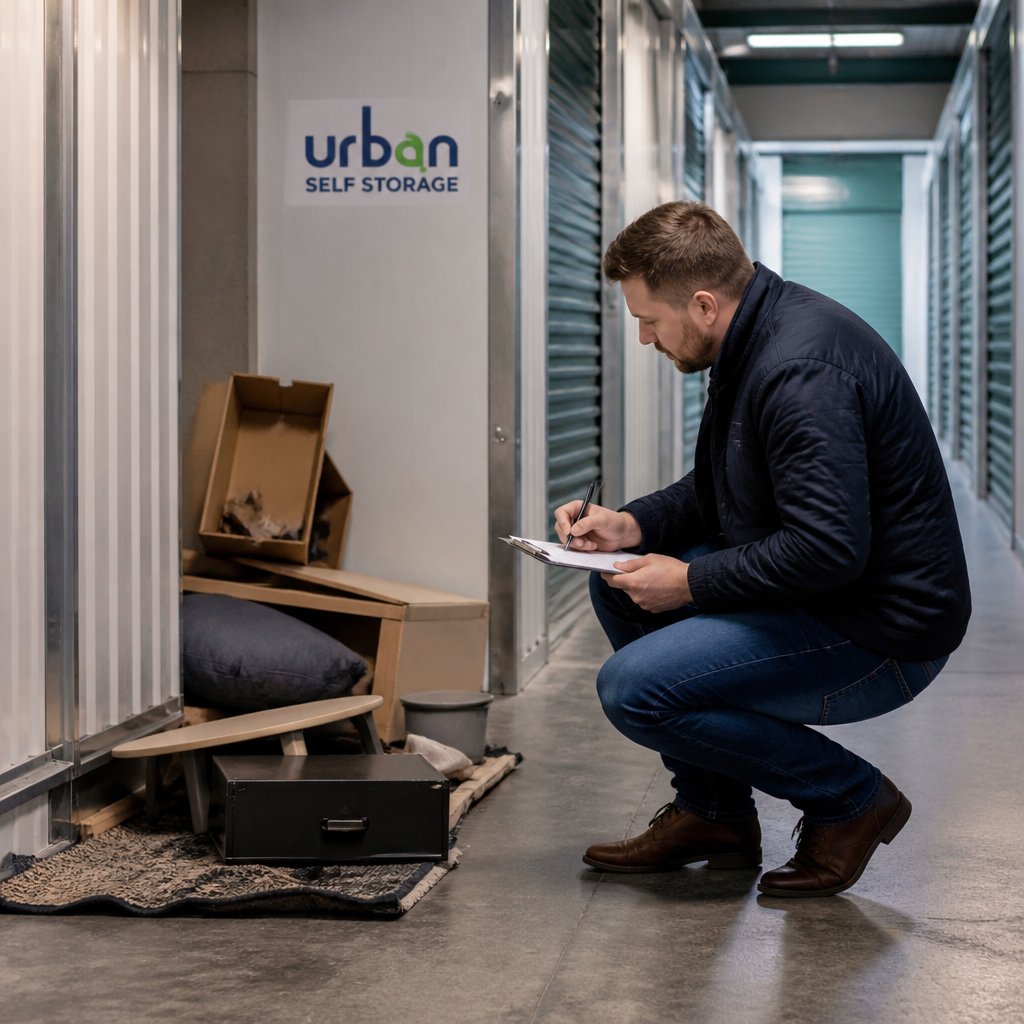
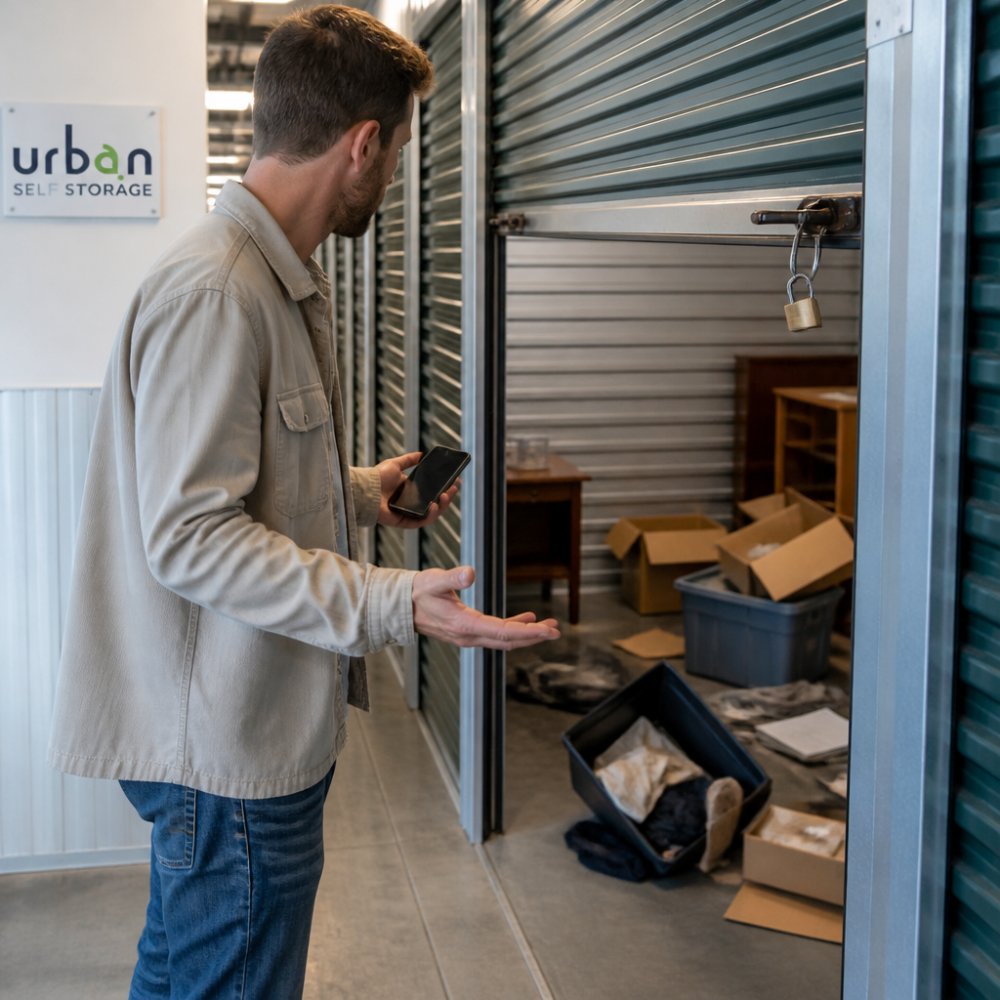
Don’t touch anything inside the unit until you’ve photographed it. Stand at the doorway and take wide shots first, then close-ups of damage, broken locks, and disturbed boxes.
Then call the police and ask for a report number. In Western Australia, you can report non-urgent theft through WA Police’s online reporting service. Keep that report number safe. Insurers ask for it on almost every claim.
Notify the Facility and Request an Incident Report
Ring the facility manager the same day. Ask whether an incident report, a copy of the access log for your unit, and confirmation that CCTV footage has been preserved are available. Ask for footage to be saved in writing.
If you’ve just discovered a break-in and want context on how often this happens, read our guide on whether storage units are safe from theft.
Does Home Contents Insurance Off-Premises Cover Apply to Your Unit?
Cover depends on your policy. Check your policy schedule for any off-premises cover and limits.
ASIC’s Moneysmart guidance on home and contents insurance explains how sum insured and exclusions work. Read it before you lodge.
What Home and Contents Policies Typically Cover
Check your policy for exclusions and any requirements for business stock, tools or high-value items.
Our article on whether storage insurance covers theft and damage breaks down the difference between facility protection plans and home contents cover.
Building Evidence for a Theft Insurance Claim
Evidence can help document what items were stored and their value.
What to Gather Before You Lodge
Build a claim file with these items:
- Police report number and officer details
- Photographs of the unit, lock, and damage
- A written inventory of stolen items with purchase dates
- Receipts, bank statements, or order confirmations
- Serial numbers, model numbers, and photos of the items
- Any valuation or appraisal documents
- The facility’s incident report and access log
- CCTV footage request confirmation
Proving Ownership When Records Are Missing
If you have no receipts, you could gather other records that may help document ownership:
- Bank or card statements showing a purchase at a retailer that matches the item and rough date
- Email order confirmations or online account order histories
- Photos of the item in use, a bike in your garage, a laptop on your desk, tools in a project photo
- Serial numbers captured in warranty registrations, app records, or manufacturer accounts
- Messages or social posts where you mentioned or showed the item
- Witness statements from family members who used or saw the item
For high-value items, you could include a retrospective valuation and clearly identify it as retrospective.
Photograph your unit contents before you need to.
Valuing Each Item: Actual Cash Value vs Replacement Cost
Check your policy to understand its valuation method and what evidence it requires.
You could present each item in a table with its description, purchase date, purchase price, current replacement price, age, and claimed amount under your policy’s method.
Don’t pad the inventory. Claim what you can substantiate.
If you’re wondering how footage fits into this, our guide on how CCTV footage can support your storage insurance claim explains the request process.
Book Online in 3 Minutes & Get 50% Off Instantly →
Build your claim file with these items before you lodge.
| Evidence to gather | Purpose |
|---|---|
| Police report number and officer details | Requested on almost every claim |
| Photographs of unit, lock and damage | Documents the break-in |
| Written inventory with purchase dates | Shows what was stored and its value |
| Receipts, bank statements, order confirmations | Supports purchase and ownership |
| Serial numbers, model numbers, item photos | Identifies the stolen items |
| Valuation or appraisal documents | Supports item value |
| Facility incident report and access log | Confirms the incident |
| CCTV footage request confirmation | Preserves footage evidence |
How to File an Insurance Claim for Stolen Storage Unit Items
Keep a copy of everything you send to your insurer.
The Chronological Claim Checklist
Be honest about what you can and can’t confirm.
Inside the Insurance Claim Investigation Process
An insurer may assess the information you provide when investigating a claim.
Expect requests for more documentation. Answer promptly and specifically. If the assessor asks for proof of ownership on a particular item, send the strongest evidence you have rather than a general statement.
Review any settlement offer against your inventory and policy before deciding how to proceed.
When a Claim Is Denied, Underpaid or Disputed
If your claim is denied or disputed, review the insurer’s reasons and your policy.
Step 1: Get the Decision and the Reason in Writing
Ask the insurer to confirm the decision in writing and to identify the specific policy clause, exclusion, or limit relied on. A verbal “not covered” is not a decision you can challenge. If the reason is unclear, ask a direct question: “Which clause of the policy excludes this item, and what evidence would change your assessment?”
Step 2: Request an Internal Review
Check your insurer’s process for requesting a review. Keep a dated copy of anything you send.
Step 3: Escalate Externally
If IDR does not resolve the dispute, you can escalate to the Australian Financial Complaints Authority. AFCA handles disputes between consumers and insurers at no cost to the consumer, and its decisions are binding on the insurer once accepted by the complainant. Before you lodge, gather your policy, the claim correspondence, the IDR outcome, and your evidence bundle. AFCA will typically ask whether you have completed IDR first.
Common Dispute Grounds and What to Argue
- Valuation method, If the insurer applied ACV but your policy specifies replacement cost (or vice versa), point to the policy wording and the schedule.
- Off-premises limit, If the insurer says the claim exceeds the off-premises cap, ask for the calculation and check whether the cap applies per item, per category, or to the total.
- Proof of ownership, If the insurer says evidence is insufficient, ask what specific evidence would satisfy them, then supply it.
- Exclusion wording, Exclusions are interpreted according to their wording. If the insurer relies on an exclusion that does not clearly apply to your circumstances, say so and ask for the reasoning.
- Delay, If the claim has stalled, ask for the status in writing and note the date. Persistent, documented follow-up is more effective than repeated phone calls.
Getting Help
If the dispute is complex or the amount is significant, you can seek independent legal advice or use a free community legal service. For general guidance on consumer rights and insurance, ASIC’s Moneysmart is a reliable starting point. Keep your expectations realistic: escalation takes time, and the strongest cases are those backed by a clear evidence trail and a specific policy argument.
Choosing a Secure Facility Before You Store
Prevention beats a claim every time. When you’re choosing your next facility, look for monitored CCTV, controlled access, good lighting, and staff who can explain their security setup.
At Urban Self Storage, our facilities in East Bunbury and Picton have 24/7 CCTV surveillance. Our short and long term storage options suit renovations and relocations alike, and our large storage units in Bunbury offer large storage options.
For a full walkthrough of securing a unit properly, read our guide on how to secure a self storage unit, or see how to choose a secure self storage facility before you sign anything.
Frequently Asked Questions
Does home contents insurance cover items stolen from a storage unit?
Cover depends on your policy. Check your product disclosure statement for any off-premises cover, limits and exclusions.
What evidence do I need for a theft insurance claim on stolen storage unit items?
You could gather a police report number, photographs, an itemised list, and records that may help document ownership. Check with your insurer about what evidence it requires.
Should I contact the police after a storage unit break-in?
You can report the break-in to police and ask for a report number. Photograph the scene before moving items, if it is safe to do so.
How long does an insurance claim investigation take?
Timelines vary by insurer and claim. Keep copies of what you send and ask your insurer for a status update if the process stalls.
A break-in is stressful, but a clear process protects your claim and your peace of mind. Urban Self Storage offers 24/7 CCTV surveillance, controlled access, and clean, secure units across our East Bunbury and Picton locations, with flexible short and long term options and a move-in process that takes under 10 minutes. Get started with Urban Self Storage and store your belongings with confidence.
