
Table of Contents
- Assess Self Storage Security Features
- Verify Storage Unit Insurance Requirements
- Inspect Unit Size, Climate Control, and Maintenance
- How to Pack a Storage Unit for Maximum Security
- Evaluate Access Hours and On-Site Management
- Review Facility Inspection Checklist Before Committing
- Confirm Contract Terms and Flexibility
- Frequently Asked Questions
Last Updated: October 1, 2026
Choosing a secure self storage facility requires careful evaluation of security features, insurance coverage, and facility standards. Many people rush this decision based on price alone, then regret it later. This guide walks you through the critical factors that separate a genuinely secure facility from one that just looks secure on the surface.
Assess Self Storage Security Features
Security starts with what you can see and what actually works behind the scenes. A facility might have cameras mounted on the walls, but are they monitored 24/7 and is footage stored and accessible? These questions matter far more than the number of cameras alone.
CCTV Surveillance and Monitoring Systems
24/7 CCTV surveillance is the foundation of a secure self storage facility. But not all systems are equal. Ask these specific questions when you tour a facility:
- Are cameras actively monitored around the clock, or just recording?
- How long is footage retained (typically 30 days minimum)?
- Can you request footage if you suspect an issue?
- Are cameras positioned to cover all entry points, corridors, and outdoor areas?
Many facilities install cameras as a deterrent but don’t actively monitor them. A monitored system means someone is watching in real time and can respond to suspicious activity. Ask for proof of monitoring, not just promises. If they can’t show you evidence, that’s a red flag.
Access Control and Gated Entry
Gated access is your second line of defence. Proper access control includes perimeter fencing, electronic gates or coded entry systems, individual unit locks, and limited access hours. Perimeter fencing keeps trespassers out, electronic gates ensure only paying customers enter, and your personal padlock prevents theft from other customers.
Confirm whether the facility offers 24-hour access or restricted hours and whether it suits your schedule.
Lighting and Perimeter Fencing
Good lighting deters criminals. Check whether outdoor areas, corridors, and unit entrances are well-lit, especially at night. A secure self storage facility should have sturdy perimeter fencing around the entire property that’s difficult to climb or cut through, not just decorative barriers.
Verify Storage Unit Insurance Requirements
Insurance is where many customers make costly mistakes. The facility’s liability is often limited, and you need your own coverage.
Tenant Insurance Versus Facility Liability
Your personal contents are not automatically covered by the facility’s insurance. Facility liability covers damage caused by the facility’s negligence but NOT theft, weather damage, or pest damage. You need tenant insurance or a rider on your home contents policy. Ask the facility about their liability limits, insurance requirements, and recommended insurers.
Coverage Limits and Claim Procedures
Understand the exact coverage limits in writing, they vary significantly. Ask about claim procedures: how quickly you can file, what documentation is needed, and how long the process takes.
Inspect Unit Size, Climate Control, and Maintenance
The physical condition of your unit and the facility directly affects how well your belongings are protected.
Book Online in 3 Minutes & Get 50% Off Instantly →
Matching Unit Capacity to Your Inventory
Create an inventory list before visiting: furniture dimensions, number of boxes, large items, and vehicles or recreational equipment. Visit in person and see actual empty units before deciding, ask staff how much they typically fit in each size. Whether you’re looking for Large Storage Units in Bunbury for household goods, Furniture Storage in Bunbury for a renovation, or specialised options like Caravan Storage in Bunbury or Boat Storage, a quality facility will have multiple sizes to match your specific needs.
Climate Regulation and Humidity Control
Climate control matters more than many people realise. Temperature and humidity fluctuations damage wood furniture, electronics, artwork, and documents. If you’re storing anything sensitive, climate control is essential.
Ask the facility:
- What temperature range is maintained?
- How is humidity monitored and controlled?
- Are climate-controlled units available for your needs?
Facility Cleanliness and Pest Control
A clean facility is a sign of good management. Walk through the corridors and common areas. Look for dust, debris, signs of pest activity, or water damage. A well-maintained facility demonstrates attention to detail.
Pest control is critical. Rodents and insects can damage stored items and create health hazards. Ask:
- What pest control measures are in place?
- How often is the facility treated?
- What happens if pests are found?
How to Pack a Storage Unit for Maximum Security
How you pack your unit affects both security and the condition of your items.
Organising Items to Prevent Damage and Theft
Pack strategically, not just randomly. Heavy items go on the bottom, fragile items higher up. Keep frequently accessed items near the door. This reduces the time you spend with your unit open and exposed.
Securing High-Value Items and Creating Inventory Records
Create a detailed inventory before you store anything. Take photos of valuable items and note serial numbers. This documentation is essential if you need to file an insurance claim.
For high-value items:
- Store them in locked cases or safes if possible
- Keep receipts and proof of purchase
- Document condition with photos
- Store the inventory list separately (not in the unit)
Evaluate Access Hours and On-Site Management
Access hours affect both convenience and security. A facility with 24-hour access is convenient but requires stronger security measures to prevent unauthorised entry. Restricted hours (e.g., 6 AM to 6 PM) are less convenient but easier to monitor.
Review Facility Inspection Checklist Before Committing
Before you sign a contract, conduct a thorough physical inspection. This checklist ensures you don’t overlook critical details.
Book Online in 3 Minutes & Get 50% Off Instantly →
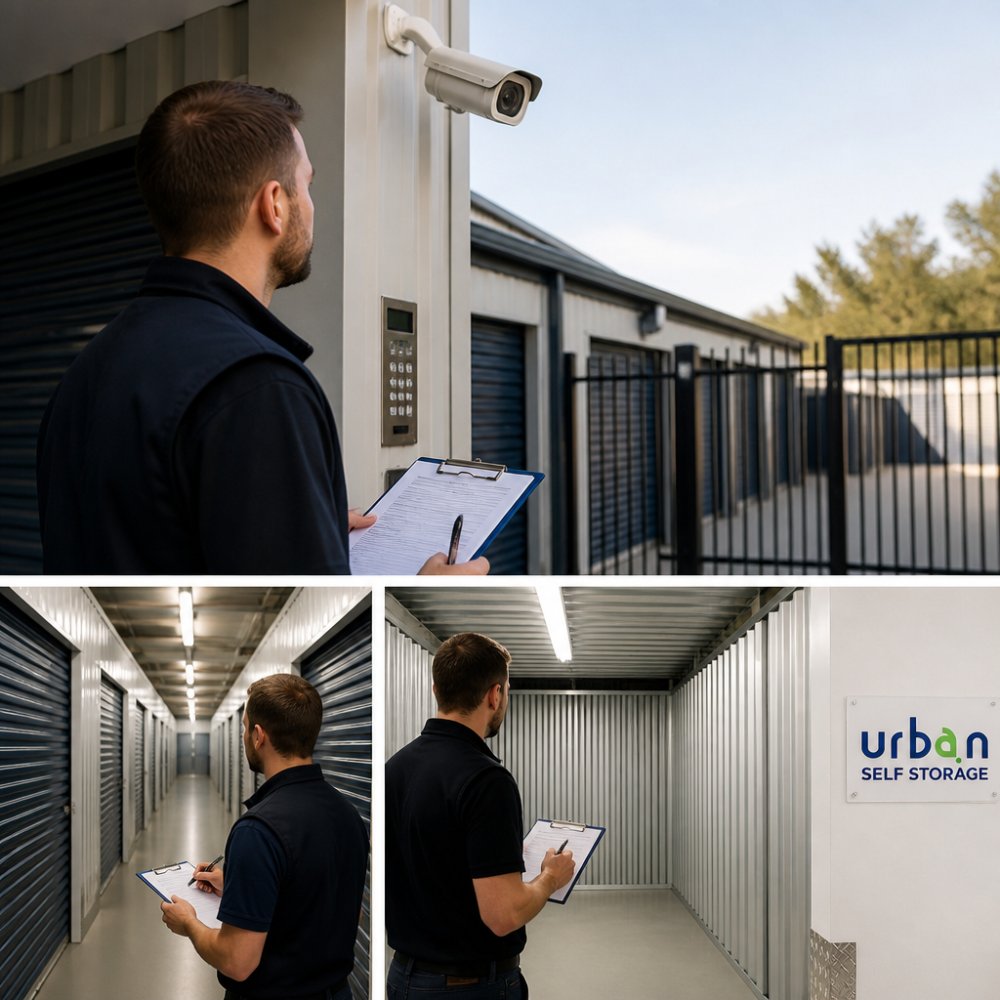
Facility Inspection Checklist:
- CCTV cameras visible and operational (ask about monitoring)
- Perimeter fencing intact and secure
- Lighting adequate in all areas (corridors, outdoor, unit entrances)
- Gated or coded access system in place
- Unit locks functional (test your own lock)
- No visible water damage, mould, or pest signs
- Corridors and common areas clean and well-maintained
- Staff present and responsive during visit
- Climate control system running (if applicable)
- Fire safety equipment visible (extinguishers, alarms)
- Emergency procedures posted and clear
- Insurance requirements clearly stated
- Contract terms transparent and in writing
Physical Site Inspection and Documentation
Visit the facility in person. Never rent a unit based on photos or a phone call. Walk through the facility, see the actual unit you’ll rent, and test the access system. This takes 30 minutes but prevents costly mistakes.
Emergency and Disaster Preparedness Protocols
Ask about emergency procedures. What happens if there’s a fire, flood, or other disaster? Does the facility have:
- Fire suppression systems (sprinklers or other methods)?
- Emergency evacuation procedures?
- Backup power for climate control and security systems?
- Flood mitigation measures?
- Clear communication plan if an emergency occurs?
Confirm Contract Terms and Flexibility
Before you commit, understand the contract fully.
Key contract terms to review:
- Rental period (month-to-month, fixed term)
- Price and what’s included
- Late fees and payment terms
- Notice required to end the lease
- What happens to your items if you stop paying
- Insurance requirements
- Access hours and any restrictions
- Prohibited items (hazardous materials, etc.)
Ask about flexibility. Can you upgrade or downgrade unit size? Can you end the lease early without penalty? Look for facilities offering Short and Long Term Storage in Bunbury WA options, which suits customers whose needs change. Confirm the facility’s flexibility matches your situation.
Frequently Asked Questions
What security features should a high-quality secure self storage facility have?
A secure self storage facility should include 24/7 CCTV surveillance with active monitoring, gated access with entry codes or key card systems, perimeter fencing, adequate lighting throughout the property, and on-site management during business hours. Look for facilities that can verify their security measures are monitored continuously and that access logs are maintained. Ask the facility to explain how they respond to security incidents and whether they conduct regular inspections.
Do I need tenant insurance for my storage unit, and what does it cover?
Tenant insurance is highly recommended for storage units. Most facilities require proof of insurance before you move in. Tenant insurance typically covers your personal belongings against theft, fire, and weather damage. Facility liability covers damage to the building itself, not your contents. Check your policy’s coverage limits and claim procedures before signing your storage contract. Your insurer can advise on the appropriate coverage amount based on the value of items you’re storing.
How can I verify that a storage facility’s security systems actually work before I sign?
Request to see the facility’s CCTV monitoring station and ask about their recording retention period. Inquire how they handle security incidents and request references from long-term tenants about their experience with security. Visit the facility during different times of day to assess lighting and staff presence. Ask whether they conduct regular security audits and whether they’re willing to provide documentation of their access control systems. A reputable facility will be transparent about these details.
What should I check during a physical inspection of a secure self storage facility?
Visit the facility in person and inspect the perimeter fencing, gate functionality, and lighting conditions. Check a sample storage unit for cleanliness, climate control, and signs of pest activity. Observe the access control system and confirm entry procedures. Ask about emergency protocols, fire safety measures, and disaster preparedness. Document your observations with photos and note any concerns. This physical inspection is crucial before committing to a secure self storage facility, as it confirms that advertised features are actually in place and functioning.