
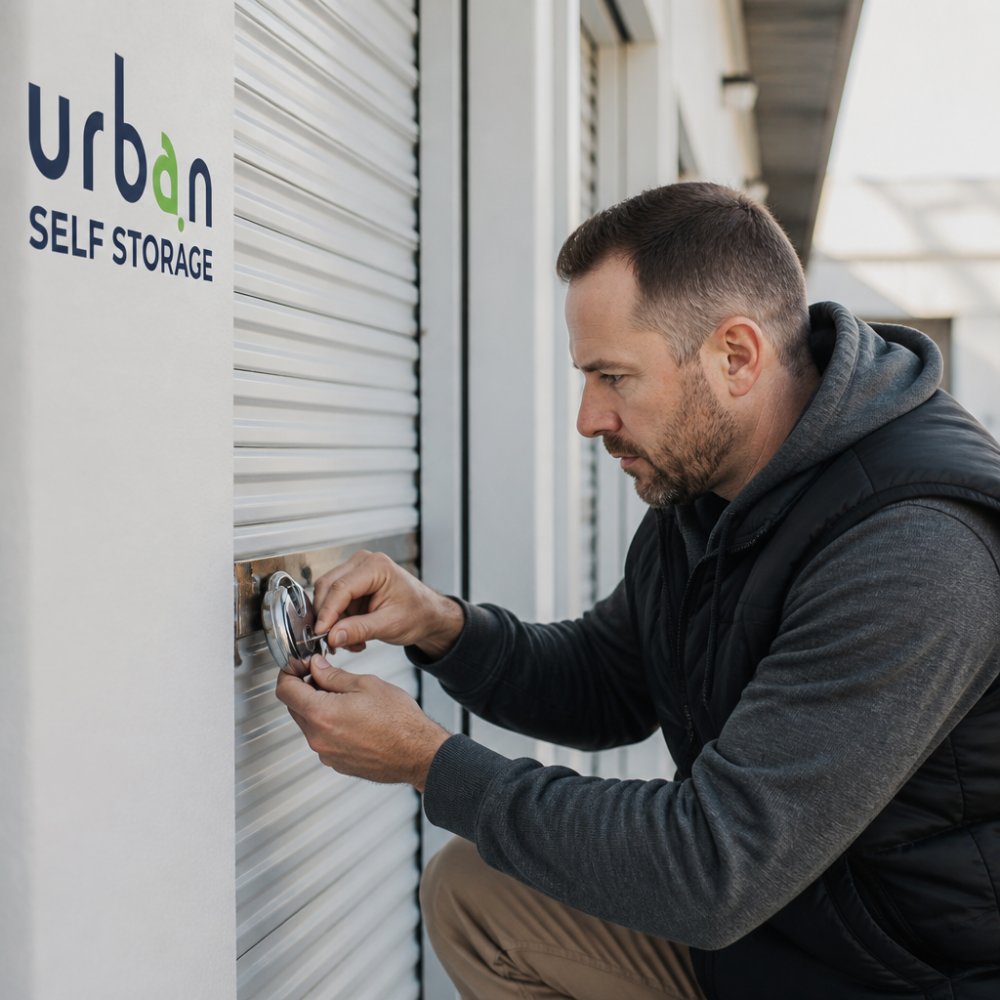
Table of Contents
- The Best Lock for a Storage Unit: Disc Locks Explained
- Self Storage Security Features to Check Before You Book
- Storage Unit Contents Insurance in Australia: What You Need to Know
- How to Pack a Storage Unit for Security
- What Not to Store in Self Storage
- Your 10-Point Checklist to Secure a Self Storage Unit
- Frequently Asked Questions
Last Updated: September 16, 2026
The Best Lock for a Storage Unit: Disc Locks Explained
The best answer to how to secure a self storage unit is a disc lock with a shrouded shackle and hardened steel body. It resists bolt cutters far better than a standard padlock, and it is the single upgrade most renters should make on day one.
If you want to know how to secure a self storage unit properly, the lock is where the conversation starts. A disc lock sits almost flush against the door hasp, so there is nothing for bolt cutters to grip. Most padlocks leave 25mm or more of exposed shackle, which is exactly where cutters bite. At Urban Self Storage, every unit is protected by 24/7 CCTV surveillance, PIN access code entry and individually alarmed units, but your own lock is the last barrier between a thief and your belongings.
Disc Lock vs Padlock vs Combination Lock: Security Ratings Compared
Disc locks win on cut resistance. Padlocks are convenient but exposed. Combination locks remove the key problem but add a different risk: anyone who watches you enter the code has your security.
| Lock Type | Security Level | Bolt-Cutter Resistant | Cost |
|---|---|---|---|
| Disc lock (shrouded shackle) | High | Yes, hardened steel body | Moderate |
| Padlock (standard shackle) | Low to moderate | No, exposed shackle cuts easily | Low |
| Combination lock | Moderate | Varies by shackle type | Low to moderate |
| Cylinder lock (built-in) | High | Yes, but facility-controlled | Included by facility |
A common mistake is buying a cheap padlock because it looks heavy. Weight is not the same as cut resistance. Look for a hardened steel body, a shrouded shackle, and a keyway that resists picking. Combination locks suit renters who lose keys, but choose one with a shielded dial and change the code the moment anyone else learns it.
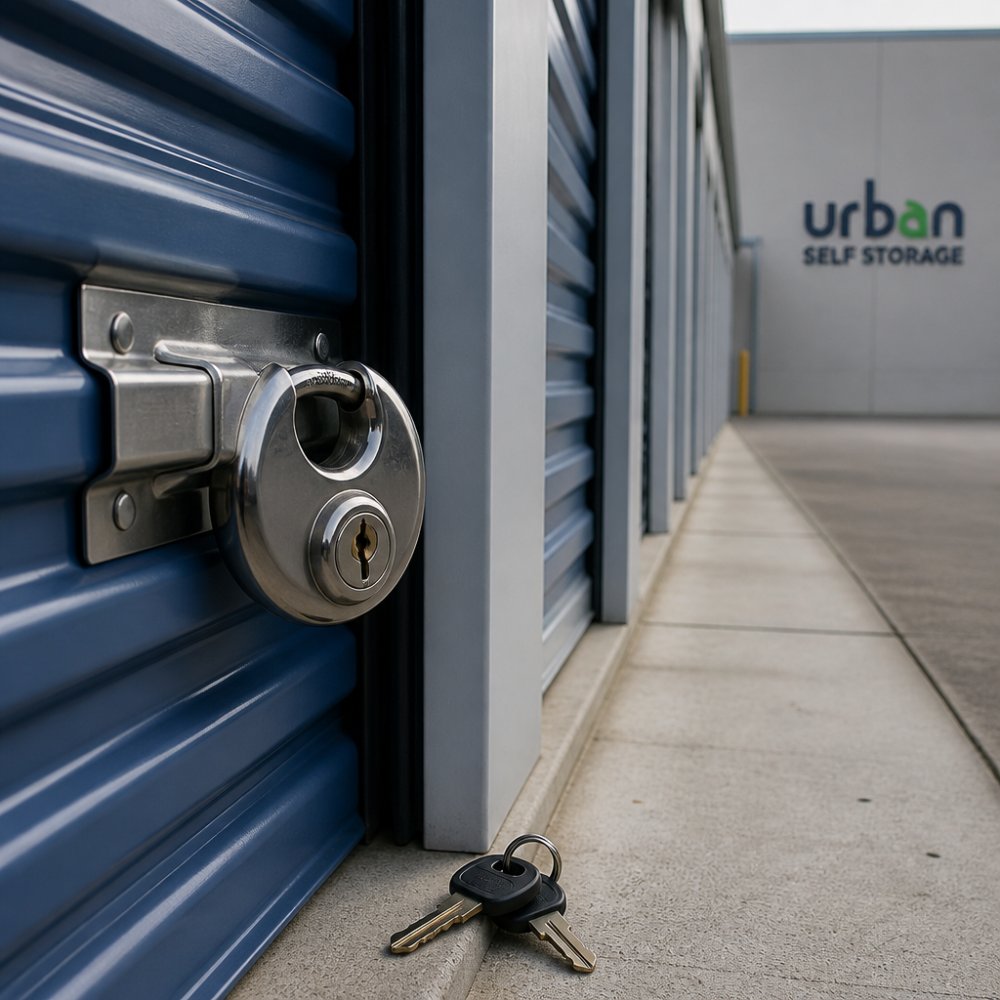
Buy your disc lock before move-in day, not after. Most facilities, including ours, let you bring your own lock, and arriving prepared means your unit is secured from the first hour rather than sitting with a temporary latch.
Self Storage Security Features to Check Before You Book
Check five things before you sign anything: 24/7 CCTV surveillance, PIN or keyless entry with boom gate access logs, perimeter fencing, facility lighting, and whether an on-site manager or monitored alarm system backs it all up. A facility that cannot show you these is a facility that is guessing.
Ask for specifics, not reassurances. “We have cameras” means little if nobody reviews the footage or if coverage stops at the front gate. A well-run site keeps boom gate access logs, so every entry is timestamped against a unique PIN. Perimeter fencing should be a physical barrier, not a decorative one, and motion-activated lighting should cover the corridors, not just the entry. Individually alarmed units mean a forced door triggers a response rather than silence.
How to Audit a Facility on Inspection Day
Walk the site the way a thief would. Arrive at dusk, not midday, and check whether the corridors are genuinely well-lit or just lit at the entrance. Look for blind spots where a camera would not see a door being forced. Ask to see where the CCTV footage is stored, how long it is retained, and who reviews it. Ask whether the on-site manager is present during opening hours or whether the site is remotely monitored after hours.
A practical inspection checklist:
Book Online in 3 Minutes & Get 50% Off Instantly →
- CCTV surveillance: Confirm coverage of corridors, not just the gate, and ask about retention periods.
- PIN access code entry: Confirm codes are unique per tenant and can be revoked individually if you suspect a leak.
- Boom gate access logs: Ask whether entry and exit are timestamped and whether management can pull a report for a specific unit.
- Perimeter fencing: Check for gaps, climbable objects nearby, and whether the fence is continuous around the site.
- Facility lighting: Look for motion-activated lighting in corridors and around roller doors, not just floodlights at the office.
- Individually alarmed units: Ask whether alarms are monitored 24/7 or only sound locally.
- On-site manager: Confirm hours and what happens outside them.
How Thieves Break Into Storage Units (and What Stops Them)
Thieves target the path of least resistance: weak locks, dark corners, and units nobody visits. They cut exposed padlock shackles, follow someone through a gate, or exploit a unit left unlocked after a hasty move-out. A common pattern is tailgating, waiting for a legitimate tenant to open the gate and slipping in behind them.
What stops them is friction. A disc lock slows the cut. Gated access with a unique PIN means no shared codes to leak. Motion-activated lighting removes the cover of darkness. Individually alarmed units mean a forced door triggers a response rather than silence. Run a lighting and visibility audit on your own unit: if you cannot see your door clearly at night, neither can a camera.
Never share your PIN access code with anyone, including friends helping you move. Shared codes are the most common way unauthorised access happens, and they make it impossible for facility management to trace who entered.
How Much Security Does a Facility Need?
There is no single mandated standard for self storage security in Australia, so the practical answer is: enough layers that a thief picks an easier target. At minimum, look for 24/7 CCTV surveillance, electronic gate PIN entry with boom gate access logs, perimeter fencing, motion-activated lighting, and either an on-site manager or monitored alarms. A facility missing two or more of these is relying on your lock alone, which is not a security strategy.
Storage Unit Contents Insurance in Australia: What You Need to Know
Your belongings are generally not automatically insured by the facility. Storage unit contents insurance in Australia is usually the renter’s responsibility, so check your rental agreement carefully before you assume you are covered. The facility’s insurance typically covers the building, not your goods inside it.
Many home and contents policies exclude or limit items kept in self storage, and some require you to notify your insurer before you store anything. Tenant insurance or a dedicated storage policy fills that gap. If you are unsure, ring your insurer and ask two questions: does my policy cover goods in a self storage unit, and do I need to list them separately?
What Australian Policies Commonly Exclude
Most home and contents policies in Australia apply conditions to stored goods. Common exclusions and limits include:
- High-value items: Jewellery, artwork, collectibles and antiques often have sub-limits or require separate listing.
- Business stock: Goods held for sale or business use are frequently excluded from personal contents cover.
- Items stored long-term: Some policies limit cover after a set period in storage.
- Prohibited items: Anything hazardous, flammable or perishable is almost always excluded, and may breach your rental agreement.
- Theft without forced entry: Some policies require evidence of forced entry to pay a theft claim, which is why your lock and the facility’s alarms matter.
Documentation Is Your Claim Pathway
Before storing anything valuable, photograph each item, record serial numbers, and keep receipts in a separate location. If a theft does occur, that documentation is what supports your claim.
A practical documentation routine:
Book Online in 3 Minutes & Get 50% Off Instantly →
- Photograph each high-value item from multiple angles.
- Record serial numbers, model numbers and purchase dates.
- Keep receipts or bank statements showing purchase in a separate, safe location.
- Store the documentation digitally, not inside the unit.
- Update the record whenever you add or remove items.
Documentation is your recovery plan. Photos, serial numbers and receipts taken before you store anything are worth more than any lock if the worst happens.
If Your Unit Is Broken Into
If you arrive and find your unit has been entered, do not disturb the scene.
How to Pack a Storage Unit for Security
Pack so that valuables sit at the back of the unit, away from the door, and so that nothing valuable is visible from the corridor.
What Not to Store in Self Storage
Do not store anything hazardous, flammable, perishable, or alive.
Your 10-Point Checklist to Secure a Self Storage Unit
Frequently Asked Questions
What is the best lock for a storage unit?
A disc lock is the strongest practical choice for most storage units. Its shrouded shackle and hardened steel body leave almost no exposed metal for bolt cutters to grip, and it resists drilling and prying better than a standard padlock. Choose a disc lock with a high padlock security rating, and check the facility’s rules on lock types before you buy. Cylinder locks suit some doors, but disc locks remain the most common recommendation for secure self storage.
Are disc locks better than padlocks?
For storage units, yes. A disc lock hides its shackle inside a rotating steel housing, so bolt cutters cannot reach the metal to cut it. A standard padlock leaves its shackle exposed and can be cut in seconds with common tools. Combination locks add convenience but often use thinner shackles. If you want the best balance of price and protection, a disc lock with a hardened steel body is the safer option.
Do self storage units have CCTV in Australia?
Many facilities, including Urban Self Storage, run 24/7 CCTV surveillance across gates, driveways and corridors. CCTV works best alongside gated access, PIN access codes, individual unit alarms and boom gate access logs, because footage only helps after an incident. Ask the facility how long footage is kept, whether cameras cover your corridor, and whether the system is monitored. Pair CCTV with your own disc lock and insurance for full protection.
Is my stuff insured in a storage unit?
Not automatically. Your home contents policy may cover goods in storage, but many Australian insurers require you to list the location or take out a separate storage unit contents insurance policy. Check your Product Disclosure Statement for limits on high-value items, and ask the facility what tenant insurance options they offer. Document your belongings with photos, serial numbers and receipts before storing, because insurers ask for proof of ownership when you claim.