

Table of Contents
- What Storage Insurance Covers: Theft and Damage
- Storage Unit Theft Insurance: What You Need to Know
- Damage Coverage in Storage: Fire, Water, and Weather
- Home Contents Insurance in Storage: Does Your Policy Cover It?
- Storage Insurance Exclusions: What Is Not Covered
- Storage Insurance Claim Process: How to Report Loss or Damage
- Coverage Limits and How to Verify Your Protection
- Frequently Asked Questions
Last Updated: October 12, 2026
What Storage Insurance Covers: Theft and Damage
Storage insurance protects your belongings against loss and damage while they’re kept in a storage facility. Understanding does storage insurance cover theft and damage, along with fire and weather events, helps you choose the right cover.
At Urban Self Storage, customers store everything from furniture to business inventory, and many worry whether their items are truly protected. The answer depends on your policy and its conditions.
How storage insurance works
Storage insurance compensates you if your stored belongings are lost or damaged. You pay a premium, and the insurer covers certain losses up to your policy limit.
Most policies require you to:
- Maintain reasonable security measures (like keeping your unit locked)
- Keep an inventory of what you’re storing
- Prove ownership of damaged or stolen items
The insurer assesses your claim and pays based on replacement cost or actual cash value, depending on your policy terms.
Covered perils and events
Storage insurance typically covers:
- Theft, when items are stolen from your unit
- Fire and smoke damage, loss from fire, including smoke damage
- Weather damage, damage from storms, wind, hail, or lightning
Exact perils vary between policies, so always check your policy document.
Storage Unit Theft Insurance: What You Need to Know
Theft cover is not automatic, and knowing does storage insurance cover theft and damage depends on whether the loss meets the policy’s definition of theft and whether you took the precautions the insurer expects, the difference between a paid claim and a denied one.
When theft is covered
Most policies cover theft when there is evidence of forcible entry, the insurer wants proof someone broke in, not simply walked through an unlocked door.
A theft claim is strongest when you can show:
- Forced entry, a broken lock, damaged door, cut padlock, or tampered latch.
- A police report, filed soon after discovery, with a report number for the insurer.
- A current inventory, a list of what was stored, ideally with photos, serial numbers, or receipts.
If your unit was left unlocked and items went missing, the insurer may treat it as unexplained disappearance rather than theft, an exclusion under many policies.
Theft conditions and security requirements
Insurers commonly require reasonable precautions, including:
- Keeping the unit locked at all times when not in use.
- Using a padlock that meets the facility’s or insurer’s standard, often a disc lock or solid-bodied padlock rather than a cheap or worn one.
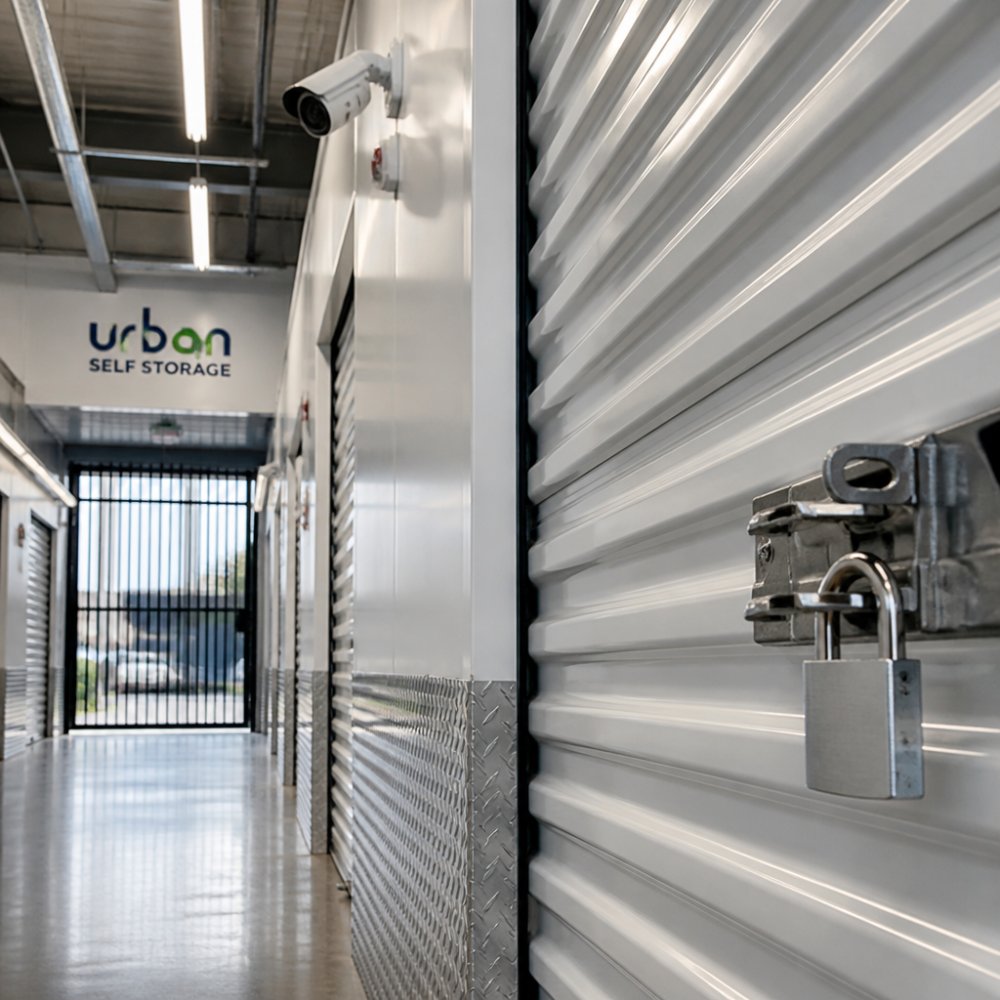
- Choosing a facility with adequate lighting, surveillance, and access control.
Fail to meet these conditions and the insurer can reduce or refuse your claim. A flimsy padlock that was easily cut may be seen as failing to take reasonable precautions, and giving a friend your access code may be treated as voluntary parting rather than theft.
Some policies exclude theft where there is no sign of forced entry, even if you are certain items were taken. Keep your unit locked, keep your inventory current, and report any loss to police as soon as you notice it.
What to do immediately after a theft
Acting quickly protects your claim:
- Do not disturb the scene more than necessary. If the lock or door is damaged, photograph it before you clean up or replace anything.
- Report to police. File a report and ask for the report number. Insurers usually require this for theft claims.
- Notify the storage facility. Ask whether CCTV footage is available and request it be preserved, footage is often overwritten after a short period.
- Contact your insurer. Report the loss within the timeframe stated in your policy, commonly within 30 days, but check your own policy document.
- Prepare your documentation. Gather your inventory, receipts, photos, and the police report number before submitting the claim.
How facility liability differs from your own insurance
A storage facility’s own liability cover is not the same as your storage insurance.
If the facility’s negligence contributed to the theft, a faulty gate or failed CCTV, for example, raise it in writing and keep a copy.
Damage Coverage in Storage: Fire, Water, and Weather
Damage cover is where storage insurance policies differ most. Two policies can both cover “water damage” yet treat the same event very differently depending on whether the damage was sudden or gradual.
Fire and smoke damage
Fire damage is covered under most storage insurance policies. Covered losses typically include:
- Direct damage from flames.
- Smoke damage to items not touched by fire.
- Damage from firefighting efforts, including water, foam, and chemicals.
Smoke damage can affect items in sealed boxes and units some distance from the fire. If your policy covers fire, it usually covers smoke damage as part of the same event, but check the wording, some policies sublimit it or require professional assessment.
To strengthen a fire damage claim, document your items before storage with dated photos and keep receipts or appraisals for high-value items. This proof of ownership and pre-loss condition makes the claim easier to assess.
Water, weather, and environmental damage
Water and weather coverage varies widely between policies. Most policies cover:
Book Online in 3 Minutes & Get 50% Off Instantly →
- Sudden water damage, a burst pipe, a failed hot water system, or an appliance leak that occurs without warning.
- Storm damage, wind, hail, lightning, and falling debris.
- Sudden environmental events, for example, a tree branch through the roof of the unit.
Many policies exclude or limit:
- Gradual water seepage, slow leaks that develop over weeks or months.
- Flooding from heavy rain or rising water, unless the policy specifically includes flood.
- Condensation and humidity damage, moisture that builds up inside the unit.
The distinction matters. Water seeping in over weeks is typically treated as gradual deterioration and excluded, while a pipe that bursts suddenly and floods your unit is usually covered. A storm driving rain through a damaged roof may be covered as storm damage, but a roof leaking for months may be treated as gradual.
Photograph your unit before you move items in and after any severe weather event. Date-stamped photos help show whether damage was sudden or gradual, which is often the deciding factor in a water damage claim.
Common damage exclusions to check
Beyond gradual water damage, most policies exclude:
- Pest damage, insects, rodents, and other animals.
- Mold and mildew, unless caused by a covered sudden event.
- Unexplained disappearance, items missing without evidence of theft or damage.
Many exclusions exist because the loss is predictable or preventable, mould grows when moisture isn’t managed, pest damage occurs when items aren’t sealed properly. Reviewing these before you store helps you avoid surprises at claim time.
How to tell sudden damage from gradual damage
A practical test: did the damage happen in a single identifiable event, or develop over time?
- A burst pipe on a Tuesday afternoon is sudden.
- A stain that spreads across a box over three months is gradual.
- A hailstorm that dents a stored vehicle is sudden.
If unsure, report the loss and let your insurer assess it rather than assuming it’s excluded. Provide photos, dates and maintenance records showing the unit was in good condition beforehand.
Matching your policy to your storage risk
Different storage situations carry different damage risks. A climate-controlled unit reduces humidity and mould risk, while an outdoor unit increases exposure to storms and temperature swings. If you’re storing items sensitive to moisture, heat or pests, check whether your policy covers those risks or whether you need additional cover.
Compare storage insurance policy wordings and product disclosure statements
Home Contents Insurance in Storage: Does Your Policy Cover It?
Many people assume their home contents insurance covers items moved into storage. This is often not true, home contents policies typically cover items in your home, not external storage facilities.
Check your home contents policy carefully.
If you need ongoing storage coverage, you’ll likely need a separate storage insurance policy. Contact your insurer to ask whether your home contents policy covers stored items, and for how long.
Storage Insurance Exclusions: What Is Not Covered
Understanding what’s excluded is just as important as knowing what’s covered. Common exclusions include:
Common exclusions you should know about
- Gradual deterioration, wear and tear, rust, or natural decay over time
- Pest damage, damage from insects, rodents, or other animals
- Mold and mildew, growth caused by moisture or humidity
Many exclusions exist because the loss is predictable or preventable. For example, mold grows when moisture isn’t managed. Pest damage occurs when items aren’t sealed properly. These are reasons to store items correctly and maintain your unit.
Storage Insurance Claim Process: How to Report Loss or Damage
Filing a storage insurance claim involves several steps. Acting quickly and gathering the right documentation makes it smoother.
Steps to file a claim
Report the loss immediately. Contact your insurer as soon as you discover damage or theft. Most policies require reporting within a set timeframe (often 30 days).
File a police report (for theft). If items were stolen, file a report with local police and get the report number, insurers usually require it.
Document the damage. Take clear photos and videos from multiple angles. If theft occurred, photograph the forced entry or damage to your unit.
Gather proof of ownership. Collect receipts, invoices, bank statements, or photos showing you owned the items.
List what was lost or damaged. Create a detailed inventory with descriptions and estimated values. Be specific: “wooden dining table, oak, 6 chairs, purchased 2023” is better than “furniture.”
Submit your claim. Send the claim form, photos, receipts, police report (if applicable), and your inventory list to your insurer.
Cooperate with the adjuster. The insurer may send an adjuster to inspect the damage. Be available and provide any additional information they request.
Documentation and proof of ownership
Documentation is crucial to a successful claim. Without it, insurers often deny claims or pay less than you expect.
Gather these before you need them:
- Original receipts and invoices
- Credit card or bank statements showing purchases
- Warranty cards or product manuals
Keep copies in a safe place separate from your stored items, a cloud account or email to yourself works well.
For items without receipts, a photo in your home, a bank statement from purchase, or a witness who can confirm ownership all strengthen your claim.
Coverage Limits and How to Verify Your Protection
Every storage insurance policy has limits, the maximum the insurer will pay for a claim.
Coverage limits work in two ways:
Overall policy limit, the total amount the insurer will pay for all claims during your policy period. For example, a $10,000 limit means the insurer pays up to $10,000 total, regardless of how many items are damaged.
Per-item limit, the maximum paid for any single item.
To verify your protection:
Review your policy document. Look for the “Coverage Limits” or “Limits of Liability” section. Write down your overall limit and any per-item limits.
Calculate your stored items’ value. Add up the replacement cost of everything you’re storing, including furniture, electronics, boxes, and any business inventory or equipment.
Compare the two. If your stored items are worth more than your coverage limit, you’re underinsured, reduce what you store or increase your coverage.
Ask about additional coverage. Many insurers offer riders or add-ons for high-value items. Jewellery, art, or collectibles often need separate coverage.
Review annually. As you add items or replace damaged goods, your total value may change. Review your coverage yearly to stay protected.
Choosing the right storage insurance means understanding what’s covered, what’s excluded, and whether your limits match your needs.
At Urban Self Storage, we recommend checking your policy before moving items into one of our secure facilities.
Frequently Asked Questions
Does storage insurance cover theft from a storage unit?
Storage insurance can cover theft, but only if certain conditions are met. Your policy must include theft coverage, the unit must have been locked, and there must be evidence of forced entry or a legitimate security breach. If items go missing without signs of forced entry, the claim may be denied. Always check your policy wording and confirm that theft is listed as a covered peril before signing up.
What damage is usually excluded from storage insurance?
Common exclusions include gradual deterioration, pest infestation, mould, flooding, and damage from lack of maintenance. Damage caused by poor packing, exposure to extreme temperatures, or items stored without proper protection is often excluded. Unexplained disappearance or loss without evidence of theft is rarely covered. Review your policy’s exclusions section carefully to understand what falls outside your coverage.
Does home contents insurance cover items kept in storage?
Most standard home contents insurance policies do not cover items stored outside your home, or they offer only limited coverage with strict conditions. Some policies require items to be in a locked, secure storage facility and may apply sublimits (lower maximum amounts) for stored property. Contact your insurer directly to confirm whether your belongings are covered while in storage and what conditions apply.
What should I do if belongings are stolen or damaged in storage?
Report the loss or damage to your storage facility immediately and request written confirmation. Contact your insurance provider within the timeframe specified in your policy (usually within 30 days). Provide detailed documentation including photos of damage, an inventory list, proof of ownership, receipts, and any evidence of theft such as forced entry. Keep all correspondence with both the facility and your insurer for your records.