
Table of Contents
- Why Security Matters in Self Storage
- Physical Security Enhancements for Storage Facilities
- 24/7 CCTV and Active Surveillance Systems
- Access Control Systems and Identity Verification
- How to Secure a Storage Unit: Practical Steps for Customers
- Self Storage Security Standards in Australia and Compliance
- Protecting Customer Data: Australian Privacy Principles for Storage Businesses
- Cyber Security and Digital Record Protection
- Frequently Asked Questions
Last Updated: September 27, 2026
Why Security Matters in Self Storage
Security is the foundation of trust in self-storage. When customers entrust you with their belongings, whether furniture during a house move, equipment for a growing business, or vehicles like caravans and boats, they’re relying on you to protect what matters to them. A breach, theft, or damage isn’t just a financial loss; it’s a failure of the core promise you’ve made.
The stakes are real. Unauthorised access, theft, and data breaches create liability for storage operators and distress for customers. This is why security practices self storage in Australia must combine physical barriers, active surveillance, access control, and data protection into a comprehensive system. No single measure is enough. A locked gate means nothing if cameras aren’t monitored. CCTV footage has limited value if access logs aren’t tracked. And modern storage operations handle sensitive customer information, rental agreements, payment details, emergency contacts, that must be protected with the same rigour as physical assets.
At Urban Self Storage, we’ve built our reputation on security that works. This guide covers the practical, proven approaches that keep facilities, customers, and their belongings safe.
Physical Security Enhancements for Storage Facilities
Physical security is your first line of defence. It deters casual theft, slows determined intruders, and creates the environment where surveillance and access control can be most effective.
Perimeter Fencing and Gate Security
The perimeter is where security begins. A well-designed fence with controlled entry points creates a clear boundary between public space and your facility. It signals that the area is monitored and protected, which alone discourages most opportunistic theft.
Effective perimeter security typically includes:
- Sturdy fencing material (chain-link or steel) at least 1.8 metres high, with no gaps or climbing points
- Automated or manually controlled gates that require authentication to open
- Gate sensors that log every entry and exit with timestamp and credential used
- Lighting at entry points to eliminate dark spots where intruders could work undetected
- Signage indicating 24/7 surveillance and access restrictions
The gate itself is a critical control point. Whether electronic or manual, it must be strong enough to resist forced entry and integrated with your access control system so every entry is recorded. A gate that swings open freely or can be pushed past defeats the entire perimeter strategy.
Individual Unit Alarms and Locks
Beyond the perimeter, each storage unit needs its own protection. A unit lock is the customer’s first line of defence; an alarm system is yours.
Heavy-duty padlocks like those with shrouded shackles and stainless steel construction resist cutting and prying. Many customers bring their own locks, so it’s worth educating them about what works. A cheap padlock creates a false sense of security.
Unit-level alarms add a critical layer. When a door is forced open, the alarm triggers immediately, alerting staff, triggering notifications, and deterring the intruder from proceeding. Motion sensors inside units can detect movement when the door is closed, catching theft in progress. These systems integrate with your central monitoring, so alerts reach the right person instantly.
24/7 CCTV and Active Surveillance Systems
Surveillance serves two purposes: deterrence and evidence. A visible camera tells potential thieves the facility is monitored. A working camera with active monitoring means intrusions are detected and responded to in real time.
Book Online in 3 Minutes & Get 50% Off Instantly →
Effective CCTV coverage includes:
- Cameras at all entry and exit points (gates, office doors, pedestrian access)
- Perimeter cameras covering the full fence line and corners
- Aisle cameras providing coverage of unit fronts and access areas
- High-definition recording (1080p minimum) for clear identification of faces and details
- Night vision or infrared capability so coverage doesn’t degrade in darkness
- 24/7 recording and retention for at least 30 days (longer if possible)
The system is only as good as its monitoring. Recorded footage sitting unwatched is useless for incident response. Active monitoring, either by on-site staff or a professional monitoring centre, means alerts are acted on immediately. When motion is detected in a restricted area at 2 a.m., someone should know about it within seconds, not hours.
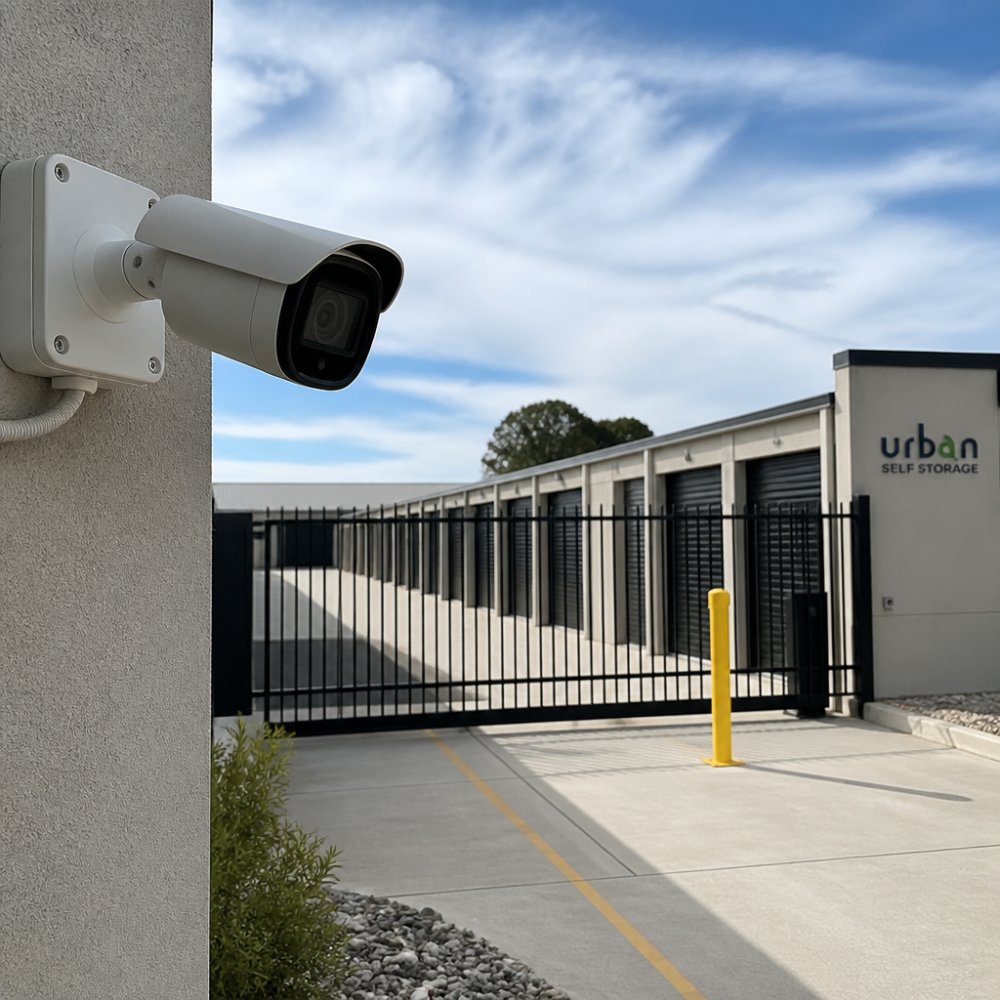
Many facilities also integrate their CCTV with their access control system, so when an alarm triggers or an unauthorised entry is detected, footage from that area is automatically flagged and timestamped.
Access Control Systems and Identity Verification
Access control bridges the gap between physical security and operational management. It determines who can enter, when, and where, and creates an audit trail of every access event.
Modern access control systems use:
- Electronic credentials (key cards, fobs, or mobile apps) that are encrypted and can’t be easily duplicated
- PIN codes that can be changed or revoked instantly without replacing physical keys
- Biometric authentication (fingerprint or facial recognition) for high-security facilities
- Time-based access so a credential only works during the customer’s rental period or specified hours
- Zone-based restrictions so a customer can access their unit but not other areas
Each access event is logged with the credential used, the time, the gate or door accessed, and whether the entry was successful or denied. This audit trail is invaluable. If a theft occurs, you can see exactly who accessed the facility and when.
Identity verification at the point of rental is equally important. Customers should provide photo ID, and that ID should be scanned and stored. This prevents rental fraud and helps law enforcement if the facility is used to store stolen goods or illegal materials.
How to Secure a Storage Unit: Practical Steps for Customers
Customers often assume the facility’s security is enough. It’s not. Effective security practices self storage requires a partnership between the operator and the renter.
Choosing the Right Lock and Security Hardware
Customers should invest in a quality padlock. A shrouded shackle design prevents bolt cutters from gaining purchase. Stainless steel resists corrosion and cutting. Look for locks with a hardened steel body and a solid cylinder mechanism.
Avoid combination locks for long-term storage, they wear out, dials become loose, and the combination can be observed or guessed. A keyed lock is more secure, though customers must keep their key safe. Some customers prefer keyless electronic locks, which can be accessed via PIN or app and provide an audit trail of who accessed the unit and when.
The lock is only as strong as what it’s attached to. The hasp should be bolted through the door and frame, not just screwed on. The door itself should be solid metal, not corrugated or flimsy.
Book Online in 3 Minutes & Get 50% Off Instantly →
Organising and Protecting Your Contents
How items are packed affects their security. Valuable items should be stored in the middle or back of the unit, not visible from the door. Boxes should be labelled generically, “Household Items” rather than “Electronics” or “Jewellery.” This reduces the incentive for theft.
Self Storage Security Standards in Australia and Compliance
Australia doesn’t have a single national self-storage security standard, but industry best practices align with broader facility management and privacy regulations. The key obligation is duty of care, the facility must take reasonable steps to protect customers’ belongings.
This means:
- Maintaining physical security (fencing, gates, locks) in good working order
- Operating surveillance systems that are functional and monitored
- Controlling access so only authorised people can enter
- Responding promptly to security incidents, alarms, or breaches
- Maintaining records of access, incidents, and maintenance
Protecting Customer Data: Australian Privacy Principles for Storage Businesses
Modern storage operations are data businesses as much as physical ones. Rental agreements, payment information, emergency contacts, and access credentials are sensitive data that must be protected.
The Privacy Act 1988 (Cth) and the Australian Privacy Principles (APPs) set the standard. Key obligations include:
- Collecting only necessary information (name, contact, payment details, emergency contact)
- Storing data securely (encrypted, backed up, access restricted)
- Protecting against unauthorised access (passwords, access logs, staff training)
- Notifying customers of a data breach within 30 days if there’s likely risk of serious harm
- Respecting customer rights to access, correct, or delete their information
- Being transparent about how data is used and stored
Cyber Security and Digital Record Protection
As storage operations move online, with digital rental agreements, app-based access, and cloud-based management systems, cyber security becomes as important as physical security.
Digital record protection includes:
- Encryption of sensitive data both in storage and in transit
- Strong authentication for staff and customer portals (multi-factor authentication where possible)
- Regular backups stored separately so data isn’t lost to ransomware or hardware failure
- Software updates applied promptly to patch security vulnerabilities
- Access logs showing who accessed what data and when
- Incident response plans so breaches are detected quickly and handled properly
Frequently Asked Questions
How can I ensure my belongings are safe in a storage unit?
Choose a facility with 24/7 CCTV surveillance, electronic access control, and perimeter fencing. Use a high-quality padlock with a shrouded shackle design, and arrange your items strategically so valuables aren’t visible from the door. Keep an inventory of what you’re storing and photograph high-value items before you move them in. Verify the facility has proper incident response protocols and that staff are trained in security procedures.
What security features should I look for in a self storage facility?
Prioritise facilities offering advanced 24/7 CCTV with remote monitoring, electronic gate access control with audit trails, individual unit alarms, and secure perimeter fencing. Check whether the operator complies with self storage security standards in Australia and holds liability insurance. Ask about their data protection practices under the Australian Privacy Principles.
How do I secure a storage unit with the right lock?
Invest in a heavy-duty padlock with stainless steel construction and a shrouded shackle to resist bolt cutters. Look for locks with high-security cylinder mechanisms and weather-resistant finishes. For business storage or long-term rentals, consider keyless smart locks. Avoid using cheap combination locks, which are vulnerable to manipulation, and never leave a key hidden near your unit.
Are self storage facilities required to have CCTV and alarm systems?
Australia doesn’t mandate CCTV or alarms by law for all self storage operators, but leading facilities implement these as standard practice. Requirements vary by state and may be influenced by insurance policies and liability considerations. Most reputable operators offer 24/7 CCTV surveillance and intrusion detection because they protect both customer assets and the facility’s legal standing. Always ask a facility directly about their surveillance coverage, monitoring arrangements, and alarm response procedures before signing a rental agreement.