
Table of Contents
- What Security Features Should a Storage Facility Have for Late Night Access?
- 24 Hour Access Storage: Understanding True Availability
- PIN-Code Entry Systems and Electronic Gate Access
- Personal Safety at Storage Facility During Late Hours
- Storage Unit Alarm Systems and Individual Unit Protection
- Is It Safe to Visit a Storage Unit at Night?
- What to Check Before Renting a Late-Night Access Unit
- Frequently Asked Questions
What Security Features Should a Storage Facility Have for Late Night Access?
Last Updated: September 26, 2026
What Security Features Should a Storage Facility Have for Late Night Access?
A secure storage facility offering late night storage access requires multiple overlapping security layers: PIN-code or app-based entry systems unique to each tenant, secure perimeter fencing, sensor-activated external lighting, 24/7 CCTV surveillance covering entry points and corridors, individually alarmed units, and remote monitoring with back-to-base security response. Personal safety features matter equally, well-lit car parks, wide driveways with clear sightlines, emergency intercoms, and CCTV-covered loading areas make the difference between a facility you can access safely at 2am and one you’ll avoid after dark.
Australia’s break and enter rate remains elevated, which is precisely why these features aren’t optional extras, they’re foundational. At Urban Self Storage, we’ve designed our Bunbury and Picton facilities with this in mind, combining site-wide security infrastructure with the specific safety features tenants need when accessing units outside business hours.
24 Hour Access Storage: Understanding True Availability
Not all storage facilities that claim 24-hour access actually mean it. Some restrict access to set hours like 6am to 9pm, despite advertising round-the-clock availability. This distinction matters enormously if you’re a tradesperson needing to grab materials at 6am before a job, or a business owner unloading stock at 10pm.
True 24-hour access storage means you can enter and exit the facility at any time without calling ahead, waiting for staff, or requesting permission. The facility’s electronic gate access and PIN-code entry system operate continuously, with no time-based restrictions. Before committing to a lease, confirm this explicitly in writing. Ask whether there are any blackout periods, maintenance windows, or emergency closures that might restrict access. Some facilities perform security audits or maintenance at specific times and temporarily lock down access, you need to know if that happens.
The infrastructure supporting genuine 24-hour access is more complex than standard facilities. The electronic gate, keypad or app-based entry system, CCTV recording, and alarm systems all must operate 24/7 without fail. This is why facilities offering true 24-hour access typically charge more than those with restricted hours. Urban Self Storage provides advanced 24/7 CCTV surveillance, electronic PIN-code entry, and motion-activated external lighting at our Bunbury and Picton locations.
PIN-Code Entry Systems and Electronic Gate Access
PIN-code entry systems are electronic keypads or mobile app-based access controls that allow tenants to unlock gates and doors without physical keys. Each tenant receives a unique code or app credentials, so the facility can track who entered, when, and how often. This is far superior to traditional key systems, which offer no audit trail and can’t be instantly revoked if a key is lost or stolen.
How PIN-code access works in practice: You arrive at the facility, enter your unique code into the keypad at the perimeter gate, the gate unlocks automatically, and you drive through. The system logs the entry timestamp. When you reach your unit, you enter the same or a different code into the unit’s lock, and the door opens. The entire process takes seconds. If you lose your code or suspect someone has it, the facility can change it instantly without rekeying physical locks.
App-based entry systems operate similarly but use your mobile phone instead of a keypad. You unlock the gate and unit doors through an app, which sends a signal to the electronic locks. This approach offers convenience, no code to remember, and allows the facility to grant temporary access to family members or contractors without issuing physical keys. However, app-based systems depend on mobile network coverage and battery life on your phone, so they’re best paired with a backup PIN keypad.
Book Online in 3 Minutes & Get 50% Off Instantly →
Electronic gate access is the perimeter control layer. The gate remains locked at all times, and only tenants with valid entry credentials can open it. This prevents unauthorised vehicles from entering the facility and creates a controlled access point where CCTV cameras can record all arrivals and departures. Combined with PIN-code entry at individual units, electronic gates form the first line of defence against break-ins.
Personal Safety at Storage Facility During Late Hours
Visiting a storage unit alone at night carries real risks, poor visibility, isolated locations, and limited staff presence all increase vulnerability. This is where personal safety features separate a well-designed facility from a risky one.
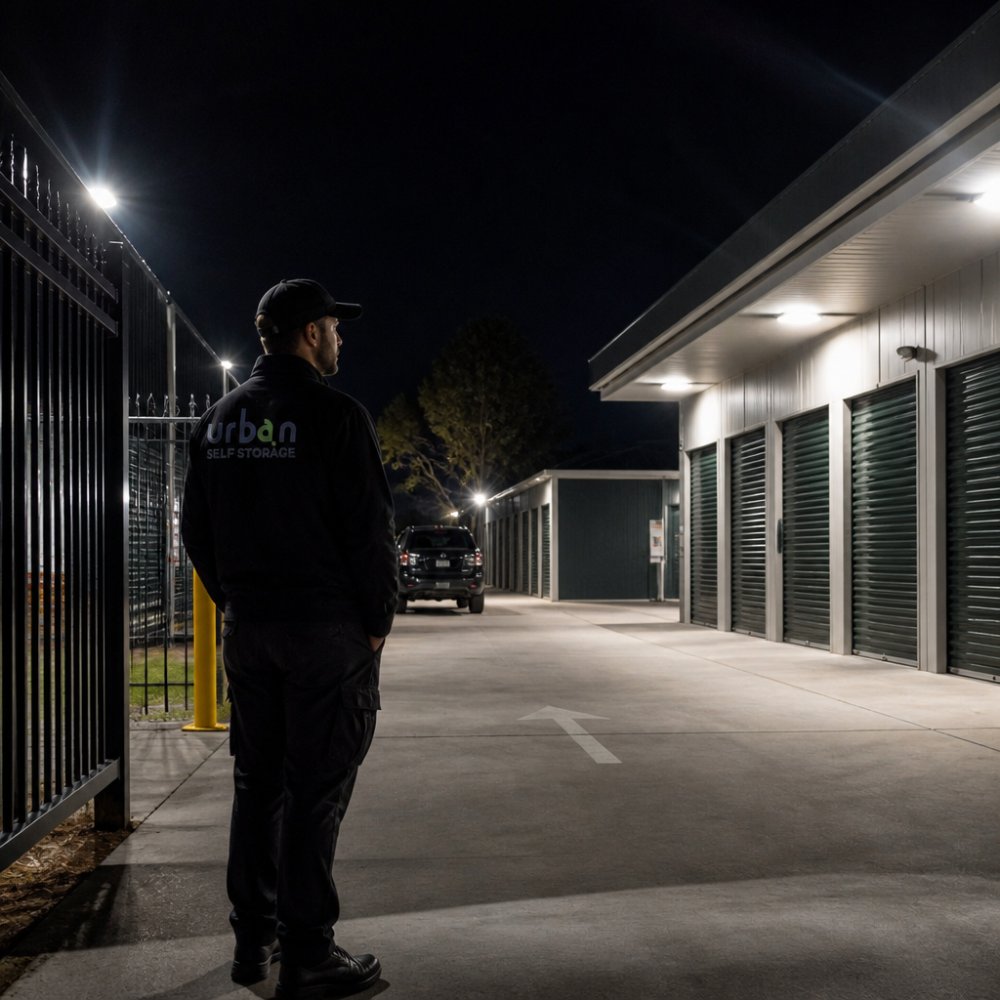
Lighting and sightlines are non-negotiable. A facility with inadequate lighting creates hiding spots and makes it harder for CCTV to capture clear footage. Look for motion-activated or sensor-based external lighting that illuminates car parks, driveways, and unit entrances. Wide, well-lit driveways with minimal blind spots mean you can see approaching vehicles or people from a distance. Narrow lanes between unit rows with poor lighting are a safety liability.
CCTV surveillance and remote monitoring during late hours serve dual purposes: deterrence and evidence. Knowing cameras are recording discourages opportunistic theft or worse. If an incident occurs, recorded footage helps police investigate and provides you with documentation. Look for cameras covering entry points, corridors, car parks, and loading bays, not just the office or front gate. Ask whether the facility has live monitoring (someone watching screens in real-time) or recorded-only systems.
Emergency intercoms or direct contact systems let you reach facility management or security instantly if you feel unsafe. Some facilities offer panic buttons in car parks or near unit entrances. This is especially important if you’re working alone late at night and something feels wrong.
Individual unit alarms add another layer. If someone attempts to force your unit door while you’re inside, an alarm sounds and alerts the facility or a remote monitoring centre. This deters break-ins and gives you an emergency signal if you’re in distress.
Storage Unit Alarm Systems and Individual Unit Protection
Individually alarmed units mean each storage door is equipped with a motion or entry-triggered alarm. When someone opens your unit door without authorisation, an alarm sounds, either a local siren, a signal to the facility’s monitoring centre, or both. This creates a strong deterrent and immediate alert if a break-in is attempted.
There are two main alarm types: local alarms (loud siren at the unit that alerts nearby tenants and the intruder) and monitored alarms (silent alert sent to a remote monitoring centre, which can contact police). Monitored alarms are often preferred because they send a silent alert to a remote monitoring centre, which can then contact emergency services.
Book Online in 3 Minutes & Get 50% Off Instantly →
Ask whether the facility’s alarm system is monitored 24/7 and by which company.
Is It Safe to Visit a Storage Unit at Night?
Yes, it is safe to visit a storage unit at night, provided the facility has proper security infrastructure and you take sensible precautions. The safety equation depends on three factors: the facility’s design and security systems, the time of night, and your own behaviour.
What to Check Before Renting a Late-Night Access Unit
Before signing a lease for late night storage access, conduct a thorough security audit. Visit the facility at the time of day you’ll typically access it. If you need late-night access, visit at 9pm or later. This is the only way to assess actual lighting, traffic, and sightlines.
Frequently Asked Questions
What is PIN-code access and how does it work?
PIN-code access (also called keypad entry) allows tenants to enter the facility using a unique numeric code assigned to their account. When you arrive at the electronic gate or entry point, you enter your PIN on a keypad, which unlocks the gate or door. This system creates an audit trail, every access attempt is logged with the time and date, so the facility can verify who entered and when. PIN codes can be changed if compromised, and they’re more secure than physical keys because they can’t be lost or duplicated.
Do all storage facilities offer true 24/7 access?
No. Many facilities advertise ’24-hour access’ but actually restrict entry to set hours like 6 am to 9 pm. True 24/7 access means you can enter at any time, day or night, using electronic access systems like PIN codes or mobile app controls. Before renting a unit you plan to access after hours, confirm the actual access hours in writing. Some facilities offer 24/7 access only to certain unit types or locations within the property, so clarify the specific terms of your lease.
How does CCTV improve safety during late night visits?
CCTV surveillance cameras covering entry points, corridors, car parks, and loading areas deter criminal activity and provide recorded evidence if an incident occurs. Live or recorded 24/7 monitoring means someone is watching (or footage is reviewed regularly), creating accountability. Cameras with night vision or infrared capability capture clear footage in low light. When visiting at night, you benefit from the knowledge that your arrival, movements, and departure are documented, and help can be summoned quickly if needed through monitored systems.
What should I check before renting a storage unit I’ll access at night?
Visit the facility in person, ideally at the time of day you’ll typically access your unit. Check for: working external lighting in car parks and around unit entrances; clear sightlines with minimal blind spots; perimeter fencing in good condition; visible CCTV cameras covering key areas; a working intercom or emergency contact system; and confirmation of actual access hours (not just advertised 24/7 claims). Ask staff how the facility handles after-hours security monitoring and what happens if you encounter an issue during a late visit. Request photos or a video tour if you can’t visit in person.