
Table of Contents
- The Short Answer: Is 24/7 CCTV Worth the Extra Cost?
- Understanding Self Storage Security Features
- Basic Storage vs. CCTV-Monitored Storage: Feature Comparison
- How Common Are Storage Unit Break-Ins in Australia?
- Contents Insurance for Storage Units: Do You Really Need It?
- What to Look for When Choosing a Secure Storage Facility
- Frequently Asked Questions
Last Updated: September 25, 2026
The Short Answer: Is 24/7 CCTV Worth the Extra Cost?
Yes, 24/7 CCTV storage units are worth the premium for most people storing valuable items. Here’s why: break-and-enter incidents at storage facilities remain a genuine risk, and continuous recorded monitoring acts as both a deterrent and evidence source if theft occurs. The cost difference is modest, typically $5-15 per week more than basic storage, but the peace of mind and recovery potential justify it for items you can’t afford to lose.
That said, CCTV alone isn’t a complete security solution. The real value comes from facilities that combine 24/7 CCTV with other layers: PIN-coded electronic gate access, individually alarmed units, steel or concrete construction, perimeter fencing, and an on-site manager. Without these complementary features, CCTV is just a recording device, not a prevention system.
Understanding Self Storage Security Features
Self storage security isn’t one thing, it’s a combination of physical barriers, electronic controls, and monitoring systems working together. Most people focus only on CCTV, which is a mistake. The real protection comes from how these layers work together to create friction at every stage of a potential break-in.
Physical security forms the foundation. Perimeter fencing prevents casual access. Steel or concrete unit construction resists forced entry. Strong locks and hinges matter more than people realise. A unit with a flimsy door is worthless, regardless of how many cameras are watching it. However, physical barriers alone are slow to respond, a determined thief with tools can breach most doors within minutes. This is why physical security must be paired with detection and response systems.
Electronic access control adds accountability. PIN-coded gates mean only authorised users enter the facility. Entry logs create a digital record of who accessed the site and when. This serves two purposes: it deters casual theft (because entry is traceable) and it provides evidence if police need to investigate. When combined with 24/7 CCTV, you have both a record of who entered and visual proof of what they did. The combination is more powerful than either alone, a thief knows their entry is logged and recorded, which significantly raises the perceived risk of theft.
Individually alarmed units are the critical response layer. A door sensor or motion detector on each unit alerts staff instantly if someone forces entry. This is the difference between a thief having 30 minutes to work undisturbed and having 30 seconds before someone responds. Facilities without individual alarms rely entirely on CCTV footage reviewed after a theft is discovered, often days or weeks later. Alarms create real-time response, which is what actually stops theft in progress.
Monitoring systems vary widely in effectiveness. True 24/7 CCTV means continuous recording and live monitoring, not just daytime coverage or motion-activated clips. Some facilities record footage but don’t actively watch it, the cameras are a deterrent and evidence source, but not a prevention system. Others have real-time monitoring with rapid response protocols. The difference in theft prevention is substantial.
On-site management creates presence and accountability. A facility with staff present during business hours and weekends is inherently more secure than one with no staff on weekends. An on-site manager or security guard notices unusual activity, responds to alarms, and deters opportunistic theft simply by being visible. Many break-ins occur during low-staffing periods precisely because thieves know response time is slower.
Lighting is often overlooked but critical. Well-lit facilities deter thieves and improve CCTV footage quality. Dark corners and poorly lit corridors are security vulnerabilities. A thief is far more likely to target a dimly lit facility than a brightly lit one, and if a theft does occur, high-quality video footage is useless if the lighting was too poor to capture identifying details.
Book Online in 3 Minutes & Get 50% Off Instantly →
How these layers interact: The most secure facilities combine all these elements into a layered system. Perimeter fencing stops casual intruders. Electronic gate access logs who enters. Individual unit alarms detect forced entry. 24/7 CCTV records what happened. On-site staff respond in real time. Good lighting ensures footage is usable. Remove any one layer, and the system becomes significantly weaker. A facility with excellent CCTV but no individual alarms is still vulnerable to theft, the cameras will record the crime, but won’t prevent it. A facility with alarms but no CCTV can respond quickly but has no evidence for police or insurance claims.
When evaluating a facility, don’t ask “Does it have CCTV?” Ask instead: “How do all these systems work together to detect and respond to a break-in?” The answer reveals whether you’re choosing genuine security or just marketing.
Basic Storage vs. CCTV-Monitored Storage: Feature Comparison
| Feature | Basic Storage | CCTV-Monitored Storage |
|---|---|---|
| 24/7 CCTV Surveillance | No | Yes, continuous recording and monitoring |
| Electronic Gate Access | Typically not | PIN-coded or keycard entry |
| Individual Unit Alarms | No | Yes, motion/door sensors |
| On-Site Manager | Limited hours | On-site presence during business hours |
| Perimeter Fencing | Basic | Secure, well-maintained |
| Night Lighting | Standard | Enhanced security lighting |
| Footage Retention | N/A | 30+ days minimum |
| Cost Difference | Baseline | $5-15 per week additional |
| Risk Level | Moderate to high | Low to moderate |
The cost difference between basic and CCTV-monitored storage is modest. For most facilities, you’re paying a small premium for a substantial reduction in risk.
How Common Are Storage Unit Break-Ins in Australia?
Break-and-enter incidents at storage facilities are a real concern. Nationally, break-and-enter crime costs the Australian economy around $144 million annually, and storage facilities are common targets because they hold valuable items with minimal on-site presence.
Storage units are attractive to thieves for several reasons. They often contain electronics, tools, jewellery, and other items that are easy to sell. Many units sit undisturbed for weeks, giving thieves time to work. And some facilities have minimal security, making entry straightforward.
The exact rate of storage unit theft varies by location and facility. Urban areas with high property crime rates see more incidents. Facilities with poor security see significantly more break-ins than well-secured ones. This is why security features matter so much, they directly reduce your risk.
Contents Insurance for Storage Units: Do You Really Need It?
Contents insurance for storage units is essential, regardless of your facility’s security level. Here’s why: even the most secure facility can’t guarantee zero theft, and the financial impact of losing valuable items can be devastating. However, insurance is also the key to understanding whether paying extra for a high-security facility is actually worth it for your situation.
Standard home and contents insurance policies often exclude items stored off-premises. You need specific storage unit insurance to cover theft, damage, or loss while your belongings are in storage. This is a critical gap many people discover too late, they assume their home insurance covers their stored items, then find out it doesn’t when they need to make a claim.
Insurance serves two purposes, and the second one directly affects your CCTV decision. First, it protects your financial investment if something is stolen or damaged. Second, it incentivises you to choose a secure facility. Insurers offer better rates, sometimes significantly better, for facilities with strong security features like 24/7 CCTV, individual unit alarms, and electronic access control. This creates a market incentive for facilities to invest in security, and it also creates a financial incentive for you to choose them.
Book Online in 3 Minutes & Get 50% Off Instantly →
Here’s how to calculate whether CCTV premium is worth paying: Start by identifying the total value of items you’re storing. If you’re storing furniture, electronics, or tools worth several thousand dollars, the insurance premium difference between a basic facility and a CCTV-monitored facility can be substantial. A facility with poor security might be $5 per week cheaper to rent, but your insurance premium might be $20 per month higher because the insurer views it as higher-risk.
Ask your insurer these specific questions before choosing a facility:
- What security features does the facility need to have for full coverage?
- What’s the excess (deductible) amount?
- Are there item-specific exclusions?
- How quickly do you need to report a theft for a claim to be valid?
- Will you cover loss if the facility’s security was breached, or only if there’s evidence of forced entry?
- Do you offer a discount if the facility has 24/7 CCTV and individual unit alarms?
What to Look for When Choosing a Secure Storage Facility
Choosing a secure facility requires evaluating multiple factors. Don’t rely on marketing claims alone, ask specific questions and verify answers.
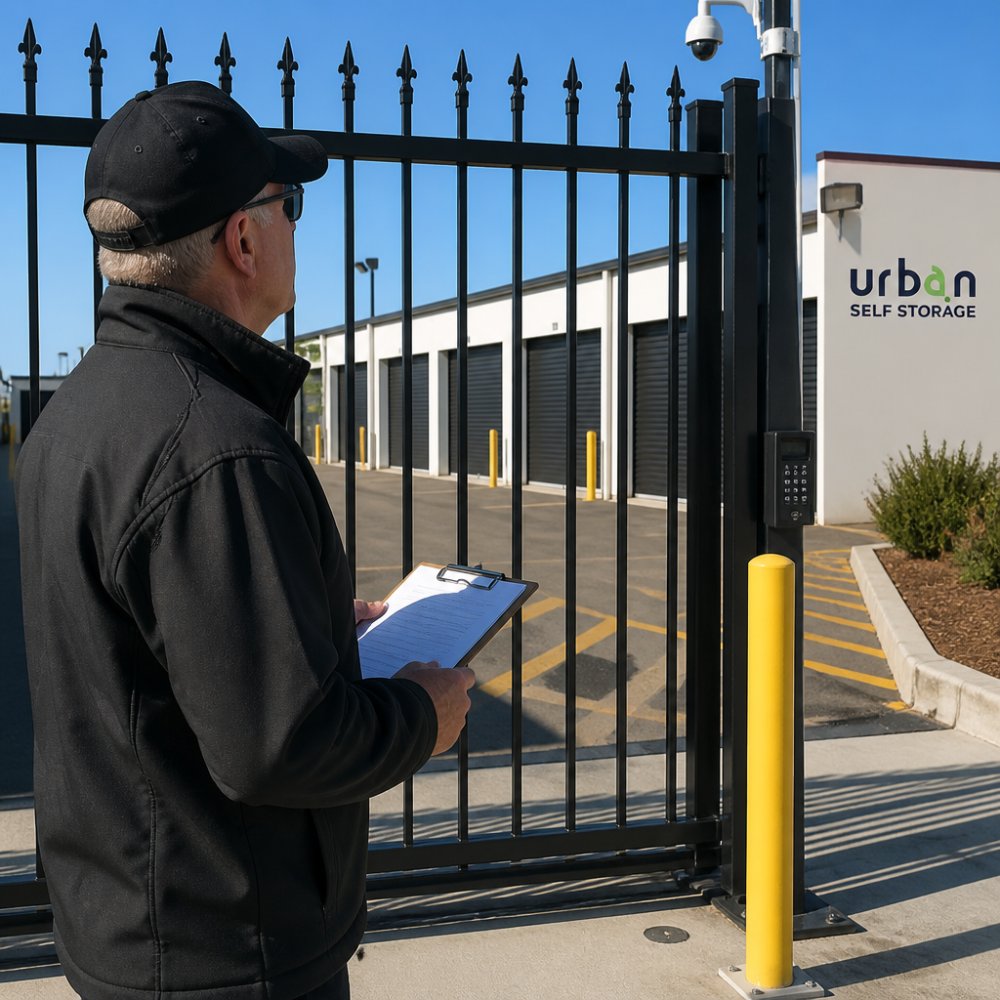
Check references.
Frequently Asked Questions
Does CCTV actually prevent storage unit break-ins?
24/7 CCTV acts as both a deterrent and an evidence source. Potential thieves typically avoid facilities with visible cameras and continuous recording because the risk of identification is high. If a break-in does occur, recorded footage helps identify the offender and supports insurance claims. However, CCTV is most effective when combined with other security measures like PIN-coded access, individually alarmed units, and perimeter fencing. No single security feature guarantees prevention, but layered security significantly reduces risk.
What security features should I look for in a storage facility in Australia?
Look for facilities offering PIN-coded electronic gates, individually alarmed units, 24/7 CCTV with continuous recording, steel or concrete unit construction, secure perimeter fencing, on-site management, and adequate lighting. Ask whether cameras are monitored live or recorded for later review. Verify that the facility maintains entry logs and can show proof of professional maintenance. The best facilities combine multiple layers rather than relying on one feature alone. Visit in person to assess cleanliness, lighting quality, and overall condition.
Does insurance cover theft from a storage unit?
Standard home or contents insurance rarely covers items in storage units, and many policies exclude storage altogether. You’ll typically need dedicated contents insurance for storage units, which covers theft, fire, water damage, and other specified risks. Premiums depend on the value of stored items and the facility’s security rating. Facilities with 24/7 CCTV, alarm systems, and on-site management often qualify for lower insurance rates because they’re considered lower-risk. Always check your policy wording and declare all stored items to your insurer.
Are storage units safer than keeping items at home?
Professional storage facilities with security features like 24/7 CCTV, alarm systems, and controlled access are generally safer than home storage for high-value items. Your home is a known target, whereas a secure facility disperses risk across many units with professional oversight. However, safety depends entirely on the facility’s security standard. A basic, unmanned storage site offers little advantage over home storage. Choose a facility with on-site management, continuous surveillance, and individually alarmed units to ensure your belongings receive genuine protection.