
Table of Contents
- Why Self Storage in Bunbury Makes Sense for Your Situation
- Self Storage Unit Sizes Guide: Finding Your Perfect Fit
- Short-Term vs Long-Term Storage: Which Works for You
- Packing Tips for Storage Units: Maximise Space and Protect Your Belongings
- Security Features That Actually Protect Your Belongings
- Flexible Rental Agreements and Access Options
- Storage Solutions for Vehicles, Caravans, and Boats
- Conclusion
Last Updated: August 29, 2026
Why Self Storage in Bunbury Makes Sense for Your Situation
Self storage bunbury solutions have become essential for residents managing life transitions, downsizing, or temporary space constraints. Whether you’re renovating your home, relocating interstate, or running a growing business, self storage offers flexibility without the commitment of larger commercial leases.
At Urban Self Storage, we’ve worked with thousands of customers across Western Australia facing similar situations: homeowners storing furniture during renovations, tradespeople keeping tools accessible, and small business owners managing seasonal inventory spikes. The pattern is consistent, people choose self storage when they need control, security, and convenience without overhead.
Self Storage Unit Sizes Guide: Finding Your Perfect Fit
Choosing the wrong unit size wastes money. Too small and you’re paying for overflow storage elsewhere. Too large and you’re paying for empty space. The sweet spot depends on what you’re storing and how long you’re keeping it.
Small Units for Personal Items and Seasonal Goods
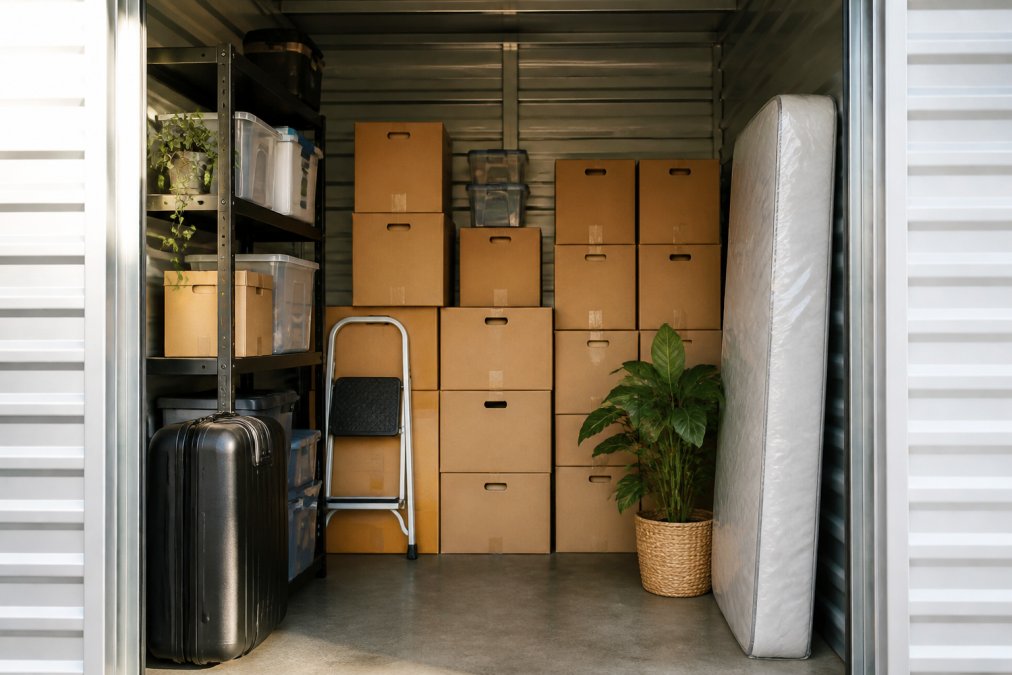
Small units typically measure between 3 and 6 cubic metres, ideal for storing seasonal items, personal collections, or overflow from a single room. A small unit holds roughly 50-80 standard moving boxes, or a single lounge suite plus a few storage boxes.
Small units work best for seasonal decorations, off-season clothing, personal collections, items from a single bedroom, or temporary storage during short renovations. The advantage is cost efficiency, you’re not paying for unused space. The limitation is obvious: if your needs grow, you’ll quickly outgrow the unit.
Medium Units for Furniture and Home Contents
Medium units range from 6 to 12 cubic metres and are the most common size for residential storage during home renovations or relocations. A 9-cubic-metre unit holds the furniture from a typical three-bedroom home plus several boxes of personal items, with room to move around and access items from multiple sides.
Medium units accommodate complete bedroom furniture sets, dining tables, lounge suites, kitchen appliances, contents of a small to medium-sized home, business inventory for small e-commerce operations, and tools for tradespeople. This size suits customers needing flexibility without paying for massive space.
Large Units for Business Stock and Equipment
Large units exceed 12 cubic metres, often reaching 18-24 cubic metres or more. These suit businesses with significant inventory, contractors with extensive tool collections, or families storing the contents of a large home.
A 15-cubic-metre unit can hold the entire contents of a three-bedroom home with room to spare, or a significant portion of small business inventory. The trade-off is obvious: larger units cost more monthly, but for businesses, the flexibility often beats committing to a commercial lease with long notice periods and fixed-term contracts.
Short-Term vs Long-Term Storage: Which Works for You
Duration changes everything about your storage decision. Short-term storage (under six months) suits temporary situations like renovations, relocations, or life transitions. You’re optimising for flexibility and quick access rather than cost per month.
Long-term storage (six months or longer) shifts the equation. A unit costing $150 monthly becomes $900 over six months, $1,800 over a year. At this point, you’re thinking about inventory management, climate control for sensitive items, and whether everything in the unit still serves a purpose.
Short-term renters often keep items loosely organised. Long-term renters should question whether they actually need items stored for extended periods. Urban Self Storage offers flexible rental agreements for both scenarios without forcing annual contracts, though longer-term discounts typically exist.
Packing Tips for Storage Units: Maximise Space and Protect Your Belongings
How you pack determines whether you waste money on unused space or retrieve damaged items. The difference between amateur and efficient packing is significant.

Start with a principle: vertical stacking is your friend, but weight distribution matters. Heavy items go low, lighter items go high, fragile items get protected. Use sturdy boxes, leave small gaps between stacked boxes for air circulation, don’t overfill boxes, use uniform box sizes when possible, and keep pathways clear for access.
Wrap sofas and chairs in blankets or furniture pads. Remove table legs if possible to save space and reduce damage. Store mattresses upright, not flat, to prevent moisture accumulation.
Creating an Inventory and Labelling System
An inventory system separates organised storage from chaos. A simple spreadsheet works: box number, contents, location in unit. Or use a photo-based system: photograph box contents before sealing, label the box with a number, and keep photos on your phone.
Label boxes on multiple sides, top, front, and at least one other side. Use clear, legible labels. "Bedroom stuff" is useless; "Bedroom, winter clothes, bedding, pillows" tells you what’s inside without opening it. For long-term storage, a detailed inventory prevents forgetting what you stored and saves hours searching for items.
Protecting Furniture and Fragile Items
Wrap wooden furniture in blankets or furniture pads, not plastic, which traps moisture and encourages mildew (peer-reviewed research). Wrap glass and ceramics individually in kraft paper, then place wrapped items in boxes with padding between them. Don’t stack heavy items on top of fragile boxes.
For electronics, ask about climate-controlled units. Temperature and humidity fluctuations damage computers, televisions, and sensitive equipment. For artwork, mirrors, and framed items, stand them upright against walls rather than stacking them.
Security Features That Actually Protect Your Belongings
Real security combines multiple layers. CCTV is one layer. Access control is another. Physical barriers matter. Staff presence during business hours adds accountability.
Urban Self Storage operates with advanced 24/7 CCTV surveillance across all facilities, monitoring entry and exit points, common areas, and drive-up access. Your unit is secured by a high-security padlock you provide or the facility supplies. CCTV protects against external threats and monitors access but doesn’t prevent damage from poor packing or environmental factors.
Beyond cameras, ask about access control systems, perimeter security, lighting, and staff presence. For high-value items, climate control prevents damage from temperature and humidity fluctuations. Storage insurance is worth considering for valuable items, standard facility insurance typically covers the facility itself, not individual customer items.
Flexible Rental Agreements and Access Options
Flexibility is why people choose self storage. You don’t want to commit to a two-year lease when you might only need storage for three months.
Flexible rental agreements mean month-to-month terms with no long-term contract, no lock-in periods, and simple cancellation. Access options vary by facility. Some offer 24/7 access; others have restricted hours, typically 6 AM to 10 PM. Restricted hours are less convenient but provide better security.
For businesses needing frequent access, 24/7 access is essential. For residential customers storing seasonal items, restricted hours are usually fine. Urban Self Storage provides flexible access options accommodating both scenarios.
Read rental agreements before signing. Look for monthly rate and introductory discounts, cancellation terms, access hours, what’s included, and liability limits.
Storage Solutions for Vehicles, Caravans, and Boats
Vehicle storage is a different category from household storage. Vehicles need protection from weather, security against theft, and sometimes space for regular access.
Caravan storage is the most common vehicle storage need. Before booking, confirm the unit accommodates your caravan’s dimensions, width matters more than length. Measure your caravan, then measure the unit. Don’t estimate.
Boat storage follows similar logic. Boats need protection from UV damage, moisture, and theft. Indoor storage is better than outdoor but more expensive. Outdoor storage with a cover is cheaper and acceptable for many situations.
For vehicle storage, ask about drive-up access, height clearance, insurance requirements, and maintenance access. Vehicle storage typically costs more than household storage because it requires larger units and more security, but for seasonal users, it’s cheaper than paying for parking or driveway space at home.
Self storage in Bunbury works best when you understand what you’re storing, how long you’ll need the space, and what security and access features matter for your situation. Urban Self Storage has helped over 5,000 customers across Western Australia find the right storage solution (bbb.org). Whether you’re storing furniture during renovation, securing business inventory, or protecting a caravan during off-season, the team understands the practicalities. Book online now to check available unit sizes, confirm access options, and secure your storage with transparent pricing and flexible terms that adapt to your timeline.
Frequently Asked Questions
Q: How do I calculate the right storage unit size for my needs?
A: Start by listing what you're storing: furniture, boxes, appliances, or vehicles. A small unit (around 3×2 metres) suits personal items and seasonal goods. Medium units (5×3 metres) fit a one-bedroom home's contents. Large units (10×3 metres or bigger) work for business inventory or multiple rooms. Visit the facility to see units in person before committing, or use a storage calculator on the Urban Self Storage website to estimate your space.
Q: What's the difference between short-term and long-term self storage?
A: Short-term storage typically suits renovations, relocations, or temporary situations lasting weeks to three months. Long-term storage works for seasonal items, business stock, or vehicle storage lasting months or years. Short-term vs long-term storage affects your rental agreement flexibility and pricing structure. Urban Self Storage offers flexible lease terms for both, with no lock-in contracts, so you can choose what suits your timeline.
Q: Are there really hidden fees, or is the pricing transparent?
A: Legitimate storage facilities should clearly state rental costs, deposit requirements, and any access fees upfront. Urban Self Storage provides transparent pricing on its website with no surprise charges. Short-term rentals don't force you into long contracts, and access to your unit remains available without additional hourly or daily fees. Always confirm the rental agreement details before signing.
Q: Can I store my caravan or boat at a storage facility in Bunbury?
A: Yes. Many facilities, including Urban Self Storage, offer dedicated vehicle and boat storage options with secure, drive-up access. Caravans, boats, and jet skis require larger units with high ceilings and reinforced access points. Confirm that the facility can accommodate your vehicle's dimensions and has appropriate security features like CCTV surveillance and padlock security for outdoor storage.
This article was written using GrandRanker