
Last Updated: November 16, 2026
Quick Summary
To pack furniture for self storage without damage, clean and dry every piece completely, then pad corners and flat surfaces before covering with breathable materials such as furniture blankets or cotton sheets. Never seal timber or upholstery in plastic, because trapped moisture causes mould, warping and lifted finishes.
- Dry all furniture for at least a full day before wrapping anything.
- Bag loose hardware, label it and tape it to the piece it belongs to.
- Pad first, then cover: padding absorbs impact while the cover holds it in place.
- Store mattresses flat or on their side, never bent, on a pallet off concrete.
- Load heaviest items at the back and keep flat items upright, never flat under load.
Table of Contents
- Preparing Furniture Before It Leaves the House
- How to Disassemble Furniture for Storage
- How to Wrap Furniture for Storage: Materials and Methods
- Material-Specific Packing for Timber, Upholstered and Glass Furniture
- How to Store a Mattress in a Storage Unit
- How to Organise a Storage Unit with a Measured Loading Plan
- Moisture Control and Long-Term Storage Checks
- Booking Your Furniture Storage Unit
- Frequently Asked Questions
Preparing Furniture Before It Leaves the House
How you pack furniture for self storage starts well before you hire a unit. If you want to know how to pack furniture for self storage without damage, the first job is to clean and dry every piece, then record what you have. Dirt traps moisture against surfaces, and moisture is what causes mould, warping and that musty smell you cannot get rid of later.
Cleaning and drying every surface
Wipe down timber, laminate and painted surfaces with a damp cloth and a mild cleaner. Then dry them completely. Do not skip this step. Trapped dust and grime hold damp against the finish.
- Vacuum upholstery and let it air dry fully
- Clean under drawers and behind headboards
- Dry everything for at least a full day before wrapping
- Never wrap furniture that is still damp
Hardware bags and an inventory list
Remove loose hardware, bag it, and tape the bag to the piece it belongs to. A common mistake is putting screws in a drawer and then forgetting which drawer. Label each bag clearly.
Write an inventory list as you go. If you want a deeper system for tracking what is inside the unit, our guide on how to manage inventory in a storage unit walks you through it.
How to Disassemble Furniture for Storage
Disassembly protects joints and saves space, but only when you do it properly. Remove legs, shelves and handles where they come off easily. Keep every screw, bolt and bracket in one labelled bag per item.
- Take a photo before you dismantle anything
- Tape hardware bags to the underside of the piece
- Store screws in a sealed bag, not loose
- Do not force stubborn fittings
Watch out: overtightening or forcing a fitting can strip the thread, and that damage is permanent. If a piece will not come apart easily, leave it assembled and wrap it instead.
How to Wrap Furniture for Storage: Materials and Methods
Wrapping is where most damage happens, and it is also where most people cut corners. The right materials protect surfaces from scratches, dust and moisture. The wrong ones trap damp or leave marks that are far harder to fix than the original risk.
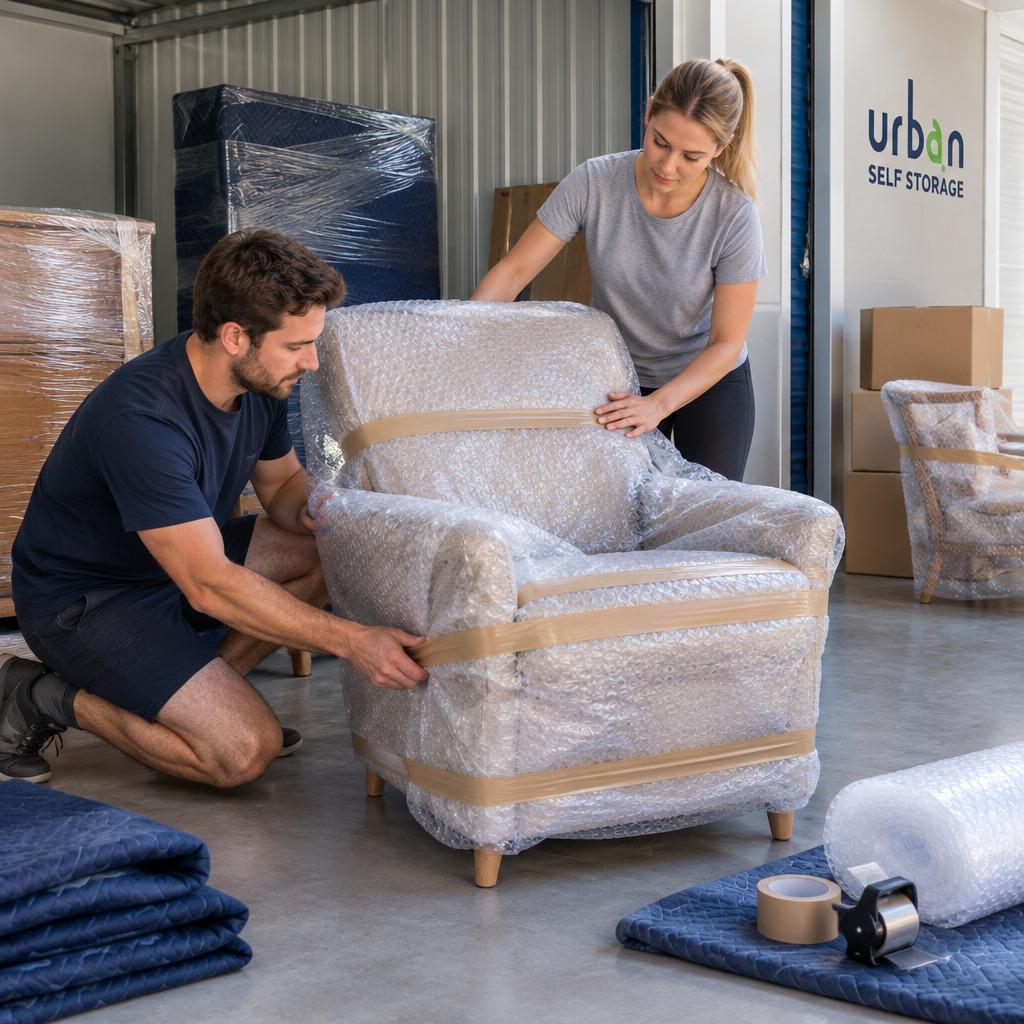
Choosing the right wrapping material for each surface
Not every cover suits every piece. A common pattern among people who damage furniture in storage is using one material everywhere because it was on hand. Match the wrap to the surface instead.
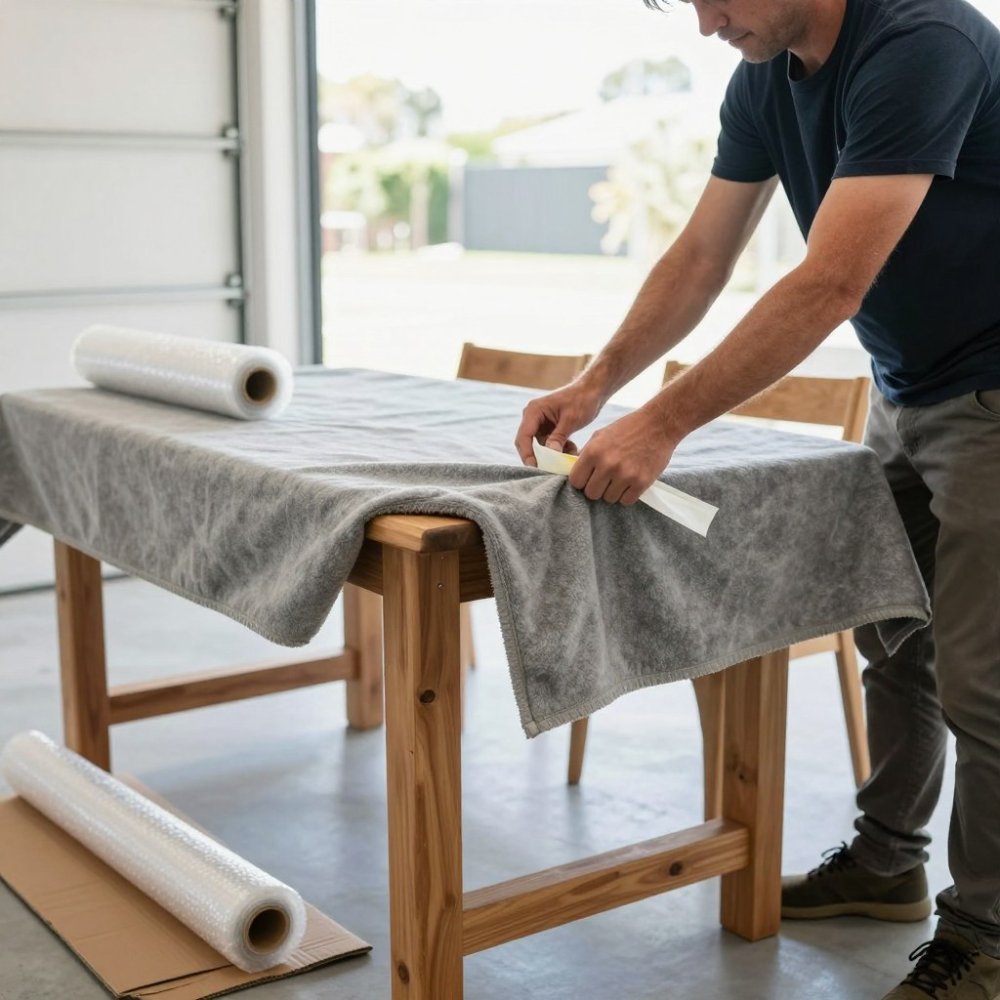
- Furniture blankets and moving pads: Suited to timber, painted and lacquered surfaces. They cushion corners and edges and let the piece breathe. Secure them with tape applied to the blanket, never to the furniture itself.
- Bubble wrap: Good for glass, mirrors, ceramics and hard corners. Use it as padding under a blanket rather than as the only layer on timber, because the plastic can trap condensation against the finish.
- Cardboard sheets: Useful for flat timber tops, table leaves and the fronts of cabinets. Cardboard is breathable and cheap, but it loses rigidity if it gets damp, so keep it off concrete.
- Cotton sheets and breathable covers: Suitable for upholstery and mattresses. They keep dust off without sealing in moisture.
A practical rule is to pad first, then cover. The padding absorbs impact; the cover holds the padding in place and keeps dust off.
Protecting corners, edges and delicate surfaces
Corners take the first hit in any move. Pad them before anything else.
- Wrap corners with bubble wrap or foam and tape firmly, but tape onto the padding, not the furniture
- Cover flat timber tops with cardboard sheets cut to size
- Use furniture blankets or pads over the top of the padding
- Secure with packing tape, but never tape directly onto timber, paint or veneer
Watch out: packing tape applied directly to a varnished or painted surface can lift the finish when it is removed months later. The adhesive bonds more firmly over time, and the damage often only appears at unpacking.
Wrapping mistakes that cause scratches and mould
The biggest mistake is sealing furniture in plastic. Plastic traps moisture, and that is exactly what causes mould in a storage unit.
Other common errors:
- Taping directly to a varnished surface, which lifts the finish on removal
- Wrapping glass with the rest of the piece instead of separately
- Skipping padding on edges because it “looks fine”
- Pulling stretch wrap too tight, which leaves pressure marks on upholstery and soft timber
- Reusing dirty blankets that carry grit against the surface
If a piece has a high-gloss finish, a light dust cover over the padding is usually enough. The goal is protection without trapping air against the surface.
Match the wrap to the surface rather than using one material everywhere.
| Material | Best for | Key difference |
|---|---|---|
| Furniture blankets and moving pads | Timber, painted and lacquered surfaces | Cushion corners and edges, let the piece breathe |
| Bubble wrap | Glass, mirrors, ceramics and hard corners | Padding under a blanket, not the only layer on timber |
| Cardboard sheets | Flat timber tops, table leaves, cabinet fronts | Breathable and cheap, loses rigidity if damp |
| Cotton sheets and breathable covers | Upholstery and mattresses | Keep dust off without sealing in moisture |
| Stretch plastic wrap | Holding blankets in place, wrapping drawer stacks | Never the only layer against timber or upholstery |
Material-Specific Packing for Timber, Upholstered and Glass Furniture
Different materials need different handling. Treating every piece the same is how damage slips through.
Timber and wood furniture: Clean and dry it fully, then apply a light coat of furniture polish before wrapping.
Upholstered furniture: Vacuum thoroughly, then cover with a breathable sheet or cover. Remove cushions and store them separately in sturdy boxes.
Glass components: Remove glass shelves and tabletops where possible.
How to Store a Mattress in a Storage Unit
A mattress needs more care than most people give it. Store it flat or on its side, never bent, and never directly on a concrete floor.
Keep mattresses off the floor with a pallet or cardboard base. For the full step-by-step, read our guide on protecting your mattress in a self storage unit, which covers cleaning, wrapping and placement in detail.
How to Organise a Storage Unit with a Measured Loading Plan
A measured loading plan turns a cramped unit into usable space. Most people load by eye and then discover the unit is full before the furniture is in. A simple floor plan and a fixed sequence prevent that.
Sketch a floor plan before you load
Before you lift anything, measure the unit and the largest pieces. On a sheet of paper, draw the unit to scale and mark the door, any pillars and the ceiling height.
A workable layout usually follows three zones:
- Back third: large, heavy and rarely accessed items, such as wardrobes, bed frames and large cabinets, placed along the back wall and side walls
- Middle third: medium items and stacked boxes, with heavy boxes at the bottom and light ones on top
- Front third: frequently accessed items, an essentials box and a clear standing area near the door
Leave a clear walkway down the middle or along one side. Without it, you will be climbing over furniture to reach anything at the back, and climbing is how items get knocked and scratched.
Load in a fixed sequence
A sequence keeps the plan intact as you load. A sequence like the following keeps the plan intact:
- Place pallets or cardboard on the floor first so nothing sits directly on concrete.
- Load the largest, heaviest items at the back and along the walls, standing them upright where possible.
- Stand flat items, table tops, mirrors, glass panels, upright against a wall or between padded furniture, never flat under other load.
- Stack boxes in uniform columns, heavy at the bottom, and keep the stack height below the ceiling by at least a hand’s width for airflow.
- Fill gaps with smaller items, cushions and rolled rugs, but do not wedge items so tightly that they press against a finished surface.
- Place the essentials box and any frequently used items last, near the door.
Watch out: stacking heavy boxes on upholstered furniture or on glass-topped pieces is a common cause of crushed frames and cracked tops. If a piece cannot take weight, do not use it as a shelf.
Use the vertical space and the gaps
Usable space in a storage unit is three-dimensional, not just floor area. Shelving units, stacked uniform boxes and upright flat items make use of height without blocking access. Keep the heaviest items low and the lightest high, and leave a small gap between items and the walls so air can move.
If you are unsure what size unit your furniture needs, our guide on choosing the right storage unit size helps you match the unit to your load before you book.
Moisture Control and Long-Term Storage Checks
Moisture is the number one enemy of stored furniture. Concrete floors and changing temperatures create condensation, and condensation leads to mould and warping.
- Keep everything off the floor using pallets or cardboard
- Leave a small gap between items and the walls for airflow
- Use breathable covers, not plastic sheeting
- Visit every few months to check for damp or pests
- Wipe down and re-cover anything that looks affected
For long-term storage, a regular check keeps small problems from becoming expensive ones. Our guide on maintaining your items during long-term storage sets out a simple routine you can follow.
Booking Your Furniture Storage Unit
Once your furniture is clean, wrapped and planned, the last step is choosing the right unit.
When you are ready, you can browse our furniture storage options and see which unit suits your load.
Packing furniture for storage is not complicated, but it rewards patience. Clean every piece, wrap it properly, plan your loading and keep moisture out.
Urban Self Storage makes the storage side simple.
Frequently Asked Questions
How do you prepare furniture for self storage?
Clean and dry every surface first, because dust and moisture trapped under covers become mould. Remove drawers, cushions and loose shelves, and bag all screws and bolts with a label. Wipe timber with a dry cloth rather than a wet one, vacuum upholstery, then wrap each piece before it leaves the house. Write a simple inventory list as you go so you know what is in each unit and where it sits.
Should furniture be covered when stored?
Cover it, but choose breathable covers such as cotton sheets or purpose-made furniture covers rather than sealed plastic. Plastic traps condensation against the surface, which is how mould and warping start in a closed storage unit. Leave a small gap at the base of each cover so air can move, and avoid stacking heavy boxes directly against upholstered pieces.
Can you store a mattress upright?
Yes, standing a mattress on its long edge is usually better than laying it flat, because flat storage compresses the filling and traps moisture underneath. Wrap it in a breathable mattress bag, tape the seams, and lean it against a wall or a sturdy stack so it cannot fall. Avoid bending or folding a mattress, and never rest heavy items on top of it.
How do you prevent mould on furniture in storage?
Keep everything dry before it goes in, use breathable covers, and leave a clear walkway so air can circulate around each piece. Place furniture on pallets or timber battens rather than directly on the concrete floor, and keep the unit sealed against rain. Check your items every few months, especially through winter, and wipe away any condensation you find before it becomes a problem.
