
Table of Content
- How Storage Facility Security Protects Your Belongings
- Self Storage Security Features That Matter
- How to Secure a Storage Unit Beyond Facility Features
- On-Site Management and Access Control Systems
- Storage Unit Insurance Requirements and Protection
- Assessing Security During Your Facility Walkthrough
- Climate Control and Fire Suppression as Security Layers
- Frequently Asked Questions
Last Updated: September 24, 2026
How Storage Facility Security Protects Your Belongings
When storing furniture, business inventory, or a caravan, your belongings’ security is paramount. This guide explains what genuinely protects your possessions and how to assess whether a facility’s security measures are real or marketing.
Fortunately, modern facilities combine multiple layers of security to keep your property safe. Understanding these protections helps you make an informed choice.
Self Storage Security Features That Matter
The foundation of storage facility security rests on features you can see and verify. These aren’t optional extras, they’re the core infrastructure that separates secure facilities from those that cut corners.
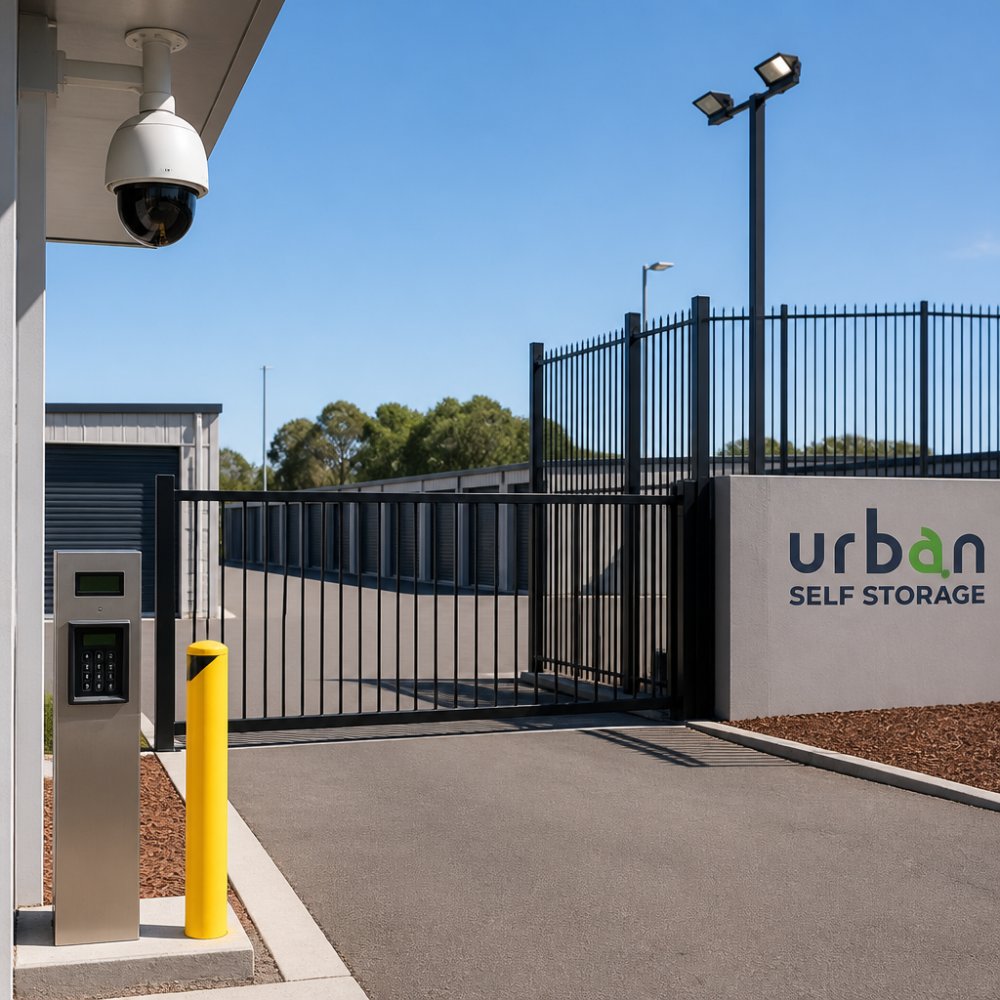
24/7 CCTV Surveillance and Digital Monitoring
CCTV surveillance must be actively monitored, not just recording. Real 24/7 monitoring means on-site staff or a remote service watches for suspicious activity.
The facility must store footage securely and retain it for a reasonable period.
Electronic Gate Access and PIN Code Entry
Electronic gates and PIN codes control entry and track access. Strength depends on code management. Modern systems restrict entry by time, allow temporary guest codes, and generate detailed logs showing who accessed the facility and when.
Physical Barriers and Perimeter Fencing
Solid, well-maintained perimeter fencing combined with secure gates creates a genuine barrier. Well-lit areas deter theft; dark corners create opportunities. A secure facility invests in motion-activated or continuous lighting to eliminate shadows.
How to Secure a Storage Unit Beyond Facility Features
Facility-level security creates the foundation, but your individual unit needs additional protection. This is where your responsibility begins.
Individual Unit Alarms and Motion-Activated Lighting
Optional alarm systems detect door opening and alert you and management. Motion-activated lighting draws attention if someone accesses your unit. Effectiveness depends on monitoring.
Locks, Barriers, and Access Logs
A high-quality padlock rated for outdoor use resists cutting and picking. Some facilities require specific lock types, which improves security by ensuring all units meet a minimum standard. Access logs track every entry, deter internal theft, and provide evidence if disputes arise.
On-Site Management and Access Control Systems
On-site management responds to problems in real time, notices unusual activity, and enforces security protocols. A well-managed facility regularly audits access logs, updates codes when tenants leave, and trains staff. Observe whether staff greet visitors and verify authorisation, this indicates genuine security commitment.
Storage Unit Insurance Requirements and Protection
Storage facility security and insurance are complementary but legally distinct. Security measures do not eliminate your need for insurance.
How Facility Liability Works in Law
Under Australian Consumer Law and state legislation, storage facilities have a duty of care but with limits. Most include liability caps in leases. This reflects the legal reality that no security system is absolute. You must manage risk through insurance.
What Your Insurance Must Cover
Your personal contents insurance should explicitly cover off-premises storage. Standard policies often exclude or limit such coverage. Before signing a lease, confirm with your insurer whether storage is covered, claim limits, covered events, and your excess. Specialist storage insurance is available if needed.
Book Online in 3 Minutes & Get 50% Off Instantly →
The Security-Insurance Partnership
Facility security prevents unauthorised access and documents activity; your insurance covers losses despite security. Together they create complete protection. When evaluating a facility, ask for its liability policy and specific liability cap.
Documenting Your Stored Items
Photograph or video-record items before storage. Keep receipts, serial numbers, and valuations. This documentation supports insurance claims and helps verify what was stored if disputes arise.
Assessing Security During Your Facility Walkthrough
A facility walkthrough verifies that security measures are genuine. Use this framework to evaluate each layer and identify gaps before committing to a lease.
Physical Perimeter and Access Control
Perimeter fencing: Is it intact, appropriate height, with secure posts? Is vegetation or debris piled against it?
CCTV Coverage and Digital Monitoring
Camera placement:
- Are cameras visible at the main entrance, gate, and throughout unit rows?
- Do cameras cover blind spots such as corners, side entrances, and the perimeter?
- Are cameras mounted high enough to prevent tampering or damage?
- Are camera lenses clean and unobstructed?
System specifications (ask facility staff):
- What is the resolution of the cameras (1080p, 4K)?
- How long is footage retained (typically 30-90 days)?
Does the facility store footage on-site or in a secure cloud system?”
Who has access to footage, and how do you request it if needed?
Is the system monitored 24/7 by on-site staff or a remote monitoring service?What happens if suspicious activity is detected (alert to staff, police notification)? - Digital monitoring systems:
- Does the facility use motion-detection or AI-powered alerts?
- Are access logs automatically generated and time-stamped?
- Can you access your own access logs online or through the facility office?
Lighting
Perimeter lighting:
- Is the entire perimeter lit at night? Walk the perimeter during your visit if possible.
- Are lights motion-activated or continuously on?
- Are there dark corners, shadows, or poorly lit corridors where someone could hide?
- Is lighting bright enough to identify faces on CCTV footage?
Unit row lighting:
- Are the aisles between unit rows adequately lit?
- Is lighting consistent, or are there patches of darkness?
- Are lights functional (check for burnt-out bulbs or non-functional fixtures)?
Unit Construction and Locks
Unit doors and frames:
- Examine a sample unit (ask the facility to show you an empty one).
- Is the door solid metal or reinforced, not hollow or flimsy?
- Is the door frame securely anchored to the unit structure?
- Does the door close and latch smoothly without gaps?
- Are hinges on the inside of the door (preventing removal from outside)?
Lock standards:
- What type of lock does the facility require or provide (padlock, cylinder lock, disc lock)?
- Is the lock rated for outdoor use and weather resistance?
- Does the facility allow you to use your own lock, or must you use theirs?
- If the facility provides locks, are they keyed differently for each unit, or do master keys exist?
Unit alarm options:
- Does the facility offer individual unit alarms?
- Are alarms monitored by staff or a professional service?
- What is the cost, and is it included in the rental or an add-on?
On-Site Management and Staff
Staff presence:
Book Online in 3 Minutes & Get 50% Off Instantly →
- Are staff members visible during your visit?
- What are the office hours, and is there after-hours emergency contact?
- Do staff greet visitors and ask who they are visiting?
- Do staff verify that visitors are authorised to access specific units?
Security protocols:
- Ask staff to explain the access procedure for a new tenant.
- How quickly can access be revoked if a lease ends or circumstances change?
- Are PIN codes changed between tenants, or are old codes deactivated?
- How are guest or temporary access codes issued and managed?
Maintenance and cleanliness:
- Is the facility well-maintained, with no broken equipment, graffiti, or debris?
- Are unit rows clean and free of clutter?
- Are common areas (office, corridors, parking) orderly and well-kept?
- A well-maintained facility suggests attention to detail across all operations, including security.
Environmental Controls and Fire Safety
Climate control (if offered):
- Are climate-controlled units separated from non-climate units?
- What temperature and humidity ranges are maintained?
- Is there a backup system if primary climate control fails?
- Are environmental sensors monitored, and are tenants alerted if conditions drift out of range?
Fire suppression:
- Are sprinkler systems visible and well-maintained?
- Are fire extinguishers present and accessible?
- Are fire alarms audible and functional?
- Are emergency exits clearly marked and unobstructed?
- Has the facility had a recent fire safety inspection (ask for documentation)?
Documentation and Transparency
Request written information:
- Ask for a copy of the facility’s security policy.
- Request details on CCTV retention, access logs, and how to file a security incident report.
- Ask for the facility’s liability policy and the specific liability cap in the lease.
- Request information on insurance requirements and recommendations.
- Ask whether the facility has had any security incidents in the past 12 months (a facility should be transparent about this).
Red flags:
- Facility staff cannot explain security procedures clearly.
- CCTV cameras are visible but staff admit they are not monitored.
- Liability limits are vague or the facility refuses to disclose them.
- The facility pressures you to sign without allowing time to review the lease.
- Security features appear neglected (broken cameras, non-functional gates, poor lighting).
- Staff are absent or inattentive during business hours.
Creating Your Inspection Record
Take notes or photographs during your walkthrough (with permission). Create a simple checklist comparing two or three facilities side by side. This structured comparison helps you identify which facility offers the most comprehensive security for your needs and budget.
Climate Control and Fire Suppression as Security Layers
Security extends beyond preventing theft and unauthorised access. Environmental controls protect your belongings from damage that undermines their value and usability.
Frequently Asked Questions
What security features should I look for in a self-storage facility?
Look for 24/7 CCTV surveillance with recorded footage, electronic gate access requiring PIN codes, on-site management during business hours, individual unit alarms, motion-activated lighting, perimeter fencing, and cybersecurity measures protecting access logs. Ask the facility to show you their monitoring systems and explain how they respond to alerts. Request information about their access control protocols and how they track entry and exit times. A facility that openly demonstrates these features gives you confidence in their security protocols.
How does 24/7 monitoring protect my stored belongings?
Continuous CCTV monitoring deters theft and vandalism by creating a visible deterrent and recording all activity. Digital monitoring systems log every entry and exit, creating accountability. If an incident occurs, recorded footage provides evidence for insurance claims and helps identify unauthorised access. On-site management or remote monitoring ensures someone responds to motion-triggered alerts. This layered approach means your belongings are protected even during hours when the facility is unstaffed, giving you peace of mind that any suspicious activity is captured and documented.
What steps can I take to add extra security to my storage unit?
Beyond facility features, use a high-quality padlock or cylinder lock on your unit door. Create an inventory list with photos of valuable items and store it separately. Avoid storing items that reveal what’s inside through visible labelling. Consider using climate-controlled units to protect against environmental damage that could mask security breaches. Keep your access PIN confidential and change it if you suspect compromise. For business stock or high-value items, request a unit in a well-lit area near the facility entrance. Document the condition of your unit with photos before and after storage, and maintain regular access logs of when you visit.
Do I need storage unit insurance, and what does it cover?
Storage unit insurance requirements vary depending on your facility and personal circumstances. Most facilities require tenants to carry insurance or sign liability waivers. Standard renters or home insurance often excludes storage units, so check your policy. Dedicated storage insurance typically covers theft, vandalism, fire, and weather damage. Review what your facility’s security protocols cover versus what remains your responsibility. Insurance limitations often exclude damage from poor packing, environmental neglect, or items stored against facility rules. Explore coverage gaps with your insurer and the facility to understand your actual protection level and choose appropriate coverage for your stored items.