
Table of Contents
- Why Furniture Storage During Renovation Matters
- How to Pack Furniture for Storage
- Climate Control and Moisture Prevention
- Short-Term Storage Options for Renovation Projects
- How to Choose a Secure Storage Facility
- Labelling, Inventory, and Pest Prevention
- Storage Insurance and Damage Mitigation
- Frequently Asked Questions
Last Updated: September 20, 2026
Why Furniture Storage During Renovation Matters
Home renovations are stressful, and the last thing you need is worrying about whether your furniture will survive the dust, debris, and chaos when you store furniture during renovation.
When you store furniture during renovation, you protect your belongings from damage, free up space for workers, and gain peace of mind.
Renovation sites generate constant dust, debris, and temperature swings that damage furniture without proper protection.
The solution is simple: move your furniture to a secure, climate-controlled facility. This keeps your belongings safe while your home gets the transformation it needs.
How to Pack Furniture for Storage
Correct packing prevents scratches, dents, warping, and broken pieces.
Furniture-Specific Disassembly and Preparation
Disassembly is essential to prevent warping, sagging, or stress fractures in assembled furniture.
Beds and mattresses:
- Disassemble bed frames completely to prevent warping and allow air circulation.
- Store mattresses vertically or on a raised surface (never flat or on the ground).
- Wrap in breathable mattress protectors, not plastic, to prevent mould.
- Store box springs separately from mattresses.
Sofas and upholstered seating:
- Remove cushions and store separately to prevent indentation.
- Disassemble removable legs and arms to reduce footprint and prevent stress fractures.
- Elevate legs using wooden blocks to prevent moisture absorption and allow air circulation.
- Never stack upholstered furniture.
Dining and wooden tables:
- Remove leaves and store separately to prevent warping.
- Disassemble legs from tabletops to prevent stress on joinery.
- Store tabletops vertically or on edge, never flat.
- Wrap legs and joinery separately.
Wardrobes and cabinets:
- Remove doors and store flat to prevent sag.
- Empty all contents completely.
- Disassemble shelves if possible to allow air circulation.
- Leave cabinet backs slightly open for ventilation.
Drawers and storage units:
- Remove all drawers and store separately to prevent swelling and sticking.
- Wrap individually to prevent moisture absorption.
- Store vertically to prevent warping.
Protecting Against Dust and Debris
Dust settles on every surface and works into crevices, making it hard to remove without damaging finishes.
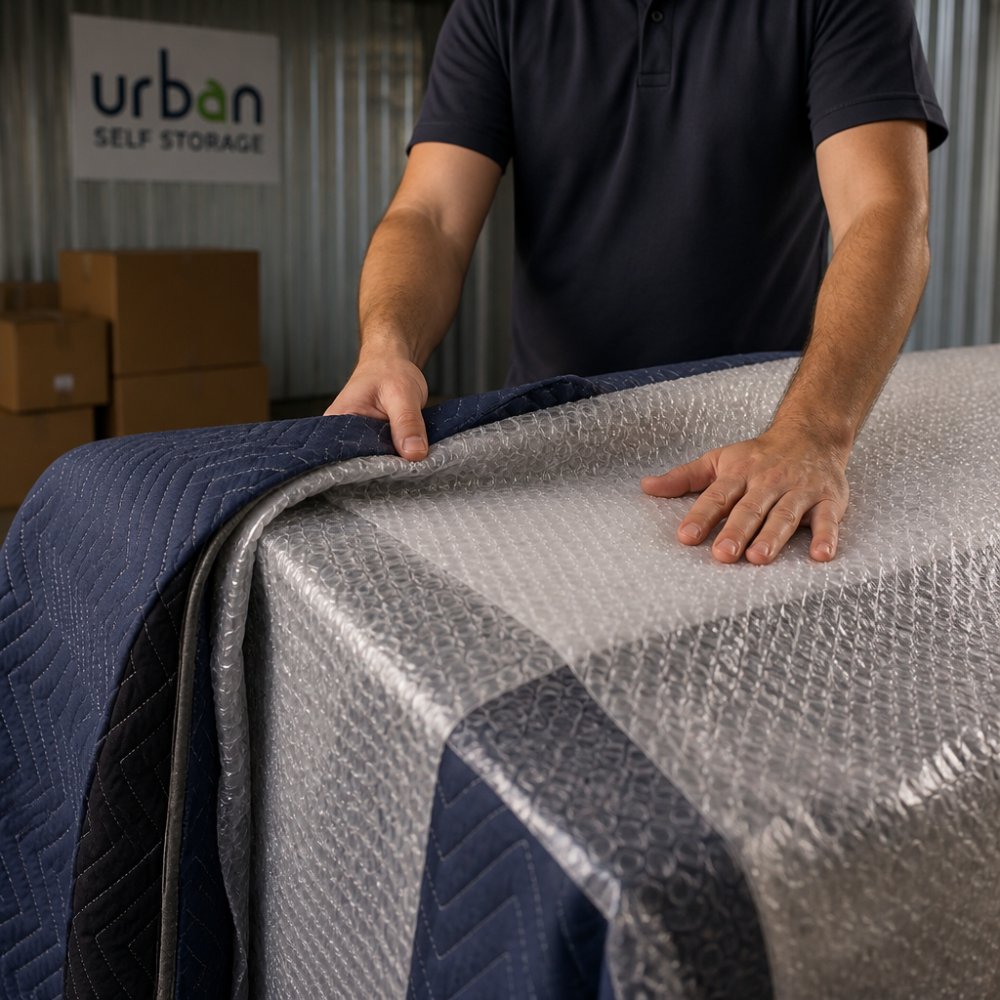
Cover all furniture with moving blankets to create a barrier against dust and impacts. Secure with soft tape that won’t damage finishes.
Use breathable furniture covers designed for storage on upholstered items to protect against dust whilst allowing air circulation.
For electronics and delicate surfaces: cover screens with soft cloth, remove and wrap glass shelves separately, protect marble or glass tabletops with cardboard, and store mirrors and glass artwork vertically.
Wrapping and Covering Techniques
Bubble wrap absorbs impacts and protects surfaces; shrink wrap keeps items compact and protected from moisture.
Climate Control and Moisture Prevention
Temperature swings and humidity cause wood warping, metal rusting, and mildew development. Climate-controlled storage prevents this damage.
Short-Term Storage Options for Renovation Projects
Your storage solution should match your renovation timeline, whether 3 months or a year.
How to Choose a Secure Storage Facility
Security matters, your furniture represents significant value and needs protection beyond a locked door.
Ask about storage insurance options.
Security Surveillance and Access Control
24/7 CCTV surveillance is standard for quality facilities, monitoring units and common areas constantly to deter theft and provide evidence if needed.
Unit Size Estimation and Space Maximisation
Choosing the right unit size saves money and prevents damage, too small causes cramping, too large wastes money.
Maximising space prevents damage:
- Stack items strategically, heavier pieces on bottom
- Use vertical space, stack chairs and tables carefully
- Keep pathways clear for air circulation
- Don’t block access to items you might need
Labelling, Inventory, and Pest Prevention
Chaos starts when you can’t find what you packed. A proper labelling system and inventory list prevent this.
Pest prevention requires attention:
- Don’t store food or organic materials
- Seal gaps in your unit
- Keep the unit clean, sweep regularly
- Use pest deterrents
- Check items periodically for signs of infestation
Storage Insurance and Damage Mitigation
Even with perfect packing and security, accidents happen. Storage insurance protects your investment. However, standard home and contents insurance often excludes items stored off-site.
Understanding the Insurance Gap
Your standard home and contents insurance policy likely contains an exclusion clause for items stored away from your primary residence. This means if your furniture is damaged, stolen, or destroyed while in a storage facility, your home insurer will not cover the loss.
This gap exists because:
- Home insurers assume items are in your home, under your supervision
- Off-site storage introduces variables the insurer cannot control (facility security, climate control, pest management)
- Storage facilities are considered commercial environments, outside the scope of residential home insurance
You need specific coverage to bridge it.
Storage-Specific Insurance Options
Dedicated storage insurance is available through two main channels:
-
Facility-provided insurance: Many storage facilities offer in-house insurance or partner with third-party insurers. This is convenient but often provides basic coverage only.
-
Standalone storage insurance policies: You can purchase a dedicated policy from your home insurer or a specialist provider. These policies are tailored to storage and offer higher limits. They typically cover:
- Theft and burglary
- Fire and smoke damage
- Water damage and flooding
- Weather-related damage
- Accidental damage (depending on the policy tier)
Action step: Contact your home insurer and explicitly ask: “Are items stored off-site in a commercial storage facility covered under my current policy?” Request the answer in writing. If the answer is no, ask about adding a storage rider or purchasing a standalone policy.
What Standard Storage Insurance Covers and Excludes
Before purchasing, understand the fine print. Most policies cover:
- Theft and break-in
- Fire and smoke
- Weather damage (wind, hail, flooding)
- Accidental damage during handling
Common exclusions include:
- Damage from poor packing or improper preparation
- Damage from lack of climate control (if you choose an uncontrolled unit)
- Pest damage or infestation
- Wear and tear, fading, or discolouration
- Damage from mould or mildew (unless caused by a covered peril like flooding)
- Damage from items stored without proper ventilation or air circulation
This is why proper packing, disassembly, and facility selection matter. They prevent damage that insurance won’t cover anyway.
Documentation for Insurance Claims
If damage occurs, your claim will be stronger if you can prove the value and condition of your furniture before storage.
Create a comprehensive inventory:
- List every item with description, dimensions, and estimated value
- Take high-resolution photos of each piece from multiple angles
- For valuable items (antique furniture, designer pieces), obtain a professional valuation
- Keep receipts, invoices, or bank statements showing original purchase price
- Store this documentation digitally (cloud backup) and in paper form
- Include photos of the packing process, showing how items were wrapped and protected
During storage:
- Take periodic photos (monthly or quarterly) if you have access to the unit
- Keep a record of any facility inspections or maintenance work
- Document the date you placed items in storage and expected retrieval date
- Note any special conditions (climate-controlled unit, pest control treatments applied)
Facility Liability and Your Protection
Reputable storage facilities carry public liability insurance. This protects you if the facility’s negligence causes damage, for example, a roof leak, fire due to faulty wiring, or theft due to inadequate security.
When choosing a facility, ask:
- “What is your liability insurance coverage amount?”
- “Are you willing to provide a certificate of currency showing your insurance is current?”
- “What happens if damage occurs due to your facility’s negligence?”
Reputable operators are transparent about liability and insurance.
Damage Mitigation: Prevention Is Cheaper Than Claims
The best insurance is prevention. Proper packing, climate control, and facility selection prevent most damage before it happens.
Prevention checklist:
- Disassemble furniture as outlined in the packing section
- Use breathable wrapping materials, not plastic
- Choose a climate-controlled facility
- Place moisture absorbers throughout the unit
- Ensure adequate air circulation around all items
- Inspect the facility in person before signing a lease
- Verify 24/7 CCTV surveillance and security protocols
- Keep the unit clean and free of food or organic materials
- Request periodic pest control treatments
Frequently Asked Questions
Will my furniture get ruined in storage if it’s not climate-controlled?
Uncontrolled storage exposes furniture to temperature swings and humidity fluctuations, which cause wood warping, fabric mildew, and finish damage. Climate-controlled storage maintains stable temperature and moisture levels, significantly reducing these risks. If storing valuable or sensitive pieces long-term, climate control is essential. Short-term storage with proper wrapping and moisture absorbers can work, but climate-controlled units offer peace of mind and better protection for upholstery and wood furniture.
How do I prepare my furniture for storage to prevent damage?
Clean all furniture thoroughly before storing. Use moving blankets to wrap each piece, securing with heavy-duty tape. Cover upholstery with furniture covers or plastic sheeting. Place moisture absorbers and desiccants inside drawers and cabinets. Disassemble large items if possible and keep hardware in labelled bags taped to corresponding pieces. Stack items strategically to avoid weight damage, placing heavier pieces on the bottom. Use corrugated cardboard between stacked items for protection.
What security features should I look for in a storage facility?
Choose a facility with 24/7 CCTV surveillance, individual padlocks on units, secure access gates, and monitored entry and exit systems. Verify that security cameras are actively monitored and footage is retained. Ask about access hours, reliable facilities offer flexible access so you can retrieve items when needed. Check that the premises are well-lit and staffed or regularly patrolled. Read customer reviews about security and ask the facility directly about their security protocols before committing.
How long can furniture safely stay in storage during a renovation?
With proper packing and climate-controlled storage, furniture can safely remain stored for extended periods. Short-term storage is lower-risk even without climate control if items are wrapped well and moisture prevention measures are in place. The key is consistent environmental conditions, avoid fluctuating temperatures and humidity. Regular access to check on items helps catch any issues early. Inventory tracking and periodic inspections provide extra assurance that your furniture remains in good condition.
Protecting your furniture during renovation requires planning. The right storage facility makes all the difference. Urban Self Storage offers secure, climate-controlled units with 24/7 surveillance and flexible terms. Our team helps you choose the right size unit and provides guidance on packing and protection. Book online now to reserve your unit and focus on your renovation with confidence.