
Table of Contents
- Security Features of Top Storage Providers: An Overview
- Comparison Table: Security Standards Across Providers
- End-to-End Encryption and Data Protection
- Storage Facility Security Checklist: What to Verify
- How to Choose a Storage Facility That Meets Your Needs
- Protecting Vehicles in Storage: Specialised Security
- Compliance, Auditing, and Ransomware Protection
- Conclusion
- Frequently Asked Questions
Security Features of Top Storage Providers: An Overview
Last Updated: September 30, 2026
Security Features of Top Storage Providers: An Overview
Choosing a storage facility means evaluating whether its storage security features and entire security infrastructure protect what matters to you. At Urban Self Storage, we help you compare security features by looking beyond marketing claims to actual protective measures, compliance standards, and real-world safeguards.
Storage security involves multiple layers: physical access control, surveillance systems, data protection, and emergency protocols. Different providers approach these differently, and the gaps can be significant.
Comparison Table: Security Standards Across Providers
| Security Feature | Urban Self Storage | Proton Drive | Microsoft OneDrive | IDrive | MEGA |
|---|---|---|---|---|---|
| 24/7 CCTV Surveillance | Advanced systems | N/A (cloud) | N/A (cloud) | N/A (cloud) | N/A (cloud) |
| Physical Access Control | Multi-size units with secure entry | N/A | N/A | N/A | N/A |
| End-to-End Encryption | Facility-level security | Zero-knowledge encryption | Personal Vault feature | Private key option | User-controlled keys |
| Multi-Factor Authentication | Facility access | Supported | Supported | Supported | Supported |
| Audit Logs & Monitoring | On-site staff | Independent audits | Ransomware detection | Continuous snapshots | Zero-knowledge architecture |
| Data Residency Compliance | Physical facility | Swiss-based jurisdiction | Microsoft 365 ecosystem | Global backup support | User-controlled encryption |
| Recovery & Backup | Physical access to units | File versioning | File versioning | Device snapshots | Secure file sharing |
| Best For | Physical goods, vehicles, equipment | Sensitive documents | Microsoft 365 users | Multi-device backups | Privacy-focused users |
Note: Urban Self Storage provides physical storage facility security, whilst the cloud providers listed offer digital storage security. Each serves different security needs.
End-to-End Encryption and Data Protection
End-to-end encryption protects data from entry until access by the intended recipient. For digital storage, this is verifiable through technical specifications. For physical storage, the equivalent is secure unit construction, access control, and continuous monitoring.
Understanding Encryption Standards
Zero-knowledge encryption (used by Proton Drive) means the provider cannot access your files because encryption keys are derived from your password and never transmitted to their servers. This requires users to manage their own passwords, losing your password means losing access permanently.
AES-256 is the industry standard for file encryption. Encryption strength depends on key management: how keys are generated, stored, rotated, and protected. A provider using AES-256 with poor key management is less secure than one with rigorous key protocols.
Microsoft OneDrive uses AES-256 encryption and TLS 1.2 in transit; Personal Vault adds facial recognition, fingerprint, or PIN authentication. IDrive offers client-side AES-256 encryption before data leaves your device. MEGA uses user-controlled master keys with RSA-2048, giving users complete control and responsibility.
Key Management and User Control
Provider-managed encryption (Microsoft OneDrive, Google Drive) means the provider holds keys and can decrypt files, enabling account recovery but requiring trust in their practices. User-managed encryption (Proton Drive, MEGA, IDrive) means you control the key; the provider cannot decrypt files, but losing your key means losing access permanently.
Ask providers: Who holds encryption keys? Can they decrypt your files? What happens if you forget your password? These answers reveal the actual security model.
Verifying Encryption Claims
Reputable providers publish security documentation and undergo independent audits. Proton Drive publishes their security whitepaper detailing encryption protocols and zero-knowledge architecture. IDrive publishes encryption methodology. Microsoft publishes OneDrive compliance documentation.
Ask providers for technical documentation on encryption algorithms, key derivation, key rotation, third-party audit reports (SOC 2 Type II, ISO 27001), and incident response procedures. Don’t accept vague claims like “military-grade encryption”, the difference lies in key management, audit practices, and compliance frameworks.
Physical Storage and Access Control
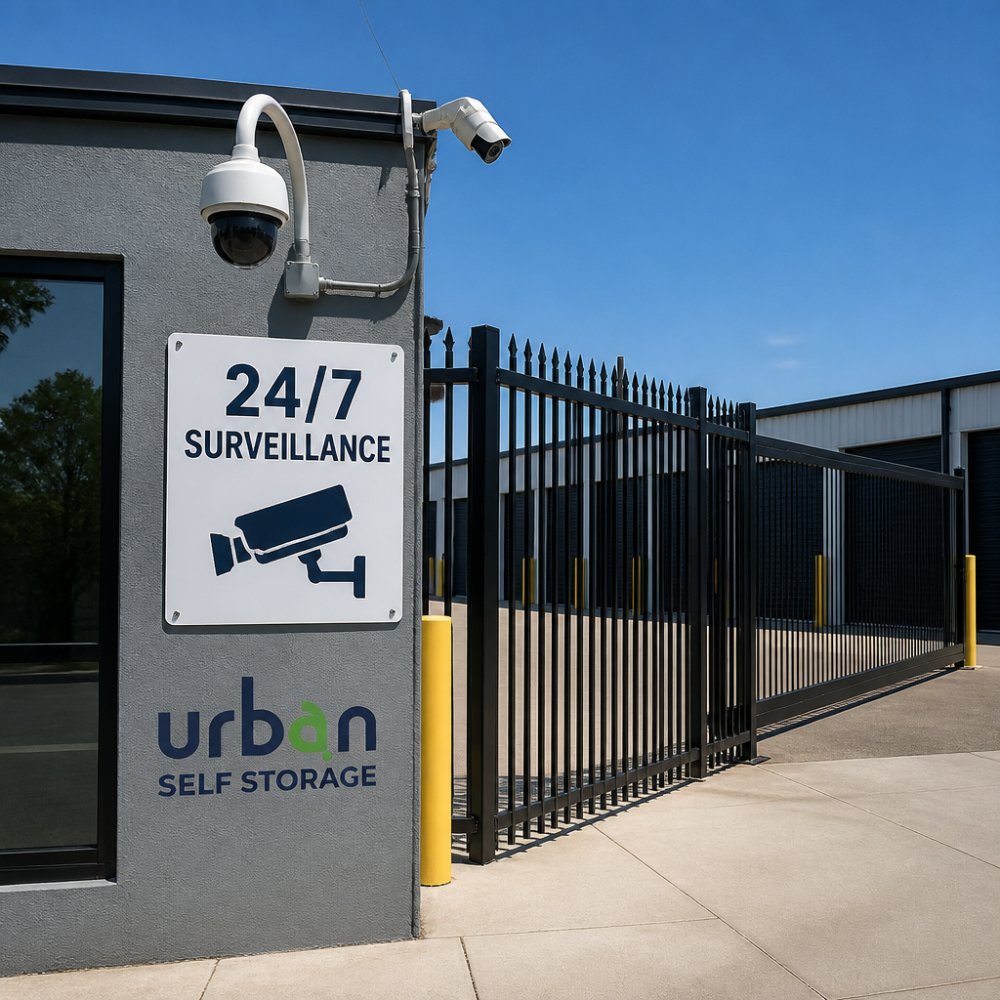
Physical storage facilities protect tangible items through storage security features including access control, surveillance, and secure construction. Urban Self Storage protects belongings through advanced 24/7 CCTV surveillance, electronic access control with individual codes, and reinforced unit construction. Digital storage protects files through encryption and key management; physical storage protects items through physical barriers and access logging. Both ensure only authorised parties can access what’s stored.
Book Online in 3 Minutes & Get 50% Off Instantly →
Storage Facility Security Checklist: What to Verify
Access Control Modern facilities offer keypad access with individual codes, allowing staff to track who enters and when. Ask whether access is 24/7 or restricted to business hours. Urban Self Storage provides flexible access hours for tradespeople, contractors, and business owners.
Surveillance Systems Look for CCTV cameras covering entry points, corridors, and outdoor areas. Ask whether the system records continuously and how long footage is retained (reputable providers retain at least 30 days). Urban Self Storage maintains advanced 24/7 CCTV surveillance across all facilities.
Perimeter Security Check for secure fencing, locked gates, and adequate lighting. Well-lit facilities deter break-ins; secure gates prevent unauthorised vehicle access.
Staff Presence Ask whether the facility has on-site staff during business hours. Staff presence provides monitoring and immediate response to issues.
Unit Construction Inspect a sample unit for solid walls, tight-fitting doors, and heavy-duty locks. Quality facilities use reinforced doors and strong locking mechanisms.
Insurance and Liability Ask what the facility’s insurance covers. Most storage facilities are not responsible for theft or damage unless caused by negligence. Understand your own insurance obligations and consider renters’ insurance.
Emergency Protocols Ask about emergency procedures, fire suppression systems, and whether the facility is in a flood-prone area.
How to Choose a Storage Facility That Meets Your Needs
Duration of Storage Short-term storage suits temporary needs like renovations; long-term storage requires climate control and strong security. Short and Long Term Storage in Bunbury WA offers flexible options without long-term contracts.
Item Type and Special Requirements Furniture benefits from climate control; business inventory needs secure access for rotation; vehicles, caravans, boats, and jet skis require larger units and weatherproofing. Urban Self Storage provides specialised storage for these items, including Furniture Storage in Bunbury, Business Storage in Bunbury, and Large Storage Units in Bunbury.
Access Frequency Frequent access requires convenient hours; long-term storage prioritises security and climate control over location. Ask whether the facility supports your access needs before committing.
Budget Constraints Pricing varies by unit size, location, and amenities. Urban Self Storage offers competitive pricing recognising storage is often temporary.
Facility Location
Protecting Vehicles in Storage: Specialised Security
Vehicles, caravans, boats, and jet skis face unique risks: weather damage, battery degradation, fluid leakage, and theft. Specialised storage facilities address these.
Climate Control Vehicles in uncontrolled environments suffer battery drain, tyre degradation, and rust.
Secure Parking Vehicles need protection from weather and theft. Dedicated storage areas with reinforced fencing, secure gates, and surveillance prevent unauthorised access. Urban Self Storage provides specialised Caravan Storage in Bunbury, Boat Storage, and Jet Ski Storage in Bunbury.
Regular Monitoring
Insurance Considerations Stored vehicles require comprehensive insurance covering theft and weather damage. Verify your policy’s storage duration clauses before storing long-term.
Book Online in 3 Minutes & Get 50% Off Instantly →
Preparation Before Storage Drain fuel tanks, disconnect batteries, inflate tyres slightly above normal, and cover the vehicle. These steps reduce damage and protect your asset.
Compliance, Auditing, and Ransomware Protection
Storage facilities handling customer data must comply with privacy regulations and demonstrate security through independent verification.
Privacy Regulation and Data Protection
In Australia, storage facilities must comply with relevant privacy regulations, which govern how personal information is collected, used, and protected. These regulations require organisations to implement reasonable security measures to protect personal information from misuse, interference, loss, unauthorised access, modification, or disclosure.
Physical storage facilities must protect customer information according to privacy requirements: secure storage of rental agreements, encrypted payment processing, and limited staff access. Ask how they protect your data, who has access, retention periods, and breach notification procedures.
Security Audits and Certifications
Physical storage facilities rarely undergo formal audits but should describe security measures and whether they’ve had security assessments.
Ransomware Protection and Recovery
Physical storage facilities face break-ins, theft, weather damage, and fire. They should have incident response plans: theft notification procedures, fire liability, and flooding recovery plans.
Incident Response and Breach Notification
Ask any storage provider: If a security incident occurs, what’s your notification procedure? How quickly will you notify customers?
Conclusion
Comparing storage providers requires understanding what you’re storing and what threats you’re protecting against. Physical storage protects goods through access control, surveillance, and secure construction. Digital storage protects files through encryption, key management, and backups. Choose based on your needs and access patterns.
Frequently Asked Questions
What security features should I look for in a storage facility?
Prioritise 24/7 CCTV surveillance with recorded footage, perimeter fencing, individual unit locks, access control systems that log entries and exits, and on-site management.
How do I know if my stored belongings are safe?
Visit the facility in person to assess cleanliness, security measures, and staff professionalism. Request proof of CCTV monitoring and ask about incident response procedures. Check customer reviews and testimonials for feedback on security. Document your belongings with photos before storage and confirm the facility has a clear access policy.
What is the difference between basic and high-security storage options?
Basic storage typically includes standard locks, perimeter fencing, and limited CCTV coverage. High-security storage adds features like 24/7 monitored surveillance, restricted access hours with keypad entry, and on-site staff.
Are there specific security standards for commercial storage in Australia?
Commercial storage facilities should comply with relevant standards for security, including appropriate fire safety measures and access control systems. Insurance requirements often dictate minimum security levels. Check with your insurer about recommended security features for your specific items, particularly for high-value business inventory or equipment.