
Table of Contents
- What Separates a High Security Storage Facility From the Rest
- Self-Storage Security Features That Actually Matter
- Your Storage Unit Security Checklist for Facility Tours
- How to Secure a Storage Unit Once You Move In
- Secure Business Storage: What Commercial Renters Should Ask
- The Limits of Security Features and Your Responsibilities
- Frequently Asked Questions
Last Updated: October 12, 2026
What Separates a High Security Storage Facility From the Rest
A high security storage facility is a site that combines several layers of protection, not just one. Cameras, controlled entry, alarms, lighting, fencing and solid locks all work together. When one layer fails, the others still hold.
At Urban Self Storage, we’ve designed our Bunbury area sites around that idea. No single feature does all the work. The best facilities stack them.
So what should you look for? Below, we break down the real signs of a high security storage facility, plus a checklist you can take on your next tour. We’ll also cover what security features can’t do, because that matters just as much.
The Australian Institute of Criminology has studied how property crime drops when sites combine lighting, surveillance and access control Australian Institute of Criminology research on crime prevention. The lesson: layers beat single measures.
One camera is not security. A facility is only as strong as its weakest layer, so look for several working together.
Self-Storage Security Features That Actually Matter
Most facilities list the same features on their website. The difference is whether those features actually work in practice. Here’s how to tell.
Surveillance, Gated Access and Controlled Entry
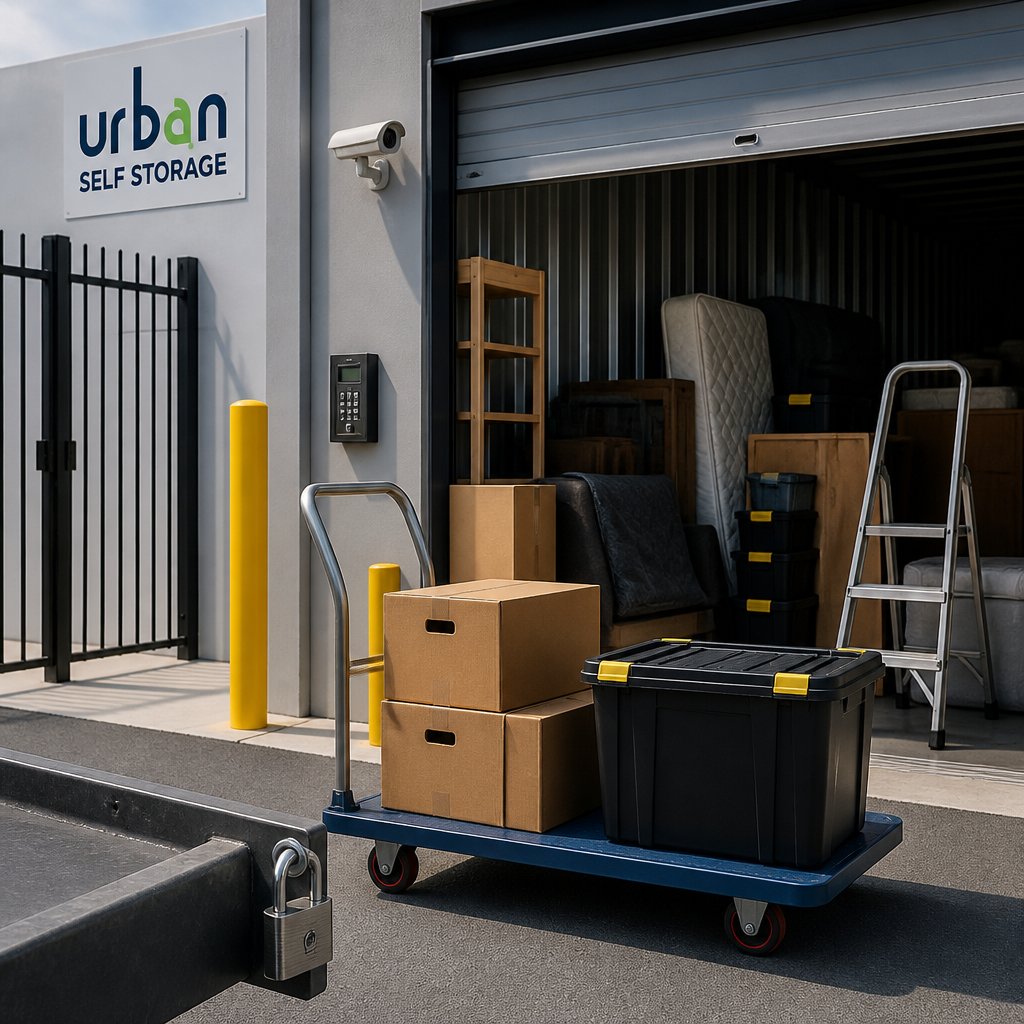
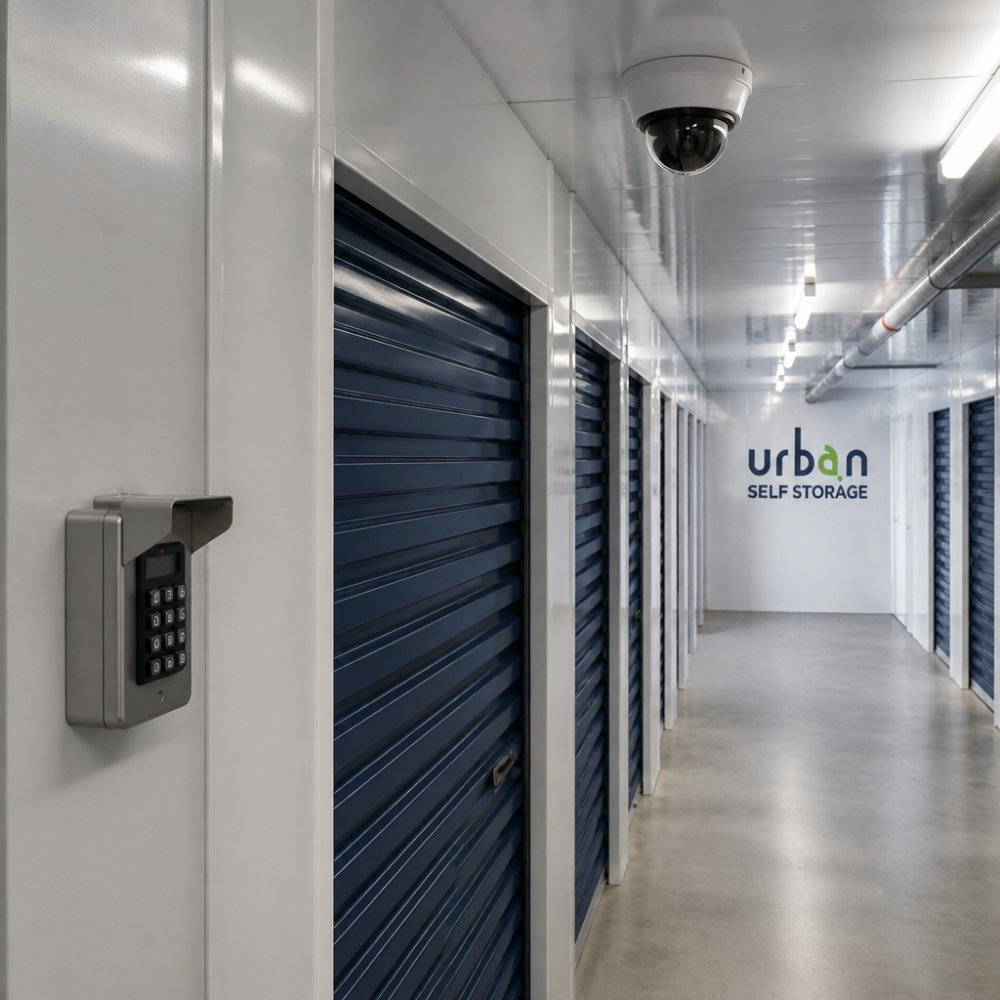
24/7 surveillance means cameras record around the clock, not just during office hours. Look for cameras at the gate, along corridors and at entry points. Ask whether footage is monitored or only recorded. Both can work, but you should know which one you’re getting.
Gated access controls who gets in. A good setup uses a keypad or PIN code, so every entry is tied to a person. That means the facility knows who came in and when.
- Cameras covering the gate, corridors and unit doors
- PIN or keypad entry instead of shared keys
- Entry records that show who accessed the site
- Visitor access that’s logged, not left open
Lighting, Fencing and Unit-Door Locks
Security lighting removes hiding spots. A well-lit facility is harder to target because nobody can work unseen.
Perimeter fencing sets a clear boundary. It slows intruders down and makes forced entry obvious.
Unit-door locks are your last line of defence. Look for tamper-resistant locks and solid doors that sit flush.
- Bright lighting across all walkways and parking
- Full perimeter fence with controlled entry points
- Tamper-resistant locks on every unit door
- Individual unit alarms on higher-value units
On a tour, look up. Cameras that are dusty, cracked or pointed at the wall tell you the system isn’t maintained. Working hardware looks clean and aimed at entry points.
Your Storage Unit Security Checklist for Facility Tours
A storage unit security checklist turns a sales tour into a proper inspection. Ask to walk the site, not just the office. The best time to test security claims is before you sign anything.
What to Inspect on the Walk-Through
- Cameras at the gate, corridors and unit doors, check they are clean, undamaged and aimed at entry points, not walls
- CCTV recording 24/7, not just in business hours, ask to see a live feed or recent footage
- Keypad or PIN access with entry logs, ask how the system records who enters and when
- Bright lighting across walkways and parking, look for dark corners or unlit stairwells
- Full perimeter fence in good repair, check for gaps, rust or makeshift repairs
- Tamper-resistant locks on unit doors, test that doors sit flush and hinges are protected
- Staff on site or active monitoring, ask who monitors alarms and how quickly they respond
- Clean, dry units with no signs of pests or leaks, check corners, ceilings and floor edges
Questions That Reveal How Security Actually Works
Ask direct questions and listen for specific answers. Vague replies are a warning sign.
- “Can I see the camera coverage?”, A confident operator will show you the monitor or a sample recording.
- “How long is footage kept?”, Most facilities keep footage for a set period; ask what happens if you need to review it.
- “Who monitors the alarms?”, Find out whether it is on-site staff, an off-site monitoring centre, or automated alerts.
- “What happens after an alarm?”, Ask about the escalation process: who is notified, how quickly, and whether police are called.
- “How is access logged for multiple staff?”, For business renters, confirm each person has a unique code and that logs are reviewable.
- “What is the process if something goes missing?”, Ask how incidents are documented and what cooperation you can expect.
Testing Access Procedures
On the tour, watch how access is managed in practice. Does the gate close fully behind you? Does the keypad require a unique code or is there a shared PIN? Are visitors escorted or logged? A facility that lets you wander unescorted without a code may be relaxed about access control.
Don’t accept “we have CCTV” as a full answer. Ask where the cameras point, how long footage is kept, and who reviews it. A camera that records nothing useful is a prop, not protection.
How to Secure a Storage Unit Once You Move In
Your unit’s security doesn’t end at the gate. A few habits protect your belongings long after you sign up.
- Use a solid, tamper-resistant padlock, not a cheap one
- Keep your access code private and never share it
- Don’t store items that attract thieves, like visible electronics
- Keep a written inventory with photos of what’s inside
- Visit regularly so you notice anything unusual
- Report suspicious activity to staff straight away
Secure business storage needs one extra step: control who on your team has the code, and change it when staff leave. That single habit prevents most internal losses.
Book Online in 3 Minutes & Get 50% Off Instantly →
Photograph your packed unit before you lock it. If something goes missing, dated photos make an insurance claim far easier to support.
Secure Business Storage: What Commercial Renters Should Ask
Businesses carry different risks than households. Stock, tools and equipment hold real value, and downtime costs money. Ask these questions before you commit.
- Is access available outside standard hours?
- How is entry logged for multiple staff members?
- Can I get a unit size that fits stock and equipment?
- Is the site monitored after hours?
- What’s the process if something goes missing?
For tradespeople and retailers, easy access matters as much as security. You need to get in and out quickly without weakening protection. Urban Self Storage offers business storage in Bunbury with flexible short and long-term options, so stock and equipment stay secure without locking you into a long contract.
The Limits of Security Features and Your Responsibilities
No facility can promise zero risk, and any operator who does is overselling. Security features reduce risk. They don’t erase it. Understanding where the facility’s responsibility ends and yours begins is essential for protecting your belongings.
What Facilities Typically Cover, and What They Don’t
Most storage agreements place responsibility for the contents on the renter. The facility secures the site, the gate and the cameras. You secure your unit, your lock and your code. Check your agreement for specific liability terms, as these vary between operators.
- Keep your own insurance for stored items, facility insurance rarely covers your belongings
- Maintain your padlock and replace it if damaged
- Protect your access code like a password and never share it
- Follow the facility’s rules on prohibited items
- Document your inventory and its value with photos and receipts
Incident Response: What Happens After an Alarm or Break-In
Ask how the facility handles incidents before you need to know. A well-run site will have clear procedures.
- Alarm activation: Who is notified, and how quickly? Is there a monitoring centre or on-site response?
- Suspected break-in: What is the process for securing the unit, notifying the renter, and involving police?
- Access-control failure: If the gate or keypad fails, how is access managed and logged?
- Fire or flood: What detection and response systems are in place, and how are renters notified?
Cybersecurity and Access-Code Privacy
Digital access systems need protection too. Ask how the facility manages codes, whether access logs are reviewed, and what happens when a code is compromised. For business renters, control who on your team has the code and change it when staff leave. That single habit prevents most internal losses.
Environmental and Non-Theft Protection
Security is not just about theft. Fire detection, water intrusion, pest prevention and climate controls protect your belongings from damage that no camera can prevent. Check for smoke detectors, dry units, and pest-control records.
Good facilities are honest about these limits. That honesty is itself a sign of a well-run site.
Frequently Asked Questions
How can you tell if a storage facility is actually secure?
Ask to walk the site before you book. Look for working CCTV cameras, gated or keypad-controlled entry, good lighting across all corridors, and sturdy unit-door locks. Ask staff how footage is monitored and whether access is logged. A high security storage facility will answer these questions directly and let you see the systems in person rather than just describing them.
What should businesses ask a storage provider about security?
Businesses storing stock or equipment should ask who can access the site after hours, how individual access codes are issued and revoked, whether there is an alarm system on units, and what insurance or liability cover applies. Also ask how incident reports are handled and whether you can get written confirmation of the security measures in place for your secure business storage needs.
Are cameras enough to secure a storage facility?
No. CCTV is one layer, but a genuinely secure facility combines surveillance with gated access, keypad or PIN entry, individual unit alarms, perimeter fencing, and adequate lighting. Cameras help with deterrence and evidence after an incident, but controlled access and physical barriers are what stop unauthorised entry in the first place.
How often should you check on items in storage?
For most renters, a visit every one to three months is enough to confirm your unit is sealed, your lock is intact, and nothing looks disturbed. If you are storing business inventory or valuable tools, check more often. Many facilities allow access during set hours, so confirm the access policy before you sign up.
Choosing storage comes down to trust, and trust is built on what you can see and verify. Walk the site, ask hard questions, and check that the layers actually work together.
Urban Self Storage offers secure, flexible storage across our East Bunbury and Picton locations, with 24/7 CCTV surveillance, keypad access, and flexible short and long-term options. Get started with Urban Self Storage and store your belongings with confidence. Book online now.