

Last Updated: November 20, 2026
Quick Summary
To store a jet ski safely in Bunbury, rinse and dry it, flush the engine after saltwater use, and fit a breathable cover. For storage longer than a few weeks, indoor jet ski storage gives the best protection from UV, humidity and salt air.
- Rinse the hull with fresh water to remove salt, sand and grime before storage.
- Flush the engine with fresh water after every saltwater outing to stop salt crystallising.
- Use a breathable cover, because plastic sheets trap moisture against the hull.
- Disconnect the battery or fit a maintainer, and keep it off concrete.
- Choose indoor storage for long stays, since covered and open options expose the machine to more weather.
Table of Contents
- Why Bunbury Conditions Call for Careful Jet Ski Storage
- Choosing Between Indoor, Covered and Open Jet Ski Storage
- Security Features to Look for in a Bunbury Storage Facility
- Step-by-Step Preparation Before You Store a Jet Ski
- Long-Term Jet Ski Storage: Checks and Recommissioning
- Jet Ski Storage Checklist and Trailer Access Planning
- Booking Secure Jet Ski Storage in Bunbury
- Frequently Asked Questions
Why Bunbury Conditions Call for Careful Jet Ski Storage
Storing a jet ski in Bunbury safely starts with understanding the local environment.
Summer heat and UV. From December to February, surface temperatures inside an unshaded unit or open bay can climb well above ambient air temperature.
Winter rain and humidity. Between June and August, persistent rain and damp air push moisture into the hull, engine compartment and electrical connectors.
Salt air. Because the coast is close by, salt settles on every exposed surface.
Seasonal wind and dust. Strong summer sea breezes carry sand and dust that work into covers, trailer bearings and moving parts.
Choosing Between Indoor, Covered and Open Jet Ski Storage
The three main storage options each suit a different budget and level of exposure. Indoor storage gives the most protection from sun, wind and salt spray, because the machine sits inside a sealed unit away from the weather. Covered storage offers shelter from rain and direct sun but leaves the sides open to humid air. Open storage is the most affordable, but it exposes the machine to the full force of the coastal environment.
| Storage type | Protection level | Best for | Main drawback |
|---|---|---|---|
| Indoor unit | High: sealed from sun, wind and salt spray | Long-term storage, premium machines | Usually costs more per month |
| Covered bay | Medium: shelter from rain and direct sun | Owners who need regular access | Humid air still reaches the machine |
| Open storage | Low: full exposure to weather | Short stays, budget-focused owners | Higher risk of salt damage and UV fading |
Indoor storage pros:
- Shields the hull and seat from UV damage
- Limits salt and sand contamination
Indoor storage cons:
- Higher cost than open or covered options
- You need to fit the machine and any trailer inside the unit
Covered storage pros:
- Good shelter from rain and sun at a moderate price
- Easier access on busy weekends
Covered storage cons:
- Open sides let salty, humid air circulate around the machine
Open storage pros:
- Lowest cost option
Open storage cons:
- No protection from salt spray or UV
- Greater exposure to theft and vandalism
For most owners in Bunbury, an indoor unit is the safest choice for storage lasting more than a few weeks. If budget is tight, a covered bay combined with a breathable cover and moisture absorbers can work well for shorter periods.
Security Features to Look for in a Bunbury Storage Facility
Before you rent, check what the facility does to protect your property. Security is one of the first things to confirm, because a jet ski is valuable and easy to move on a trailer.
Look for these features:
-
Continuous CCTV coverage. Ask any provider how cameras are monitored and where they are positioned.
-
Clear facility rules. Read the terms carefully so you understand access hours, insurance requirements and what the facility will and will not cover.
A quick visit to the site tells you a lot. Look at how clean and well maintained the grounds are, and whether the staff can explain the security arrangements in plain terms.
Step-by-Step Preparation Before You Store a Jet Ski
Proper preparation is the single most effective way to protect your machine during storage. Work through these steps before the jet ski goes into the unit.
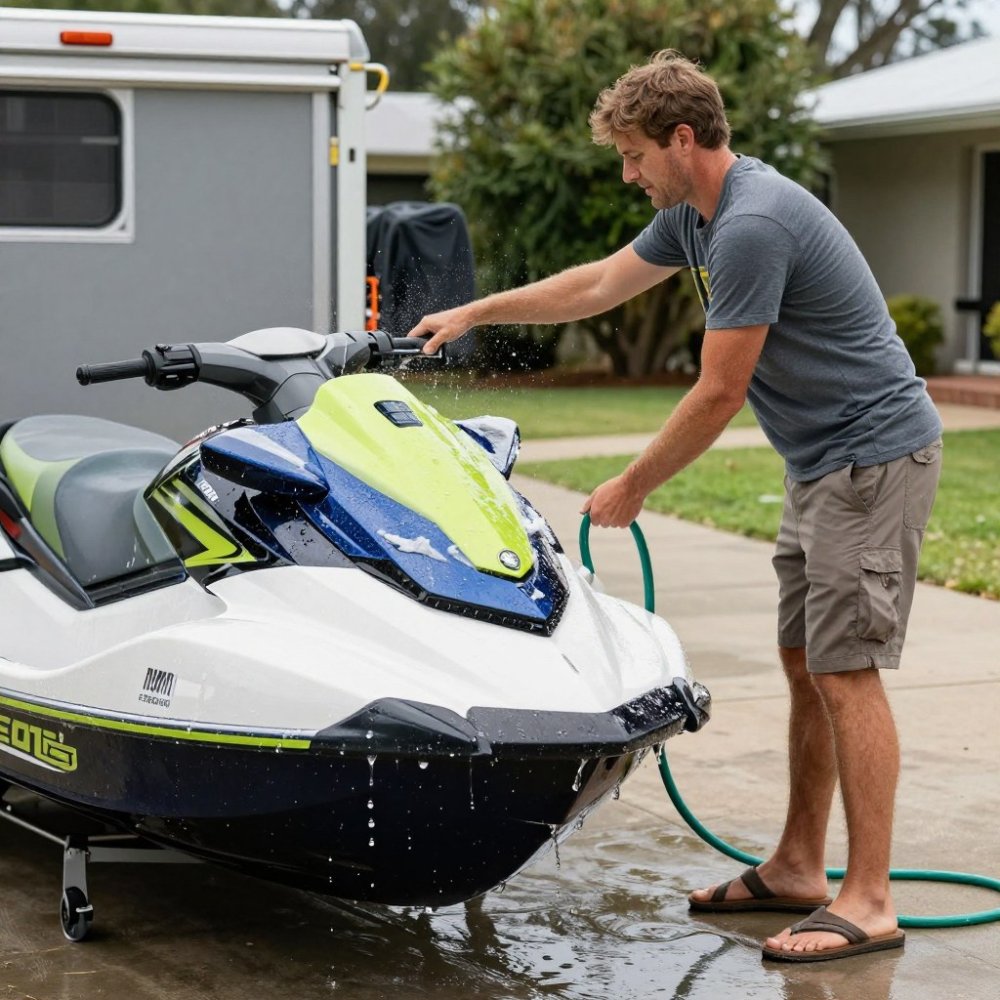
- Rinse the hull with fresh water. Use a garden hose to wash off salt, sand and grime. Pay attention to the intake grate and the area around the steering nozzle.
- Dry the machine thoroughly. Moisture trapped in hidden areas causes corrosion and mould. Wipe down the seat, deck and engine compartment, and let everything air out.
- Flush the engine. This is covered in detail below.
- Check fuel and oil levels. Top up the fuel tank with fresh fuel and a stabiliser to reduce fuel degradation over the storage period.
- Inspect hoses, belts and fittings. Look for cracks, brittle sections and loose clamps. Replace anything that looks worn before storage, not after.
- Protect the battery. This is covered in detail below.
- Apply a protective cover. Use a breathable cover rather than a plastic sheet, because plastic traps moisture against the hull.
- Place moisture absorbers inside the storage area. These help control humidity around the machine.
Work through this sequence in order. Flushing and drying should happen before the cover goes on, otherwise trapped water will stay inside the machine for weeks.
Flushing the Engine After Saltwater Use
Flushing the engine after saltwater use is one of the most important steps in jet ski storage. Salt left inside the cooling system crystallises as the water evaporates, and it can clog passages and damage internal components.
To flush the engine:
- Connect a freshwater flushing system according to the manufacturer’s instructions for your model.
- Run the engine briefly with fresh water flowing through the cooling system, watching for any signs of overheating.
- Stop the engine and drain any remaining water from the system.
Always follow the guidance in your owner’s manual for your specific machine. If you are unsure, ask a qualified marine mechanic to show you the correct procedure.
Protecting the Battery During Storage
A battery left flat or fully discharged for weeks can be damaged beyond recovery. Before storage, disconnect the battery or fit a battery maintainer, and check that it is fully charged.
Store the battery off concrete and away from direct sunlight. Cold and heat both shorten battery life, so an indoor unit gives the best conditions. Check the charge level every few weeks if the battery is not connected to a maintainer.
Long-Term Jet Ski Storage: Checks and Recommissioning
Storage that lasts several months needs a different plan from a two-week break, and the preparation should match the duration. Treating every storage period the same is one of the most common mistakes owners make.
Short-term storage (a few weeks)
For a few weeks between rides, the priority is keeping the machine dry and the battery healthy. Rinse and dry the hull, flush the engine if the last outing was in saltwater, fit a breathable cover and connect a battery maintainer or disconnect the battery. Check the cover after heavy rain and empty any water that has pooled. A short storage period rarely needs fuel stabiliser if the tank is fresh, but it does need a visual check before the next launch.
Off-season storage (one to three months)
Off-season storage is where most preparation pays off. Top up the fuel tank with fresh fuel and a stabiliser to limit degradation, change the oil if it is due, and fog the engine according to the manufacturer’s instructions if the manual recommends it for storage. Remove the battery and store it on a maintainer in a cool, dry place, or leave it connected to a maintainer in the machine if the storage bay has power. Place moisture absorbers in the hull and engine compartment, fit the breathable cover and check the machine every few weeks for condensation, pests and cover condition.
Extended storage (more than three months)
Extended storage adds risks that shorter periods do not. Fuel can degrade even with a stabiliser, so plan to drain and replace it before recommissioning if the machine has been idle for many months. Tyres on the trailer can develop flat spots, so move the trailer slightly every few weeks or support the axle to take weight off the tyres. Grease trailer bearings and check the coupling and tie-downs. Inspect the cover monthly, because a torn or slipped cover lets rain and dust reach the machine.
Recommissioning after any storage period
When you are ready to ride again, recommission the machine in reverse order:
- Remove the cover and air out the machine.
- Reconnect and check the battery, and charge it if needed.
- Check fuel, oil and coolant levels, and replace the fuel if it has aged.
- Inspect hoses, belts and the intake for damage or debris.
- Start the engine on a trailer or in a safe area and check for leaks and unusual noises.
- Check trailer tyre pressures, bearings and lights before towing.
Recommissioning carefully avoids surprises on the water and helps you catch small problems before they become expensive repairs.
Watch out: starting an engine that has been stored for months without checking the fuel and oil first can cause damage that is far more costly than the inspection would have been.
Jet Ski Storage Checklist and Trailer Access Planning
A simple checklist keeps the process consistent every time you store the machine. Use this before each storage period:
- Hull rinsed with fresh water and dried
- Engine flushed with fresh water
- Fuel topped up with a stabiliser
- Hoses, belts and fittings inspected
- Battery disconnected or on a maintainer
- Breathable cover fitted securely
- Moisture absorbers placed in the storage area
- Trailer tie-downs and registration documents stored safely
- Access hours and facility rules confirmed
Trailer access also needs planning. Measure the combined length and width of the jet ski and trailer, and confirm the unit door or bay can accommodate it with room to manoeuvre. Check the access route into the facility, including gate hours, and make sure you can get in and out without difficulty.
Insurance and liability matter too. Confirm what your own policy covers while the machine is in storage, and read the facility’s terms to understand what it will and will not be responsible for. Keep receipts and records of any work carried out before storage.
Booking Secure Jet Ski Storage in Bunbury
Once you know what protection you need, the next step is to find a unit that fits the machine, your access schedule and your budget.
Our Bunbury area locations in East Bunbury and Picton give owners convenient options depending on where they live and travel. Our 24/7 CCTV surveillance supports the security measures outlined above.
Proper preparation, the right storage type and a secure facility are what keep a jet ski in good condition between rides. Take the checklist above, compare the options, and book a unit that suits your machine.
Frequently Asked Questions
How do you prepare a jet ski for storage?
Rinse the hull and intake with fresh water to remove salt, sand and grime. Flush the cooling system, fuel the tank with stabiliser and run the engine briefly to circulate it. Dry the interior thoroughly, remove the drain plug if your model requires it, and clean the air intake. Disconnect or remove the battery, and store it on a surface away from concrete. Finally, cover the craft with a breathable cover rather than plastic, which traps moisture and encourages mould.
Should you flush a jet ski before storing it?
Yes, particularly after riding in saltwater. Salt residue left in the cooling passages and intake can corrode internal components over a storage period. Use fresh water to flush the engine according to your owner’s manual, then drain any remaining water so it does not sit in the system. Flushing before storage is one of the most important steps in protecting the engine during a long period out of use.
How do you protect a jet ski battery during storage?
Remove the battery where practical, or disconnect its terminals, and keep it fully charged. Store it in a cool, dry place off concrete floors, and check its charge every few weeks. A battery maintainer or trickle charger can prevent the battery from going flat over the storage period. Keep it upright and away from flammable materials, and follow the manufacturer’s guidance on battery care.
Is indoor storage better for a jet ski?
Indoor or fully enclosed storage generally offers the best protection against sun, salt air and temperature swings, which are significant in coastal areas. It also reduces exposure to UV damage on plastics and cover fabric. Covered or sheltered options provide good protection at a lower cost, while open storage leaves the craft fully exposed. Choose the level of protection that matches how long you plan to store the jet ski and how exposed the site is.
