

Last Updated: November 21, 2026
Quick Summary
The cost of secure 24-hour storage in Australia depends on unit size, facility type and location, access terms, and security inclusions rather than a single headline rate. Because 24-hour access can appear as a higher base rate or a separate fee, request written quotes for the same unit size and access type from three facilities and compare them like-for-like.
- Storage rates rise with unit size, and the same unit can cost different amounts between facilities in one city.
- Ask what you will pay in month two and month twelve, and get the answer in writing.
- Confirm whether 24-hour access is included in the quoted rate or charged separately before signing.
- Check that CCTV covers entrances, corridors and unit doors, not just the front gate.
- The 24-hour premium mainly suits tradespeople, e-commerce businesses and shift workers.
Table of Contents
- What Drives the Cost of Secure 24-Hour Storage?
- Self Storage Costs Australia: What to Expect
- Storage Unit Sizes and Prices: Matching Space to Your Needs
- Storage Fees and Charges: The Full Cost Picture
- Storage Security Features That Justify the Price
- The 24-Hour Access Premium: Is It Worth Paying For?
- How to Compare Storage Quotes Accurately
- Book Your Secure Storage Unit With Confidence
- Frequently Asked Questions
What Drives the Cost of Secure 24-Hour Storage?
The cost of secure 24-hour storage in Australia is not a single number.
Two renters can choose what sounds like the same unit and end up paying very different monthly amounts, because one picks after-hours access and the other takes standard hours. Neither is being overcharged. They bought different things.
So what actually moves the number? Four levers do almost all the work:
- Unit size and configuration. A small locker, a medium unit and a large unit sit at very different points on the price curve.
- Facility type and location. Container storage on the edge of town rarely matches the rate of a modern, gated, alarmed building closer to homes and businesses.
- Access terms. 24-hour access can carry a premium, whether it appears as a higher base rate or a separate access fee.
- Security and inclusions. CCTV, electronic gate entry, PIN access and alarm systems cost money to run, and that cost shows up somewhere.
Below, we break down what a realistic storage budget looks like, how to read a quote properly, and when the 24-hour premium is genuinely worth paying. A common mistake is comparing headline rates without checking access hours, fees and security.
Self Storage Costs Australia: What to Expect
Self storage costs in Australia vary widely by size, location and facility standard, so treat any single advertised figure as a starting point rather than a benchmark. Storage costs generally rise with unit size, and rates can vary considerably between facilities in the same city. Our average cost of self storage price guide sets out the full picture so you can anchor your expectations before you call anyone.
A single national average is of limited use for budgeting. Monthly rates for the same unit can differ depending on location and facility. Build your budget from three inputs: the size you actually need, the access terms you require, and the fee structure of the specific facility.
A practical way to anchor your expectations is to request quotes for the same unit size and access type from three facilities in your area, then compare them on a like-for-like basis. Ask for a written quote from each facility, and compare them on a like-for-like basis. If you are comparing across cities, expect the same unit size to sit at different points on the price curve depending on local land costs, competition and demand.
Why Location and Facility Type Affect Your Rate
Location is the quiet price driver. A facility close to a growing residential area or an industrial hub carries higher land and operating costs than one on the outskirts, and that difference reaches your monthly rate. Facility type matters just as much.
That does not make the cheaper option bad value. It makes it a different product. If you are storing a caravan or boat, an outdoor or container space may suit you perfectly. If you are storing furniture or business stock that cannot get dusty or damp, an indoor unit with proper security is usually the smarter buy, even at a higher monthly rate.
Check what is actually covered before you treat a low rate as a win.
How to Build a Realistic Budget Before You Call
Before you request quotes, write down four things: the approximate cubic space your belongings occupy, whether you need drive-up or indoor access, whether you need after-hours entry, and how long you expect to store. With those four answers, you can ask every facility for a comparable quote and avoid the common trap of comparing a small standard-hours locker against a large 24-hour unit as if they were the same product. A realistic budget also includes a buffer for the move-in costs covered in the fees section below, because the first month’s outlay is rarely just the advertised rent.
Storage Unit Sizes and Prices: Matching Space to Your Needs
Storage unit sizes and prices generally rise together, but not in a straight line. Moving to a larger unit is where budgets often stretch. Getting the size right the first time is the simplest way to control cost, because renting too small forces an upgrade and renting too large wastes money every month.
A general guide to matching belongings to space:
- Small locker: documents, seasonal clothing, a few boxes, tools for a tradesperson.
- Medium unit: a one-bedroom apartment’s contents, spare furniture, e-commerce stock.
- Large unit: a full household move, business inventory, equipment, or a combination of furniture and stock.
- Outdoor and container space: caravans, boats, jet skis, trailers and vehicles.
If you are unsure, our storage unit size guide helps you match your belongings to the right space before you commit. It beats guessing and paying for a unit you do not fill.
Storage Fees and Charges: The Full Cost Picture
Storage fees and charges beyond the monthly rate are where budgets quietly blow out. A clear quote should list the base rent and any other charges, such as administration fees, locks, protection cover or access-related costs. Ask for the total cost of ownership for your intended stay, not just the headline rate.
Here is the checklist we would run through before signing anything:
- Monthly rate confirmed in writing, including any introductory discount and when it ends
- Administration or set-up fee stated up front, if any
- Protection cover or insurance cost, and whether it is optional
- Access terms: standard hours versus 24-hour access, and any after-hours fee
- Minimum stay or notice period, and whether you are locked into a fixed lease
- Payment options and how renewals are priced
- Lock and padlock cost, or whether you supply your own
A common mistake is assuming an introductory rate is the ongoing rate. Ask directly what you will pay in month two and month twelve, and request that the answer be put in writing.
Storage Security Features That Justify the Price
Security features are what separate a secure facility from a basic yard, and they are one reason two units of the same size can carry different rates.
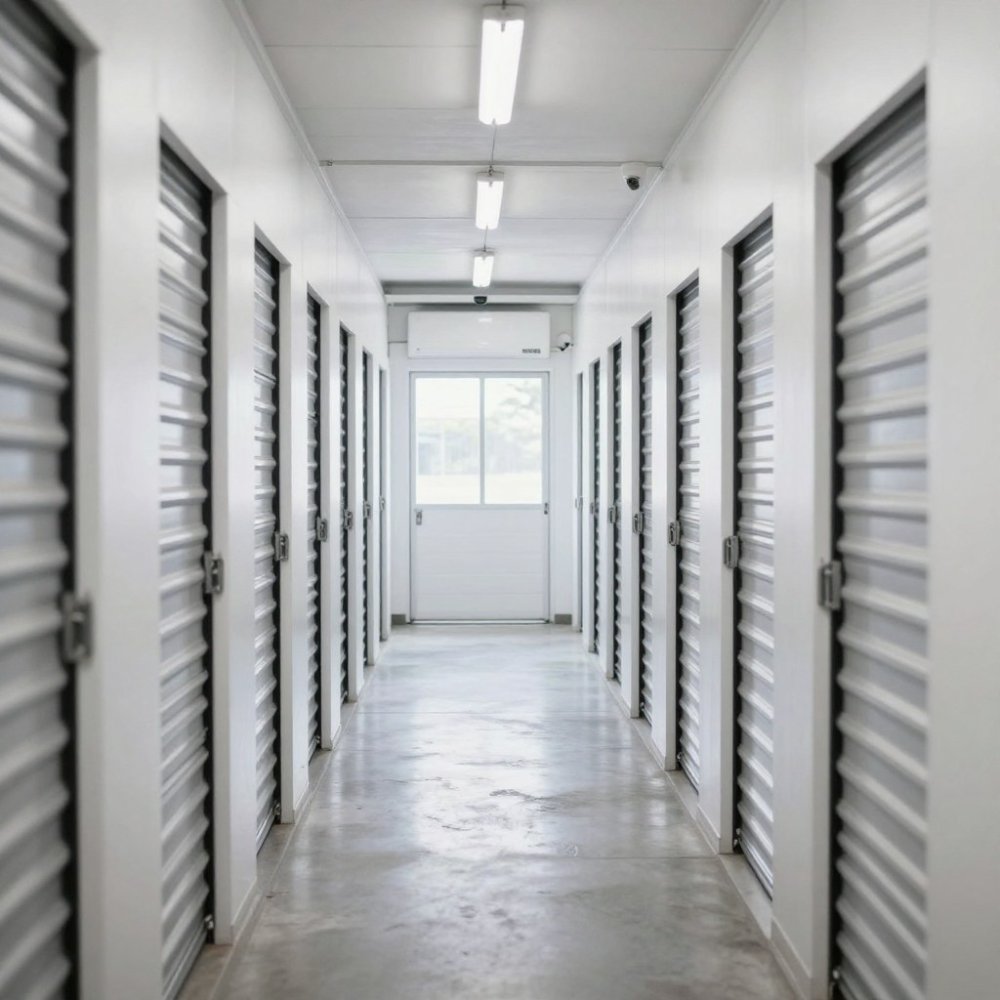
The core features to look for:
- 24/7 CCTV surveillance covering entrances, corridors and unit doors, not just the front gate.
- Electronic gate entry and PIN access, so every entry is recorded to an individual.
- Alarm systems that trigger on unauthorised access.
- On-site lighting and clear sightlines, which deter opportunists more than signs do.
- Restricted access control, so only paying customers reach the units.
How to Assess a Facility’s Security Claims
Ask specific questions about any facility’s security. How many cameras cover the site, and are they monitored or simply recorded? Is gate access logged per customer? Can you inspect the facility before you commit?
Our security features checklist covers the nine things worth verifying before you rent, so you can hold a quote up against it line by line.
The 24-Hour Access Premium: Is It Worth Paying For?
24-hour access is usually worth paying for only if your needs require it.
The structure of access charges can make quotes hard to compare.
To verify what you are actually being offered, ask four specific questions before you sign:
- Is 24-hour access included in the quoted rate, or is it a separate charge? If separate, how is it calculated?
- Does 24-hour access mean unrestricted entry at any time, or are there any restricted periods?
- How is access granted after hours, and is there a charge for the access device?
- Is vehicle access available overnight? This matters if you are moving furniture or restocking a business.
Some facilities advertise “extended access” that is not genuinely around the clock. If a listing says 24/7, confirm it in writing and ask whether the site is staffed or monitored remotely overnight.
Who might benefit from it:
- Tradespeople and contractors who need tools and materials outside standard hours.
- Businesses and e-commerce retailers restocking or dispatching at night or early morning.
- Shift workers whose free time falls outside normal opening hours.
If your access needs fit comfortably within standard hours, or you visit only occasionally, the premium may not be worth paying.
If you are weighing it up, our guide to who actually needs 24-hour storage access breaks down the trade-off in more detail.
How to Compare Storage Quotes Accurately
Comparing storage quotes accurately means lining them up before you decide. Two quotes are most comparable when unit size, access terms, security inclusions and fees all match. Line them up against the same criteria, and the cheapest option often stops being the cheapest.
| What to compare | Why it matters | What to ask |
|---|---|---|
| Unit size and type | Drives the base rate | Is this indoor, outdoor or container? |
| Access hours | 24-hour access carries a premium | Is after-hours access included or charged? |
| Security inclusions | CCTV, gate entry, alarms | What coverage, and is it monitored? |
| Fees and charges | Total cost, not headline rate | Admin fee, lock, protection cover? |
| Contract terms | Flexibility affects cost | Minimum stay, notice period, renewal rate? |
Run every quote through this grid. It is the fastest way to spot a hidden fee or a missing inclusion, and it stops you comparing a premium 24-hour unit against a standard-hours locker as if they were the same thing.
Book Your Secure Storage Unit With Confidence
Urban Self Storage runs two facilities in the Bunbury area, in East Bunbury and Picton, offering personal, furniture, business, equipment, caravan, boat and jet ski storage on flexible short- and long-term terms, from caravan storage in Bunbury and boat storage to large storage units in Picton WA for bigger household moves and business stock. Our sites offer advanced 24/7 CCTV surveillance and a simple move-in process.
You can view current rates and secure your unit directly through our affordable storage units page. If you want to see the facility first, ask. We would rather you inspect the site than take our word for it.
Storage pricing rewards the prepared buyer. The customers who get the best value are the ones who know their unit size, check the access terms, and read the fee list before they sign. If you want a straightforward quote with the inclusions spelled out, get started with Urban Self Storage and book a clean, secure unit that fits your budget and your access needs.
Frequently Asked Questions
How much does secure 24-hour storage cost?
The cost of 24-hour storage depends on unit size, location, and the level of security provided. Pricing depends on quantity, dates, unit size, location and access terms. Facilities that offer around-the-clock access may charge an additional access fee. For current prices and an accurate figure, visit the Urban Self Storage pricing page or request a quote directly.
Does 24-hour access make storage more expensive?
It can. Some facilities include 24-hour access in the base rate, while others charge a separate access fee. When comparing quotes, ask specifically whether after-hours access is included or billed separately, and check the total cost for how often you will visit.
What security features should I look for in a storage facility?
Prioritise facilities with 24/7 CCTV surveillance and electronic gate access. Ask whether cameras are actively monitored or only recorded, and ask whether you can inspect the facility before you rent.
What extra fees should I check before booking a storage unit?
Beyond the monthly rate, ask about any administration fees, deposits, insurance or protection cover requirements, and charges for after-hours access. Confirm whether the quoted rate is weekly or monthly, and check the minimum stay or notice period if you might need to vacate early. Comparing the total cost, not just the headline rate, helps you avoid surprises.
