
Last Updated: November 20, 2026
Quick Summary
Caravan storage in Picton means parking your van at a secure off-site facility instead of leaving it exposed at home, freeing up your driveway and reducing weather and theft risk. Local owners can choose indoor, undercover or outdoor hardstand bays, and should compare access hours, security and contract terms before committing.
- Compare access hours, surface drainage, bay dimensions, security and contract terms, not just headline rent.
- Indoor sheds suit long-term storage, undercover offers weather cover, and hardstands suit frequent use.
- Prepare your van by cleaning it, draining tanks, disconnecting the battery and fitting a breathable cover.
- Check your local council’s verge and parking rules, plus strata by-laws, before parking at home.
- Visit stored vans every few weeks to check for leaks, pests and flat spots on tyres.
Table of Contents
- Caravan Storage in Picton: What Local Van Owners Need to Know
- Storage Options Around Picton and Bunbury
- Indoor, Undercover or Outdoor Hardstand?
- The Caravan Storage Checklist for Choosing a Site
- How to Prepare a Caravan for Storage
- Caravan Storage Security: What Actually Keeps Your Van Safe
- Long-Term Caravan Storage Tips for the Off-Season
- Local Parking Rules and Council Requirements to Check
- Book Your Picton Caravan Storage Online
- Frequently Asked Questions
Caravan Storage in Picton: What Local Van Owners Need to Know
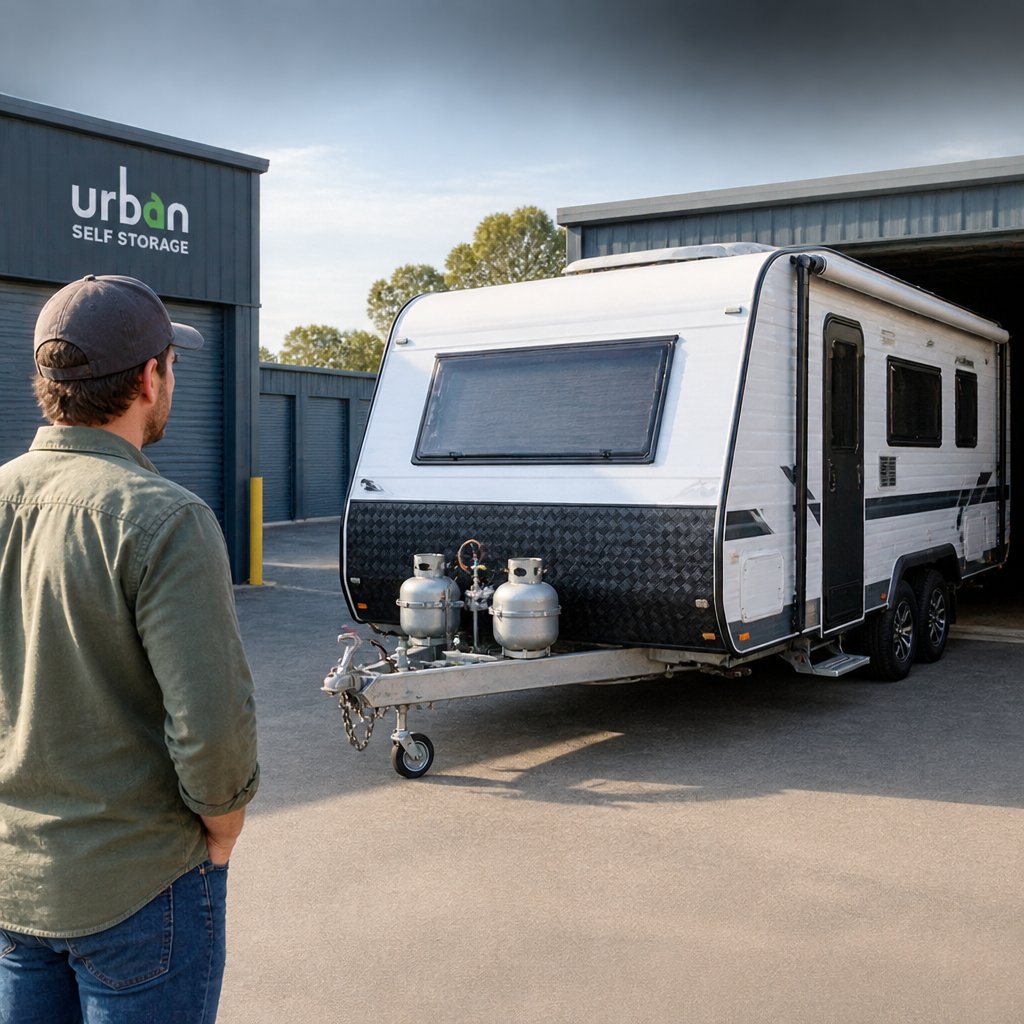
Caravan storage is the practice of parking your van somewhere secure when it isn’t being used, rather than leaving it exposed at home. If you own a van around Picton, you’ve probably noticed how much driveway space it eats up, not to mention the constant worry about weather and theft. At Urban Self Storage, we run facilities in the Bunbury area, and local van owners often ask where to keep their van and whether it will stay safe there.
Off-site storage at a secure facility can free up your driveway and reduce exposure to weather and theft. Below, we’ll walk through your options, how to prepare the van, and what to check before you sign anything.
Storage Options Around Picton and Bunbury
Van owners in this area generally choose between three setups: keeping it at home, renting a commercial storage space, or using a dedicated outdoor hardstand at a facility. Each has trade-offs, and the right choice usually comes down to how often you use the van and how much protection you want between trips.
At home. Home storage avoids extra rental costs, but it ties up your driveway and leaves the van exposed to sun, rain and dust. Check your strata by-laws and council verge rules before parking at home.
Commercial facility, indoor or undercover. A commercial facility can offer a monitored site, controlled access and a fenced perimeter, and it frees up your property. Indoor and undercover bays generally offer more protection from UV and weather, though access arrangements vary by facility, so check the hours before you commit.
Outdoor hardstand. A dedicated hardstand can suit owners who take the van out often, because it may allow you to drive straight up to the bay. The trade-off is full exposure to the elements, so surface condition, drainage and cover become more important.
What to compare like-for-like. Rather than comparing headline rent alone, compare the full arrangement: access hours and whether after-hours access is available, whether the surface is sealed or gravel and how it drains in winter, bay dimensions and turning space for your van and tow vehicle, what security is included, what the contract says about notice periods and liability, and what your own insurer requires of stored vans. Ask each facility for its terms in writing before you commit.
If you want to see what is actually on offer nearby, you can explore the outdoor caravan and boat storage in Australind to compare setups before deciding, and our guide to finding the best caravan storage near you walks through the same criteria in more detail.
Watch out: a low headline rate may be outweighed by limited access hours or contract terms, so read the terms before comparing on rent alone.
Indoor, Undercover or Outdoor Hardstand?
The right storage type depends on how much protection your van needs and how often you use it. Here’s how the three main options compare:
| Storage Type | Protection Level | Best For | Access |
|---|---|---|---|
| Indoor shed | Highest, fully enclosed | Long-term storage, older vans | Scheduled |
| Undercover | High, roof over van | Owners wanting weather cover | Regular |
| Outdoor hardstand | Good, open air | Frequent use, larger vans | Easy, drive-up |
Indoor storage may suit vans parked for months at a time. Undercover is a middle ground for owners who want shelter without a fully enclosed space. Outdoor hardstand can suit owners who take the van out often.
A common mistake is paying for indoor storage you don’t need. If you use the van monthly, a hardstand with good security does the job.
The Caravan Storage Checklist for Choosing a Site
Before you commit to any site, run through this checklist:
- Is the site fenced and gated with controlled access?
- Are there working cameras covering the storage area?
- Is the ground firm, level and well drained?
- Can you get in and out easily, including reversing room?
- Is there space to walk around the van for checks?
- Are short and long-term options both available?
- Is the site managed on-site or monitored remotely?
- Do you have clear answers on insurance and liability?
If you want a broader guide to weighing up sites, our team has put together a page on finding the best caravan storage near you that walks through the same criteria in more detail.
How to Prepare a Caravan for Storage
Preparing a caravan for storage can help protect it from damage that builds up over time. The steps are simple but easy to skip.
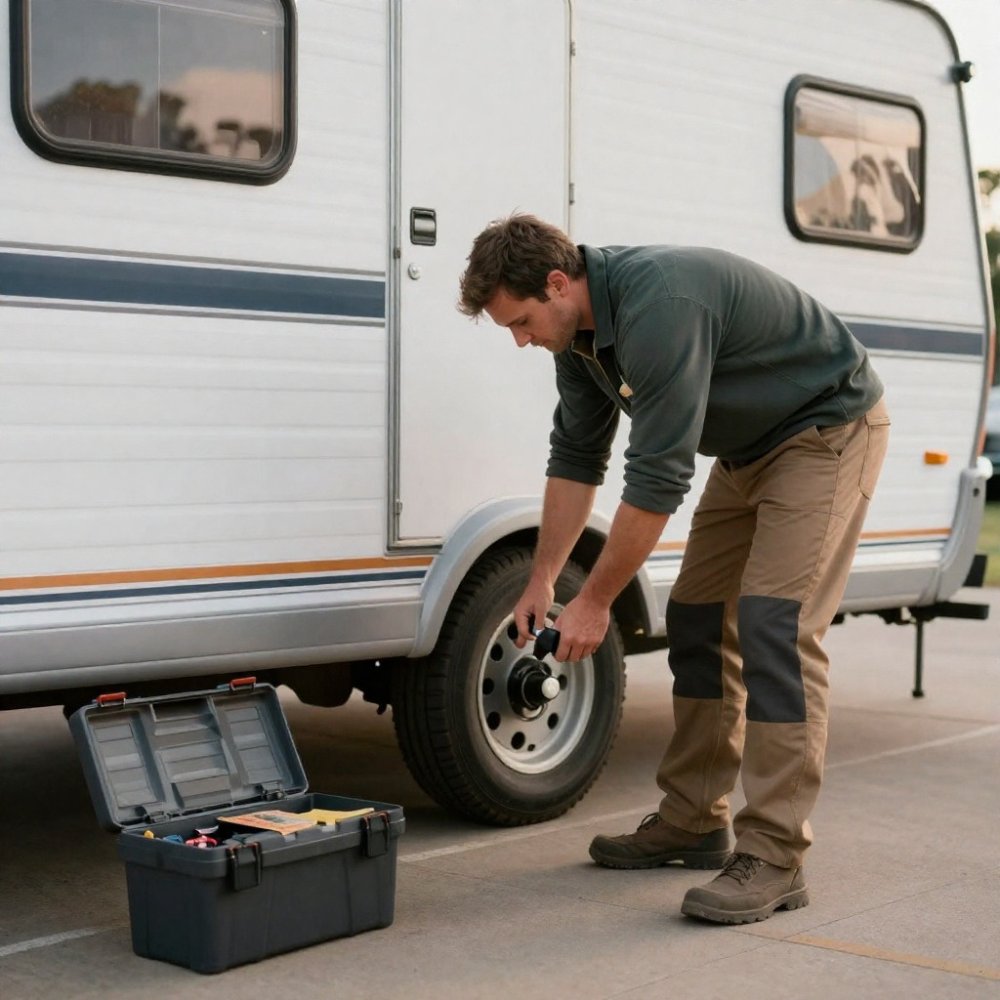
Here’s how to prepare a caravan for storage:
- Clean it inside and out. Dirt traps moisture and attracts pests.
- Empty the fridge and cupboards. Leave doors open to air out.
- Drain the water tanks and lines. Standing water causes mould and odours.
- Disconnect the battery and store it somewhere cool if you can.
- Check tyre pressures and expect to top them up before your next trip.
- Cover vents and the coupling to keep dust and insects out.
- Fit a breathable cover if the van sits outdoors.
Watch out: sealing a van up tight with no ventilation can trap moisture inside, so airflow matters.
Caravan Storage Security: What Actually Keeps Your Van Safe
Good security comes down to layers: a fence, controlled entry, cameras and lighting working together. One measure alone rarely stops a determined thief.
Ask any facility three questions: who can get in, how is that tracked, and is someone watching. Gated access and camera coverage of the storage area can add meaningful protection, and on-site management adds another layer.
If you’re weighing up keeping the van at home versus paying for storage, it helps to see the security and cost comparison between home and off-site storage. And if you want to know which facility features genuinely protect a stored van, read up on how storage facility security protects your belongings.
Long-Term Caravan Storage Tips for the Off-Season
Long-term caravan storage tips come down to a routine: check the van regularly, keep air moving, and protect it from the sun. Vans left untouched for months are the ones that develop problems.
- Visit every few weeks to check for leaks or pests
- Move the van slightly to avoid flat spots on tyres
- Keep the cover secure but allow ventilation
- Look for rust or damp around windows and seals
- Recharge or maintain the battery
UV exposure is the quiet killer here. It fades seals, cracks tyres and dulls paint over time. A cover or undercover spot makes a real difference to how the van looks and performs when you next take it out.
Local Parking Rules and Council Requirements to Check
Parking a caravan on your property or the street is not always as simple as it looks, and in Western Australia the rules come from more than one place. Before you park a van on a verge, driveway or street, it helps to understand which authority controls what.
State-level road rules. Under Western Australian road rules, caravans are generally subject to the same parking restrictions as other vehicles. Confirm the current rules with the official source. You cannot park across a driveway, within a certain distance of an intersection or pedestrian crossing, on a footpath, or in a way that obstructs traffic. A caravan left standing on a public road for an extended period can also attract attention under local government parking laws, because councils can regulate how long a vehicle stays in one spot.
Council local laws. Each local government in WA can make its own local laws and parking local laws covering verges, street parking and long-term vehicle standing. These vary between councils, so the practical step is to check the parking and verge rules published by your own local government before you leave a van on the street or a verge. Many councils restrict heavy or long vehicles from parking on residential verges, and some require a permit. Fines apply for breaches, and councils can issue infringements or arrange removal of an unlawfully parked vehicle.
Strata and property rules. If you live in a strata scheme, the strata by-laws may restrict caravan parking on common property or in visitor bays, regardless of what the council allows. Check your scheme’s by-laws before assuming a bay is fair game.
Why off-street storage sidesteps the issue. Storing the van at a commercial facility means the road and verge rules no longer apply to you, and you are not relying on a neighbour’s tolerance or a council officer’s discretion. It also keeps the street clear, which matters for emergency access and for neighbourly relations.
Watch out: a van that is registered and roadworthy can still be unlawfully parked on a verge under a council local law, so registration is not a defence against a parking infringement.
For authoritative detail, check the current road rules on the Western Australian legislation website and the parking or verge policy published by your local government.
Book Your Picton Caravan Storage Online
Finding secure storage shouldn’t be a headache. At Urban Self Storage, we offer flexible short and long-term options, 24/7 CCTV surveillance, and a simple move-in process. Our Bunbury area locations in East Bunbury and Picton give local van owners a convenient, secure place to park, and if your needs change, our large storage units in Picton WA may suit bigger vans and extra gear.
You can see current options and availability when you book your Picton caravan storage online. Get started with Urban Self Storage and free up your driveway with a van that’s safe, dry and ready when you are.
Frequently Asked Questions
How do I choose the right caravan storage option in Picton?
Start with a caravan storage checklist: confirm the site is fenced, gated and covered by 24/7 CCTV, check whether access hours suit your trips, and ask what the monthly rate includes so there are no surprise charges. Visit in person to judge drainage, turning space and how clean the hardstand is. For vans kept long-term, undercover or indoor bays reduce UV and weather damage compared with open outdoor hardstand.
How should I prepare my caravan before it goes into storage?
Empty food and perishables, clean and dry the interior, and leave vents and cupboards slightly open for airflow. Drain the water tanks and lines, disconnect the battery and store it on a trickle charger, and inflate tyres to the recommended pressure. Give the van a wash and check seals and roof vents for leaks. A written checklist keeps the process consistent each time the van comes off the road.
Should a caravan be covered when it is in storage?
A breathable cover helps with dust, bird droppings and UV exposure, but a cheap non-breathable tarp can trap moisture and encourage mould. If your van sits undercover or indoors, a cover is often unnecessary. Outdoors on hardstand, choose a fitted, breathable cover and strap it down properly so wind does not rub it against the paintwork.
How often should I check a stored caravan?
Inspect the van at least once a month, and more often during wet winter months. Look for damp inside cupboards and under mattresses, check tyre pressures, confirm the cover is secure, and run the battery charger if fitted. Regular checks catch moisture, pests and tyre issues early, which matters for long-term caravan storage and keeps the van ready for its next trip.
