
Table of Contents
- Prepare Your Furniture Before Storage
- Best Way to Pack Furniture for Storage
- How to Protect Wood Furniture in Storage
- How to Prevent Mould on Furniture in Storage
- Choose the Right Storage Environment
- Organise and Stack Furniture Correctly
- Monitor and Maintain Your Storage Unit
- Conclusion
Last Updated: August 18, 2026
Storing furniture safely requires more than just shoving items into a unit and hoping for the best. Improper storage leads to warped wood, mouldy upholstery, damaged finishes, and structural damage that can render pieces unusable. This guide from Urban Self Storage covers the essential steps to protect your furniture during storage, whether you’re downsizing, renovating, or relocating.
The difference between furniture that emerges pristine and furniture that comes out damaged often comes down to preparation, protection, and environment. We’ll walk you through the exact process to store furniture safely, from pre-storage cleaning through to retrieval.
Prepare Your Furniture Before Storage
Before your furniture enters a storage unit, it needs proper preparation. Skipping this step is where most storage problems begin.
Start by deep cleaning every piece. Dust, dirt, and debris left on furniture can trap moisture and create conditions for mould and mildew growth. Use a soft cloth and appropriate cleaner for the material, wood polish for timber, fabric cleaner for upholstery, leather conditioner for leather pieces. Let everything dry completely before packing.
Next, inspect for existing damage. Document any scratches, stains, or wear with photos. This protects you if you need to make an insurance claim. Address any issues now, loose joints, peeling veneer, or worn fabric, to prevent them from worsening in storage.
For wooden furniture, apply a protective finish. Furniture polish creates a protective layer that helps prevent moisture absorption and surface finish deterioration. This step is particularly important for valuable or antique pieces.
Remove any items stored inside drawers, cabinets, or cushion covers. Empty drawers completely; items left inside can shift during transport and cause damage. Take out cushions from sofas and chairs. Leaving items inside creates weight imbalances and traps moisture.
Disassemble what you safely can. Removing legs from tables, detaching shelves, and taking apart bed frames reduces the footprint and makes pieces easier to protect. Keep all hardware in labelled bags and tape them to the corresponding furniture piece. Take photos of the assembly process so you know how to reassemble everything correctly.
Best Way to Pack Furniture for Storage
How you wrap and pack furniture determines whether it arrives in perfect condition or damaged beyond repair.
Wrapping and protective materials
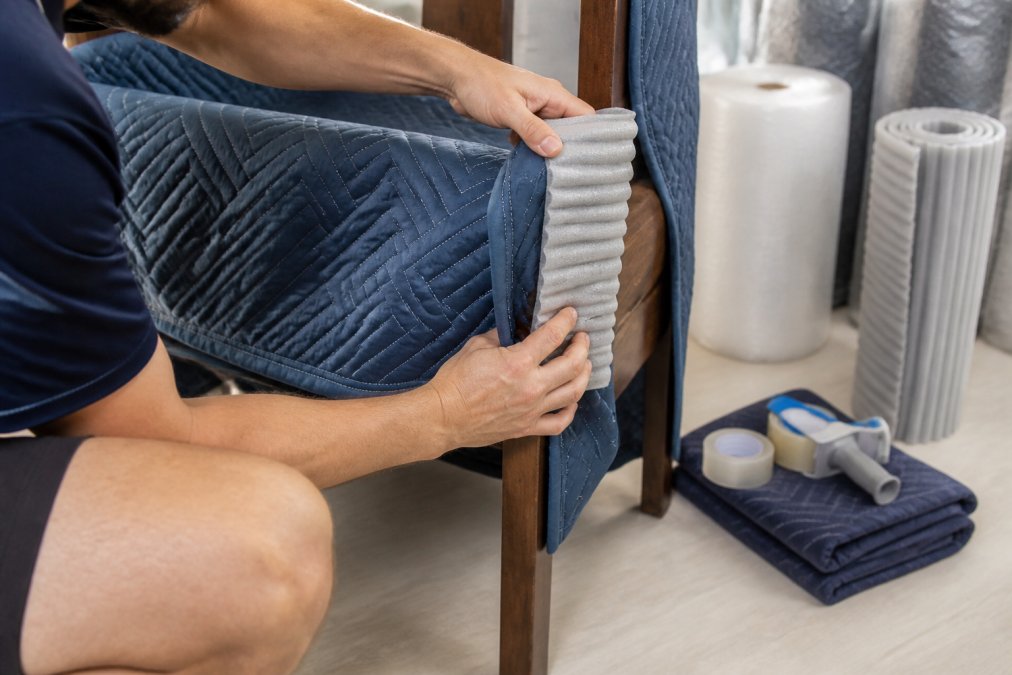
Breathable covers are essential for long-term storage. Unlike plastic wrap, which traps moisture and creates conditions for mould growth, breathable covers allow air circulation while protecting against dust and bumps. Moving blankets work exceptionally well, they’re thick, durable, and provide cushioning. Wrap each piece individually, securing blankets with soft rope or moving straps rather than plastic tape, which can damage finishes.
For upholstered items like sofas and chairs, use mattress protectors or furniture covers designed for storage. These breathable covers protect fabric from dust, dirt, and pest infestation while allowing moisture to escape. Avoid plastic covers entirely; they’re the primary cause of mould on upholstered furniture in storage.
Corrugated cardboard provides excellent protection for flat surfaces and edges. Use cardboard sheets to protect tabletops, mirror backs, and glass surfaces. Edge protectors, foam or cardboard corner guards, prevent damage to corners and edges where furniture is most vulnerable.
For glass and fragile items, wrap individually in bubble wrap or packing paper. Glass shelves should be wrapped separately and stored flat, never standing upright. Mark all boxes containing fragile items clearly.
Avoid using newspaper directly against wood surfaces. Ink can transfer and cause discolouration. Use packing paper or kraft paper as a barrier between protective materials and finished surfaces.
Disassembly and organisation
Disassembling furniture reduces storage space and minimises transit damage.
Keep all hardware organised. Place screws, bolts, and brackets in small plastic bags labelled clearly, "Dining table legs" or "Bookshelf brackets." Tape these bags securely to the furniture piece they belong to, or store them together in a larger labelled container. Take detailed photos before disassembly showing how components fit together. These photos are invaluable when reassembling months later.
Store legs vertically when possible rather than laying them flat. Wrap them individually in moving blankets to prevent scratching.
For drawers, leave them slightly open during storage to prevent moisture buildup. If storing drawers separately, wrap them individually and store them flat.
How to Protect Wood Furniture in Storage
Wooden furniture is particularly vulnerable in storage. Wood absorbs and releases moisture based on humidity levels, which causes warping, swelling, and surface finish damage.
The primary enemy of wood furniture is humidity fluctuation. When humidity rises, wood swells; when it drops, wood shrinks. This constant movement stresses joints, can cause splitting, and damages the surface finish. Climate-controlled storage units maintain consistent temperature and humidity levels, preventing these damaging fluctuations. For valuable wooden pieces, climate-controlled storage is worth the investment.
For standard storage units without climate control, use moisture absorption products. Silica gel packets, calcium chloride dehumidifiers, or specialised furniture storage dehumidifiers help reduce moisture in the air around your furniture. Replace them regularly. These aren’t a substitute for climate control, but they help manage moisture in standard units.
Ensure wooden furniture has proper ventilation around it. Don’t pack it tightly against other items or walls. Air circulation helps prevent moisture concentration.
Apply furniture polish before storage as an additional protective measure. Use wax-based or silicone-based products rather than oil-based polishes, which can become sticky in warm storage conditions.
Store wooden furniture away from direct sunlight if your storage unit has windows. Sunlight can fade finishes and cause uneven colour changes.
How to Prevent Mould on Furniture in Storage
Mould growth is one of the most common and damaging problems in furniture storage. Mould thrives in damp, poorly ventilated environments and can permanently damage upholstery, wood, and leather.
The foundation of mould prevention is moisture control. High humidity creates ideal conditions for mould. Use dehumidifiers or moisture absorption products in your storage unit. Check and replace moisture absorbers regularly, especially in humid seasons.
Ventilation is equally critical. Ensure air can circulate around all furniture pieces. Don’t stack items directly against walls or pack them tightly. Leave space between pieces. Good air circulation prevents moisture from concentrating in specific areas.
Never use plastic wrap or plastic covers for long-term storage. Plastic traps moisture against the furniture surface, creating perfect conditions for mould. Use breathable covers instead.
For upholstered furniture, ensure it’s completely dry before storage. Air-dry upholstered pieces thoroughly before wrapping. In humid climates, use fans to speed up drying.
Store leather furniture with leather conditioner applied. Properly conditioned leather resists moisture absorption better than untreated leather.
Inspect your storage unit regularly for signs of water damage, leaks, or flooding. Choose a storage facility with a good roof, proper drainage, and no history of water intrusion. Urban Self Storage facilities feature advanced 24/7 CCTV surveillance.
Choose the Right Storage Environment
The storage environment you select dramatically affects how well your furniture is protected.
Climate-controlled versus standard units
Climate-controlled storage maintains consistent temperature and humidity year-round, typically between 15-21°C and 30-50% humidity. This stability protects wood from warping, prevents mould growth, and preserves finishes and fabrics.
Standard storage units experience temperature and humidity fluctuations based on seasons and weather. These fluctuations stress wooden furniture and create conditions for mould growth.
For short-term storage of everyday furniture, standard units work fine if you use moisture absorption products and ensure proper ventilation. For long-term storage, valuable pieces, antique furniture, or items sensitive to moisture, climate-controlled storage is the better choice.
Consider your climate. In humid regions, the cost difference between standard and climate-controlled storage is worth it. If you’re storing irreplaceable or expensive items, climate control is insurance against damage.
Ventilation and air circulation
Regardless of unit type, ventilation and air circulation are essential. Stagnant air allows moisture to concentrate and mould to grow. Ensure your storage unit has adequate ventilation.
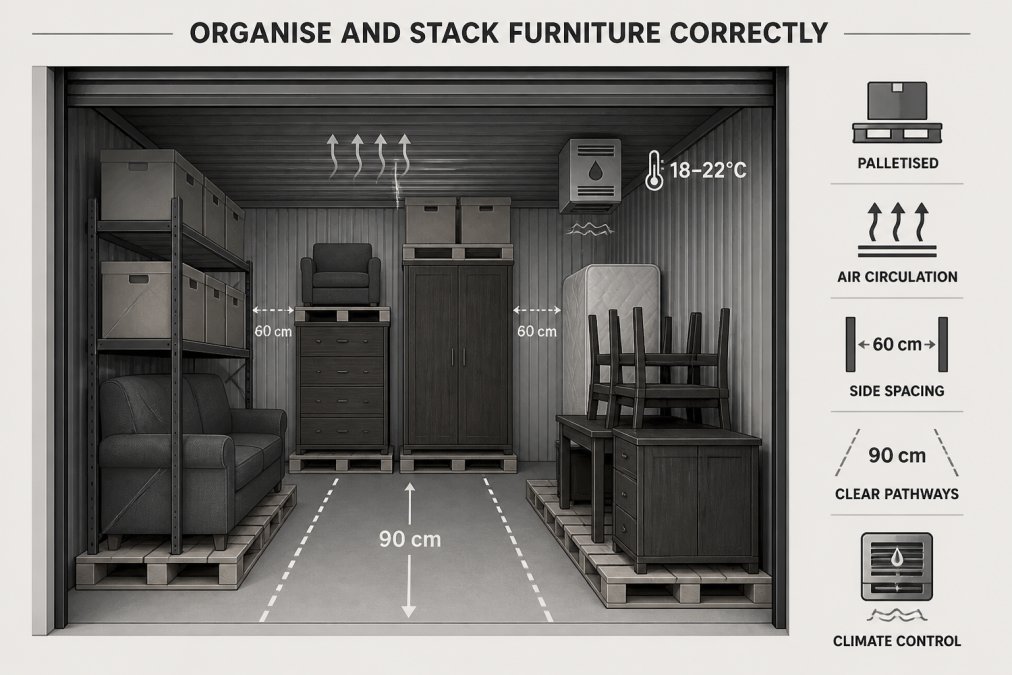
Position furniture to allow air flow. Don’t pack items tightly or stack them ceiling-high without gaps. Leave space between pieces. This simple step significantly reduces moisture concentration and mould risk.
If your storage unit doesn’t have built-in ventilation, consider portable options. Small battery-powered fans or solar-powered ventilation units can improve air circulation.
Organise and Stack Furniture Correctly
How you arrange furniture in your storage unit affects both protection and space efficiency.
Start by creating a layout plan. Place heavier items on the bottom and lighter items on top. Never stack heavy pieces on top of delicate furniture. Tables and sturdy pieces can support weight; upholstered items and delicate pieces cannot.
Use palletised storage when possible. Placing furniture on wooden pallets raises it off the floor, improving air circulation underneath and protecting against floor moisture. Pallets are especially important if there’s any risk of water intrusion.
Create clear pathways through your unit. You’ll need access to items if you want to retrieve something or check on your storage.
Protect surfaces where furniture contacts other items. Place cardboard or moving blankets between stacked pieces to prevent scratching and damage.
Store drawers separately from main units if possible, or leave them slightly open. For mattresses and upholstered pieces, store them upright rather than flat to maintain shape and allow better air circulation.
Label everything. Include contents and the room it came from. This makes retrieval much easier.
Monitor and Maintain Your Storage Unit
Storage doesn’t end once you’ve packed your furniture and locked the door. Regular monitoring throughout the storage period helps catch problems early.
Visit your unit monthly if possible. Check for signs of water damage, pest activity, or mould growth. Look at your moisture absorption products and replace them if saturated. Ensure nothing has shifted or tipped over.
If you notice any issues, dampness, musty smells, or visible mould, take action immediately. Increase ventilation, replace dehumidifiers, and if problems persist, move valuable items to a climate-controlled unit.
Keep your storage unit organised throughout the storage period. Maintain the same care standards you used during initial packing.
Document the condition of your storage unit. Take photos monthly showing the arrangement and condition of furniture. These photos serve as evidence if you need to file an insurance claim.
Keep detailed records of what you’re storing, including dimensions, condition notes, and estimated value. This information is essential for insurance purposes.
Storing furniture safely requires attention to detail at every stage, from pre-storage cleaning through to monitoring while items are in the unit. The investment in proper preparation, protective materials, and the right storage environment pays dividends when your furniture emerges in the same condition it went in.
Urban Self Storage offers secure, flexible storage solutions with modern facilities designed to protect your belongings. Our two locations provide convenient access with a simple move-in process completed in less than 10 minutes, giving you peace of mind that your furniture is stored safely. With climate-controlled options, 24/7 CCTV surveillance, and flexible short and long-term rental terms, you can choose the protection level your furniture needs. Book online now to secure the right storage space for your furniture.
Frequently Asked Questions
How do I know if my storage unit has proper ventilation to prevent mould?
Look for well-ventilated storage units with air circulation systems. Climate-controlled units maintain consistent humidity levels (typically 30-50%), which is essential to prevent mould growth on furniture. Before storing items, inspect the unit for musty odours, visible moisture, or signs of damp. Ask the facility operator about their humidity monitoring and ventilation practices. Breathable covers rather than plastic wrap also allow moisture to escape, reducing mould risk significantly.
What's the best way to pack furniture for storage to avoid damage?
Start by disassembling larger pieces and keeping hardware in labelled bags. Use moving blankets to wrap each item, securing them with tape rather than plastic shrink wrap, which traps moisture. Add edge protectors to corners and legs to prevent dents. Use corrugated cardboard to separate stacked pieces and absorb moisture. Leave small gaps between items for air circulation, and avoid stacking heavy furniture directly on upholstered items. Store mattresses upright or on a flat, raised surface to prevent sagging and moisture absorption.
How do I prevent mould on furniture in storage?
Mould thrives in damp, poorly ventilated spaces. Choose a climate-controlled unit with humidity control and good air circulation. Before storage, ensure all furniture is clean and completely dry, any residual moisture accelerates mould growth. Use breathable covers and avoid plastic wrap that traps condensation. Place moisture-absorbing materials like silica gel or activated charcoal inside the unit. Check your furniture monthly, especially during humid months. Proper ventilation and consistent humidity levels are the most effective mould prevention strategies.
Should I use plastic covers or breathable covers for furniture in storage?
Breathable covers are superior to plastic wrap for long-term furniture storage. Plastic traps moisture and condensation, creating an environment where mould and mildew thrive. Breathable covers allow air circulation while protecting against dust and surface damage. Moving blankets and dust covers made from fabric provide excellent protection without moisture buildup. Reserve plastic covers only for short-term protection during transit. For extended storage, especially in humid conditions, breathable materials are essential to maintain your furniture's structural integrity and finish.
This article was written using GrandRanker