
Table of Contents
- Short-Term vs Long-Term Storage: Key Differences
- Comparison Table: Duration, Cost, Access & Flexibility
- Month-to-Month Storage Lease Options
- Storage Cost Per Month: Short-Term vs Long-Term Pricing
- Self Storage Unit Sizes: Choosing the Right Capacity
- Decluttering and Renovation Storage: When Each Works Best
- How to Choose: A Decision Checklist
- Frequently Asked Questions
Last Updated: September 23, 2026
Short-term storage is typically under 3 months and suits temporary needs like house moves or renovations. Long-term storage is 3 months or longer and works best for seasonal items, downsizing, or ongoing business inventory. The key difference: short-term offers flexibility and pay-as-you-go rates, while long-term usually comes with discounted monthly pricing and lease commitments.
Short-Term vs Long-Term Storage: Key Differences
Understanding the distinction between short-term and long-term storage starts with duration and cost structure. Short-term storage covers periods under 3 months, ideal for moving house, home renovations, or temporary overflow. Long-term storage spans 3 months to several years, designed for seasonal items, downsizing, or ongoing business needs.
The real difference lies in how you pay and commit. Short-term rental agreements typically offer month-to-month flexibility with no lock-in, meaning you can exit whenever your renovation finishes or your relocation settles. Long-term contracts usually require a commitment in exchange for discounted monthly rates. Think of it this way: short-term prioritises flexibility; long-term prioritises savings.
At Urban Self Storage, we see customers choose based on their timeline and budget. A family renovating their home for 8 weeks needs quick access and the ability to leave without penalty. A business storing seasonal stock year-round benefits from lower per-month costs and a predictable rental expense.
The storage unit sizes available, ranging from 1m³ lockers to 50m³+ spaces, work for both durations. What changes is the access pattern. Short-term renters often need drive-up storage units for frequent loading and unloading. Long-term customers prioritise security features like CCTV surveillance, individual alarms, and gate codes to protect items sitting undisturbed for months.
Short-term storage = flexibility and accessibility. Long-term storage = cost savings and security.
Comparison Table: Duration, Cost, Access & Flexibility
| Aspect | Short-Term Storage | Long-Term Storage |
|---|---|---|
| Duration | Under 3 months | 3 months to several years |
| Best For | House moves, renovations, temporary overflow | Seasonal items, downsizing, business inventory |
| Pricing Structure | Pay-as-you-go, month-to-month rates | Discounted monthly rates with lease commitment |
| Access Hours | Often 24/7 or extended hours | Usually 24/7 at secure facilities |
| Flexibility | Exit anytime without penalty | Early exit may incur fees; no lock-in common in Australia |
| Security Features | Standard CCTV and gate access | Enhanced: CCTV, individual alarms, climate control options |
| Drive-Up Access | Commonly available | Available but less critical for infrequent access |
Month-to-Month Storage Lease Options
Month-to-month leases are the backbone of short-term storage and increasingly common for long-term renters in Australia who want flexibility without commitment. These rental agreements let you pay one month at a time with the option to extend or exit based on your needs.
The advantage is clear: no surprise long-term obligation. If your home renovation finishes early or your business inventory clears faster than expected, you walk away without penalty. Urban Self Storage offers month-to-month options across both locations, meaning you can adjust your storage duration as circumstances change.
However, month-to-month comes with a trade-off. Monthly rates are higher than discounted long-term pricing. If you know you’ll need storage for 12 months, committing upfront usually saves money compared to paying month-to-month for the full year. But if your timeline is uncertain, the flexibility justifies the premium.
Many Australian storage facilities, including Urban Self Storage, also offer flexible storage contracts that let you switch from short-term to long-term without moving your belongings. This matters for customers who initially book for a 2-month renovation but discover they need another 4 months, you can upgrade your lease on the spot without disruption.
Check whether your storage facility allows mid-contract upgrades or downgrades. Some facilities charge admin fees; Urban Self Storage’s simple process means you can adjust your plan with minimal fuss.
Storage Cost Per Month: Short-Term vs Long-Term Pricing
The pricing logic is straightforward: long-term commitments cost less per month because the facility locks in your occupancy and reduces turnover risk. Short-term month-to-month storage carries a premium because the operator must account for faster unit turnover and administrative overhead.
Book Online in 3 Minutes & Get 50% Off Instantly →
Real-world example: a 10m³ unit might cost one rate for a 1-month rental and a lower per-month rate if you commit to 12 months. The difference compounds; over a year, that per-month saving adds up significantly.
For short-term storage during a house move or renovation, you’re paying for convenience and flexibility. You get in quickly (Urban Self Storage’s move-in takes under 10 minutes), access your items whenever you need them, and leave without penalty once your project wraps.
For long-term storage, the maths favour commitment. Seasonal businesses storing stock year-round, families downsizing and keeping inherited furniture, or traders holding equipment between jobs all benefit from locked-in lower rates. You know your monthly cost, budget accordingly, and avoid the surprise of rate increases if you stay month-to-month.
The storage unit size also affects pricing. Larger units (20m³+) for long-term use see steeper per-month discounts than small lockers. This makes long-term storage especially cost-effective for business inventory or significant household goods. Whether you’re storing a caravan, boat, jet ski, or business stock, Large Storage Units in Bunbury offer the space and discounted rates that long-term commitments provide.
Avoid the false economy of short-term month-to-month pricing if you know your storage need will extend beyond 3 months. The cumulative cost of paying premium short-term rates for an extended period often exceeds a committed long-term lease. Calculate your likely duration before booking.
Self Storage Unit Sizes: Choosing the Right Capacity
Unit size drives both cost and usability. Australian storage facilities typically offer sizes from 1m³ (small locker for documents or seasonal decorations) to 50m³+ (entire house contents or business inventory).
For short-term moves or renovations, most households need 5-15m³. A 5m³ unit can hold the contents of a bedroom; 10m³ can accommodate a lounge and dining area; 15m³ can fit the contents of a 2-bedroom house. The key is choosing enough space so items aren’t crammed; compression risks damage and makes retrieval frustrating.
For long-term storage, size choice depends on what you’re keeping. Seasonal stock (Christmas decorations, summer sports gear) might need 2-3m³. A downsizer storing inherited furniture or a business holding overflow inventory might need 20m³+.
Decluttering and Renovation Storage: When Each Works Best
Short-term storage shines during life transitions. A home renovation typically lasts 8-16 weeks, perfect for short-term rental. You move furniture and fittings into a self-storage unit, contractors access your space freely, and you retrieve everything once work finishes. Month-to-month flexibility means if the project runs over, you extend without renegotiating.
Choose short-term storage for house moves, renovations, and temporary decluttering trials. Choose long-term storage for downsizing keepsakes, seasonal business inventory, and permanent overflow space.
How to Choose: A Decision Checklist
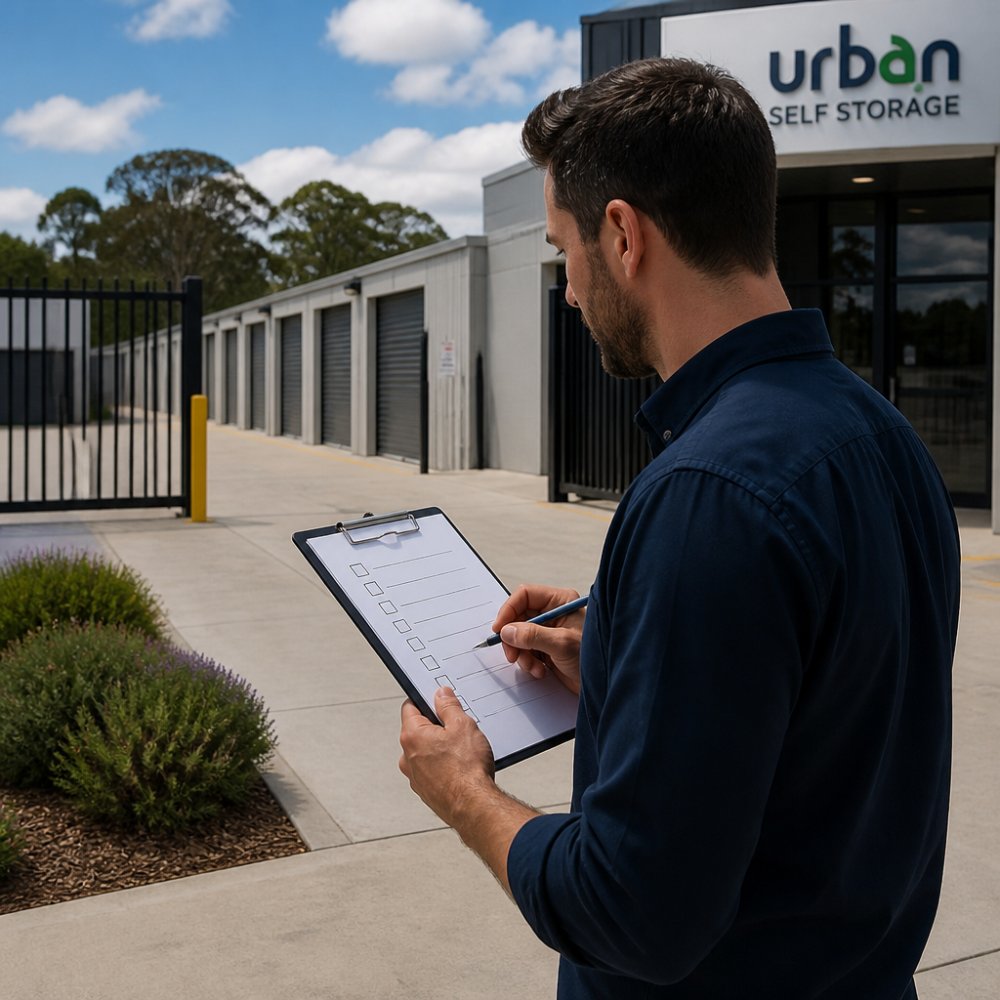
Use this framework to determine whether short-term or long-term storage suits your situation.
Step 1: Define Your Timeline
Book Online in 3 Minutes & Get 50% Off Instantly →
- How long do you need storage? (Be realistic, most projects run longer than expected.)
- Is the end date fixed (renovation completion) or uncertain (downsizing trial)?
- If uncertain, short-term month-to-month is safer; if certain and beyond 3 months, long-term saves money.
Step 2: Assess Access Frequency
- Will you access items weekly, monthly, or rarely?
- Frequent access favours short-term with drive-up units and extended hours.
- Infrequent access (seasonal stock, keepsakes) works with standard long-term access.
Step 3: Calculate Total Cost
- For timelines under 3 months: short-term month-to-month is usually cheaper.
- For timelines 3-6 months: compare month-to-month total vs. a committed 6-month rate.
- For timelines 12+ months: long-term discounts almost always beat cumulative short-term costs.
Step 4: Evaluate Item Protection Needs
- Are you storing furniture, electronics, or sensitive inventory?
- Climate-controlled storage (long-term option) protects against temperature and humidity damage.
- Standard secure storage (short-term or long-term) with CCTV and gate codes suits most household goods and business stock.
Step 5: Check Flexibility Requirements
- Can you commit to a lease, or do you need exit flexibility?
- Australian storage facilities increasingly offer no-lock-in long-term options, ask before assuming commitment.
- Urban Self Storage allows mid-contract adjustments, so you can start short-term and extend to long-term without moving.
Step 6: Book and Move In
- Choose a facility with the access hours and features you need.
- Confirm whether move-in is quick (under 10 minutes) if you’re on a tight timeline.
- Ask about discounts, as offers may be available.
Frequently Asked Questions
What counts as short-term vs long-term storage?
Short-term storage typically covers periods under 3 months, ideal for house moves, renovations, or temporary transitions. Long-term storage runs 3 months or longer, suited to seasonal items, business inventory, or extended preservation needs. The distinction matters because pricing structures, lease flexibility, and facility features often differ between the two. Short-term rentals emphasise accessibility and month-to-month flexibility, whilst long-term options may offer discounted per-month rates in exchange for commitment.
Is long-term storage cheaper per month than short-term?
Long-term storage often offers better per-month value because providers discount extended commitments. However, the total cost depends on your contract length, unit size, and facility features. Short-term storage charges higher monthly rates but requires no long-term commitment, making it cost-effective if you only need space briefly. Compare your specific duration and unit size requirements against available pricing to determine which approach saves money for your situation.
What items suit long-term storage versus short-term?
Short-term storage works best for household goods during moving house, furniture during renovations, or seasonal items you’ll retrieve within months. Long-term storage suits business inventory, archived documents, vehicles like caravans or boats, or possessions you’re keeping but not using regularly. For long-term storage of sensitive items like electronics or antiques, considering options that protect against environmental factors is advisable. Short-term storage often prioritises accessibility since items are retrieved sooner.
Can you switch from short-term to long-term storage without penalty?
Most Australian self-storage providers, including those offering flexible month-to-month leases, allow you to extend your rental without penalty. You can typically start with short-term and convert to long-term if your needs change. However, terms vary by facility, so confirm the specific contract conditions before booking. Facilities with no lock-in contracts offer the most flexibility to adjust your storage duration as circumstances evolve.
How much notice do I need to give before ending a storage contract?
Notice periods vary by provider and contract type. Month-to-month leases typically require a notice period to vacate, though some facilities may accept shorter notice. Long-term contracts sometimes specify longer notice periods, but flexible providers minimise this requirement. Always review your rental agreement carefully before signing. Urban Self Storage’s simple rental process includes clear terms so you understand your exit obligations upfront.