

Table of Contents
- How to Cut Storage Costs in Bunbury Without Cutting Security
- Storage Unit Sizes: Match the Unit to What You’re Storing
- Storage Unit Prices per Month: What Drives the Number
- Storage Security Features: How to Tell Real Protection From Marketing
- Self Storage Hidden Fees: The Costs That Change the Real Price
- Location and Access: The Cheap Unit That Costs You Time
- Insurance and Preparation: Protecting What You Store
- Conclusion
- Frequently Asked Questions
Last Updated: October 20, 2026
How to Cut Storage Costs in Bunbury Without Cutting Security
The cheapest way to store your belongings without weakening security is to right-size the unit, ask what the total monthly cost includes, and check the security setup before you sign.
Storage pricing is rarely apples to apples. One facility advertises a low rate but adds admin and insurance fees; another quotes more but includes alarmed units, keypad gate access and CCTV.
Storage Unit Sizes: Match the Unit to What You’re Storing
Getting the size right is the biggest cost lever you control. Too large wastes money every month; too small forces a second unit or a rushed declutter.
Common self storage sizes and what they typically hold:
- 1.5 x 1.5m – a few boxes, seasonal items, small tools
- 3 x 1.5m – a studio or one-bedroom worth of furniture, or a small office archive
- 3 x 3m – the contents of a one to two-bedroom home, including larger furniture
A Right-Sizing Checklist You Can Use Before You Book
Work through this before you commit so you rent once, not twice:
- List every large item (beds, couches, fridges, pallets) and note its rough footprint
- Stack boxes in your mind: aim for waist-high stacks, not ceiling-high
- Add a walkway allowance if you need regular access
Photograph your packed load from a doorway before you book. Seeing the actual pile makes it far easier to judge whether a 3 x 3m unit is enough, and it saves you paying for space you do not need.
Storage Unit Prices per Month: What Drives the Number
Storage unit prices per month in Bunbury and the wider South West reflect size, location, access and security. As a rough guide, a 3 x 3m unit in the South West often runs $200 to $400 per month, and some smaller Bunbury units start around $240 per month. Treat these as approximate and confirm current rates with each provider.
Several factors move the number up or down:
- Size and height – more cubic space costs more
- Access type – drive-up units and 24/7 access can carry a premium
- Security level – CCTV, individual door alarms and keypad gate access cost money to run
- Term length – longer terms and prepayment often attract a better rate
Size and Price Comparison at a Glance
| Unit size | Roughly fits | Indicative monthly cost | Watch for |
|---|---|---|---|
| 1.5 x 1.5m | Boxes, seasonal items, tools | Entry-level rate | Often the promo unit; check renewal price |
| 3 x 1.5m | Studio or 1-bed furniture | Mid-range | Confirm internal height |
| 3 x 3m | 1-2 bedroom home contents | Approx. $200-$400 | Insurance and admin fees on top |
| 3 x 6m | 3-bed home, stock, equipment | Higher tier | Ask about drive-up access |
Costs are indicative and vary by facility. Always confirm the current rate and what it includes.
Storage Security Features: How to Tell Real Protection From Marketing
Cheap storage units are safe when the facility backs up its claims with visible, working systems. The useful skill is separating genuine protection from a brochure line: knowing how to verify each feature on site and weigh it against the rent you are quoted.
The Security Features That Actually Matter
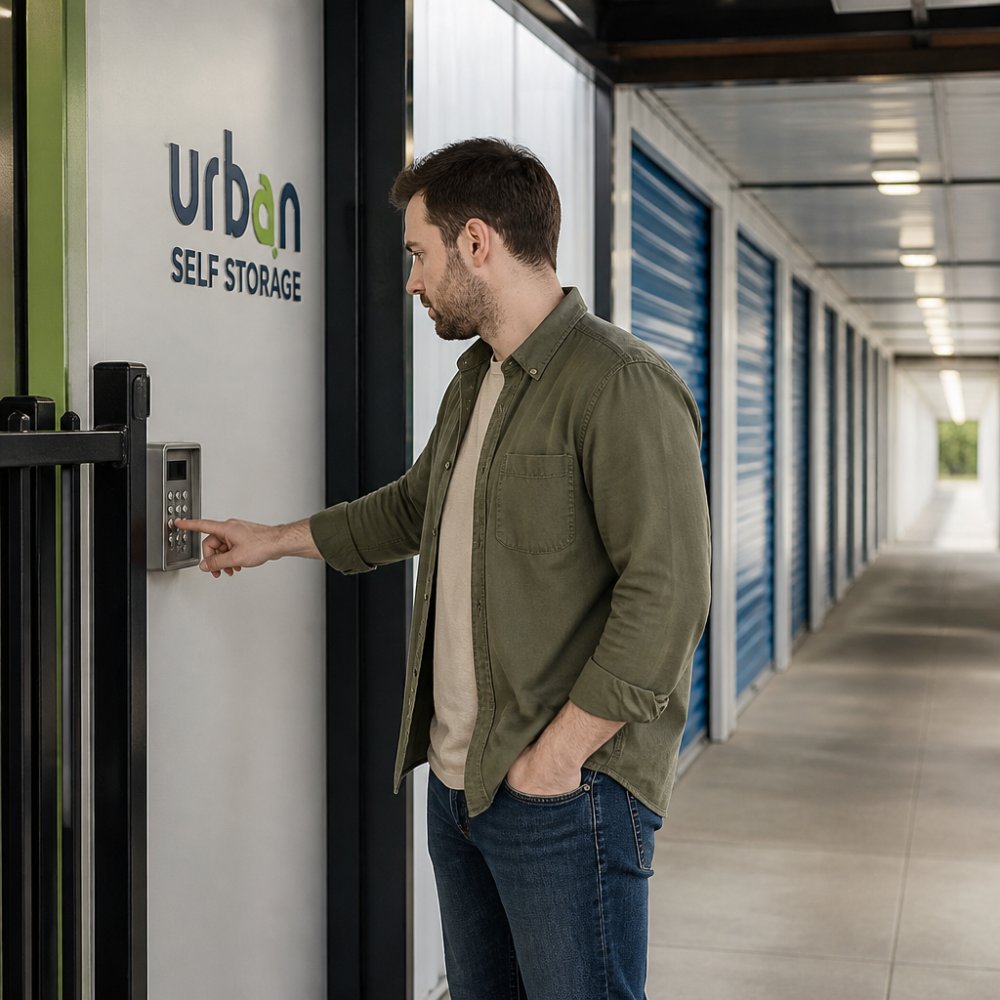
Look for perimeter fencing, good lighting, CCTV covering entries and corridors, individual door alarms, and keypad gate access that logs who comes and goes. Onsite staff and clear access hours add another layer.
Book Online in 3 Minutes & Get 50% Off Instantly →
Not all features carry equal weight. Gate control and door alarms deter opportunistic entry, while CCTV is most valuable after an incident. Lighting and fencing shape whether someone tries at all.
How to Verify Security Claims on a Site Visit
Do not rely on the website. Walk the facility and check these in person:
- Perimeter and gate – Is the fence intact with no gaps, and does the gate close fully behind every vehicle? Watch it operate.
- Keypad gate access – Ask whether entries are logged and who can issue or revoke codes. A keypad that is never audited is weaker than it looks.
- CCTV – Point at the cameras you can see and ask what they cover and how long footage is kept. Cameras aimed only at the office door are not protecting your unit.
- Individual door alarms – Ask whether each unit is alarmed and what triggers the alarm. This is the feature most often claimed and least often demonstrated.
- Lighting – Visit at dusk if you can. Corridors and loading areas should be lit well enough to work safely and to leave no dark corners.
- Onsite staff and access hours – Confirm whether staff are present during business hours and what the access hours are. 24/7 access is convenient but only sensible where gate control and alarms are solid.
- Condition and cleanliness – Look for damp, pests, leaks and rubbish. A clean, dry facility protects your goods from damage no camera will prevent.
Bring a short list and ask the same questions at every facility. Comparing answers side by side is far more reliable than comparing brochures, and it exposes vague claims quickly.
The Price-Versus-Security Trade-Off
This is where cheap storage units become a false economy. A unit with no CCTV, no gate control and no onsite presence is where “cheap” turns expensive.
Price the protection, not just the space. If one facility is meaningfully cheaper but lacks gate control, door alarms and CCTV, ask what it would cost to self-insure the contents for a year.
Security Checklist Before You Sign
- Confirm CCTV covers gates, corridors and unit doors, and ask how footage is monitored and retained
- Check for individual door alarms on each unit and ask what triggers them
- Verify keypad gate access with a record of entries and a process for revoking codes
- Inspect perimeter fencing and night lighting in person, ideally at dusk
- Ask whether staff are onsite and what the access hours are
- Confirm who holds keys and how access is controlled
- Check the facility is clean, dry and free of pests
- Ask what storage insurance or liability cover is available and whether it is required
A low headline rate with weak protection is not a bargain. Before you sign, confirm the security features in person and check whether your home contents insurance covers goods in storage. If it does not, factor the cost of cover into the comparison.
Self Storage Hidden Fees: The Costs That Change the Real Price
Self storage hidden fees are the difference between the advertised rate and what you actually pay. Ask for the total monthly figure in writing before you commit, and what it will be after any promotional period ends. That question separates a genuine bargain from a rate that quietly climbs.
Watch for these common add-ons and when each applies:
- Administration or setup fees – charged once at sign-up, so they matter most on short rentals. On a two-month rental, a setup fee can add a meaningful percentage to the total.
- Lock purchase – if you do not bring your own. Ask whether a specific lock type is required and whether you can supply your own.
- Insurance or liability cover – may be required or optional. Check whether it is included in the quoted rate or billed separately, and check what it actually covers.
- Minimum rental periods – a short minimum term can lock you in longer than you planned. Ask whether month-to-month storage with no lock-in contract is available.
How to Compare the Real Monthly Cost
Build a simple total-cost figure for each facility before you decide:
- Take the quoted monthly rate
- Add any admin or setup fee, divided across the months you expect to stay
- Add the lock cost if you are not bringing your own
- Add insurance or liability cover if it is required or you choose it
- Replace the promotional rate with the renewal rate for any month after the promotion ends
- Add any access surcharges you expect to incur
Compare that result, not the headline rate. A facility that quotes more per month but includes alarmed units, keypad gate access and CCTV, with no admin fee and a clear renewal rate, can easily be cheaper over a year.
The real price is the total you pay each month including admin, lock, insurance and any renewal rate, not the headline figure on the listing. Get that total in writing before you sign.
Questions to Ask Before You Sign
- What is the total monthly cost, including every fee?
- What does the rate revert to after any promotion, and when?
- Is there a minimum rental period or notice period to vacate?
- Is insurance or liability cover required, and what does it cover?
Ask each provider to email you the total monthly cost and the renewal rate. A written figure is far easier to compare than a phone quote, and it gives you something to hold the facility to later.
Location and Access: The Cheap Unit That Costs You Time
A unit on the far edge of the region can cost more than it saves once you count fuel and travel time. Convenience is part of value.
Weigh these trade-offs:
Book Online in 3 Minutes & Get 50% Off Instantly →
- Travel time from home or your business hub
- Access hours and whether 24/7 access matters for your schedule
- Drive-up versus corridor access for heavy or bulky items
- Multiple trips if the unit is hard to reach
For tradespeople and businesses, a location near your work routes often beats a slightly cheaper unit across town. Providers with East Bunbury and Picton locations, like Urban Self Storage, let you compare access against your daily movements.
Insurance and Preparation: Protecting What You Store
Home contents insurance often excludes goods kept in self storage, so check your policy before you move anything in. Ask the facility what cover it offers and whether it is required.
Preparation protects your belongings and your budget:
- Use sturdy boxes and label them by room
- Wrap furniture and keep items off the floor on pallets
- Drain fuel from mowers and equipment
- Keep an inventory list and photos for any claim
Ask whether short and long term storage in Bunbury WA options and month-to-month terms are available with no lock-in contract. Flexible terms let you scale down once the renovation or move is done.
Conclusion
Finding cheap storage units without sacrificing security comes down to right-sizing, reading the total cost, and checking the security setup in person. Do not let a low headline rate hide weak protection or surprise fees.
At Urban Self Storage, we back affordable rates with advanced 24/7 CCTV surveillance, keypad-controlled access and clean, secure facilities across our East Bunbury and Picton locations.
Frequently Asked Questions
How much does a storage unit cost in Bunbury per month?
As a rough guide, 3x3m units in the South West typically run about $200 to $400 per month, and some small Bunbury units start around $240 per month. These are approximate figures only, since rates vary by facility, unit type and lease length. Always confirm current rates directly with the provider before you book, and ask whether any admin, lock or insurance costs sit on top of the advertised price.
What size storage unit do I need?
Match the unit to the job. A 1.5×1.5m unit holds boxes and small furniture; a 3×1.5m suits a studio or a few large appliances; a 3x3m fits a one to two bedroom home; and a 3x6m handles a larger household or business stock. Measure your bulkiest items first, including the caravan or trailer if you are storing one, and ask the facility to confirm the fit before signing.
Are cheap storage units safe?
They can be, but price alone tells you nothing about safety. A cheap unit is only good value if the facility has perimeter fencing, working CCTV, good lighting, keypad gate access and, ideally, individual door alarms. Ask to inspect the site before signing and confirm who monitors the cameras and when. A low monthly rate at a facility with no monitoring is false economy if your belongings are at risk.
Are there hidden fees with self storage?
Sometimes. Common extras include a one-off admin fee, the cost of a padlock, insurance or liability cover, and charges for late payment or early termination. Ask for a full written breakdown before you sign, and check whether the advertised rate is a promotional price that rises after the first month. Comparing total move-in cost, not just the headline monthly rate, is the only fair way to judge value.