
Table of Contents
- Climate Controlled vs Standard Storage: The Short Answer
- What Climate Controlled Storage Actually Does
- Storage Unit Price Comparison: What the Extra Cost per Week Really Buys
- Protecting Sensitive Items in Storage: What Needs Climate Control and What Does Not
- Mould and Mildew Prevention in Storage: Why Humidity Matters More Than Heat
- Long-Term Storage Tips: When Climate Control Starts to Pay for Itself
- Do You Need Climate Control? A Numbered Checklist
- Conclusion: Weighing the Extra Cost Against What You Are Storing
- Frequently Asked Questions
Last Updated: September 18, 2026
Climate Controlled vs Standard Storage: The Short Answer
Yes, climate controlled storage is worth the extra cost when you are storing items that moisture, heat or temperature swings can ruin, and when you plan to keep them stored for more than about three months. For tools, plastic tubs and outdoor gear, a standard unit is usually the smarter spend.
If you are weighing up whether climate controlled storage is worth the extra cost, the honest answer depends on two things: what is going in the unit, and how long it stays there. This guide from Urban Self Storage breaks down the price gap, the items that justify the premium, and the ones that genuinely do not.
Australian Bureau of Meteorology climate data
What Climate Controlled Storage Actually Does
Climate controlled storage is a storage unit where temperature and humidity are actively managed within a set range, rather than left to whatever the weather does outside.
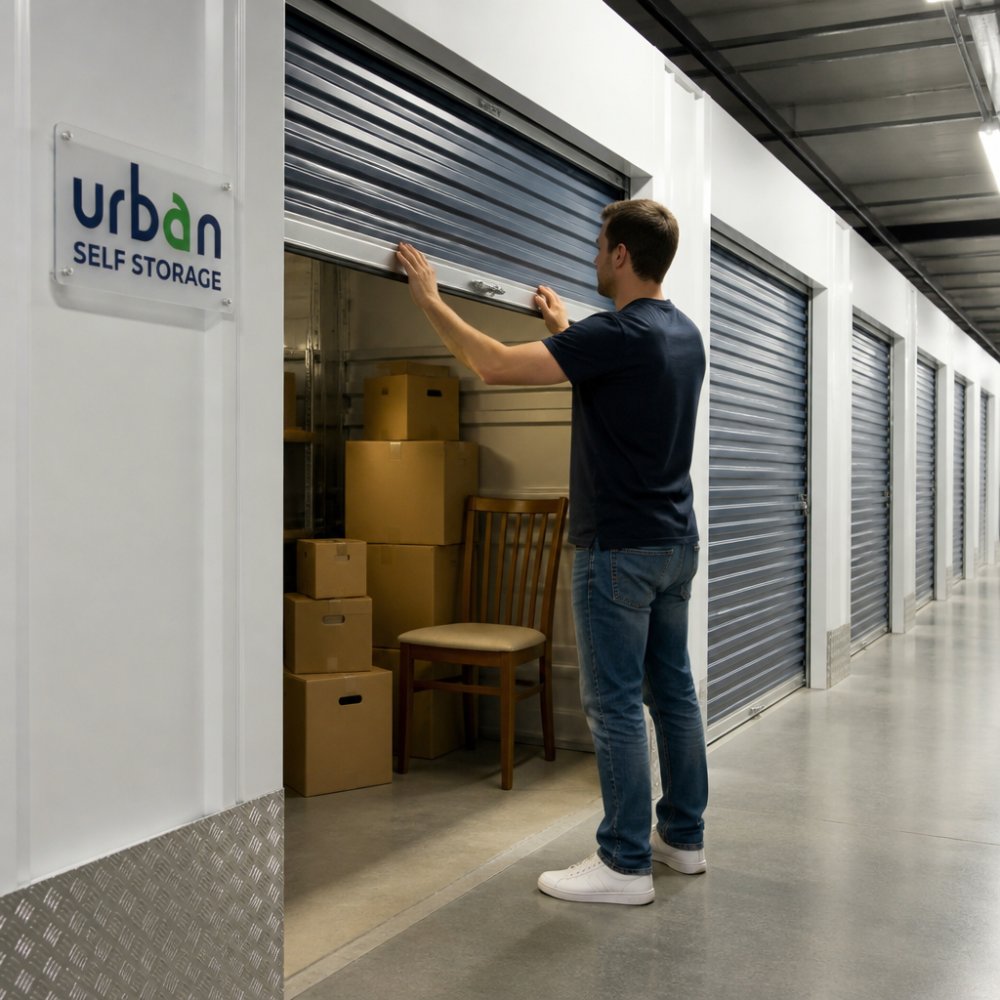
A climate controlled unit typically holds temperatures between roughly 15°C and 25°C, with relative humidity kept in a stable band. That stability is the point. It is not about making the unit cold or warm, it is about stopping the swings that cause damage.
Temperature range and humidity control explained
Temperature-controlled storage and humidity-controlled storage are often sold together, but they solve different problems. Temperature control stops heat from warping timber, softening adhesives and stressing electronics. Humidity control stops moisture from feeding mould and mildew and corroding metal.
How a standard storage unit compares
A standard storage unit is a secure, dry shell. It keeps your belongings locked up and out of the rain, but the air inside tracks the outside temperature. On a 38°C summer day, an uninsulated unit can get considerably hotter than the air outside, and on a cold night it drops just as fast.
Book Online in 3 Minutes & Get 50% Off Instantly →
Storage Unit Price Comparison: What the Extra Cost per Week Really Buys
Climate controlled storage usually costs around 20% to 40% more per week than a standard unit of the same size. The exact premium varies with unit size, location, and availability. It is a modest extra cost per week, not a dramatic one, which is why the decision should hinge on your contents rather than your budget alone.
| Feature | Standard Storage Unit | Climate Controlled Unit |
|---|---|---|
| Temperature range | Tracks outside conditions; can exceed 38°C in summer | Held around 15-25°C |
| Humidity control | None | Actively managed |
| Price premium | Baseline | Roughly 20-40% more per week |
| Best for | Tools, plastic tubs, outdoor gear, metal equipment | Timber, electronics, leather, documents, artwork |
| Mould risk | Higher in humid months | Low |
| Ideal duration | Any | Beyond about 3 months |
The replacement-cost test
The weekly gap is small enough that one damaged item can wipe out a year of savings. Run the numbers before you book:
- A solid timber dining table or antique piece can cost several hundred to several thousand dollars to replace or restore.
- A water-damaged document set or photograph collection is often impossible to replace at any price.
- A failed appliance or corroded electronic item typically costs hundreds to replace.
- A year of the climate control premium on a typical unit is usually a few hundred dollars.
Compare the premium against replacement value, not against the base rent. One damaged timber table or water-damaged document set can wipe out a year of savings.
Protecting Sensitive Items in Storage: What Needs Climate Control and What Does Not
Sensitive items in storage are those that absorb moisture, react to heat, or lose value when their shape or finish changes. If you can picture an item swelling, warping, cracking, corroding or growing mould, it belongs in a climate controlled unit.
Items that justify the premium
- Wooden furniture, which warps and cracks as moisture levels rise and fall
- Electronic components, where heat and condensation shorten working life
- Leather goods, which dry out, crack or grow mildew
- Musical instruments, especially those with timber bodies and tight tolerances
- Wine, which needs steady temperature to avoid spoilage
- Photographs, artwork and collectibles, where fading and foxing are permanent
- Archival documents and important papers, which stain and crumble once damp
- Antiques, where any environmental damage destroys value
Items that are fine in a standard unit
- Hand tools and metal equipment
- Plastic storage tubs and crates
- Outdoor gear, camping equipment and garden furniture
- Bicycles, surfboards and sporting goods
- Lawnmowers and hardware
Clean and fully dry anything going into storage, and never seal damp items in plastic. Trapped moisture is the single biggest cause of mould in a standard unit, and it happens because of what you packed, not where you packed it.
Mould and Mildew Prevention in Storage: Why Humidity Matters More Than Heat
Mould and mildew prevention in storage comes down to humidity, not temperature. Mould needs moisture to grow, and in a closed unit with no air movement, a humid spell is all it takes. This is where Australian conditions differ sharply from the generic advice in most overseas guides.
How Australian humidity zones change the risk
Coastal and subtropical regions carry far more atmospheric moisture than inland areas. Coastal and subtropical regions carry far more atmospheric moisture than inland areas. In these zones, a standard storage unit is a genuine mould risk for porous goods through summer. In these zones, a standard storage unit is a genuine mould risk for porous goods through summer. Inland and southern areas see lower average humidity but still face summer heat extremes that drive temperature swings and condensation.
What actually reduces the risk
- Use climate control where the contents are porous or valuable
- Leave a gap between boxes and the walls for air circulation
- Elevate items off the floor on pallets or shelving
- Avoid cardboard for long-term storage; use plastic crates
- Add moisture absorbers for short stints in a standard unit
- Inspect stored goods every few months, especially after summer
Budget-friendly hacks for a standard unit
If climate control is out of reach, you can still cut the risk substantially:
- Line the base of cardboard boxes with a moisture-absorbing layer or use sealed plastic crates instead.
- Place reusable moisture absorbers or silica gel packs inside boxes and replace them monthly through humid months.
- Keep everything off the concrete floor; concrete wicks moisture and transfers it to whatever sits on it.
- Avoid stacking boxes tight against external walls, which are the coolest surfaces and the first to attract condensation.
- Visit and air the unit on a dry day if the facility allows it.
Australian Government guidance on mould and damp
Book Online in 3 Minutes & Get 50% Off Instantly →
Long-Term Storage Tips: When Climate Control Starts to Pay for Itself
Long-term storage tips almost always circle back to the same threshold: around three months. Below that, most goods survive a standard unit without issue. Past it, the cumulative effect of temperature fluctuations and humidity starts to show.
Do not assume a standard unit is “dry enough” because the facility looks clean. Cleanliness and environmental control are different things, and a spotless unit with no ventilation will still grow mildew in a humid month.
Do You Need Climate Control? A Numbered Checklist
Work through this list before you book. Two or more “yes” answers means climate control is the better call.
- Are you storing timber furniture, antiques or musical instruments?
- Are electronics, appliances or precision equipment going in?
- Are you storing leather, fabric, artwork or photographs?
- Will anything stay in the unit longer than three months?
- Is the unit in a humid or coastal area?
- Would mould or water damage be expensive or impossible to reverse?
- Are documents, archives or collectibles involved?
- Do you want to avoid inspecting and re-packing goods every few weeks?
Conclusion: Weighing the Extra Cost Against What You Are Storing
The decision comes down to a simple trade: a modest weekly premium against the risk of moisture damage, warping, corrosion and mould that no amount of cleaning can undo. If your contents are replaceable and cheap, save the money. If they are not, climate control is the cheaper option in the long run.
Frequently Asked Questions
Is it worth getting a climate controlled storage unit?
It depends on what you are storing and for how long. Climate controlled storage is generally worth it for electronics, wooden furniture, leather, musical instruments, artwork, photographs and important documents, especially beyond about three months. For tools, plastic tubs, outdoor gear and metal equipment, a standard storage unit usually does the job. Run the numbers: if replacing the contents would cost more than the weekly premium across your storage period, climate control is the safer choice.
How much more does climate controlled storage cost in Australia?
Climate controlled units typically cost around 20 to 40 per cent more per week than a comparable standard unit. The exact gap varies with unit size, location and availability, so check current rates on the provider’s website. When comparing, look at the extra cost per week rather than the percentage alone, and factor in how many weeks you actually need. A short stay of a few weeks rarely justifies the premium; longer stays often do.
Does Australia’s humidity make climate control necessary for storage?
In coastal and subtropical areas, yes, it can be. High summer humidity combined with warm temperatures creates ideal conditions for mould and mildew, which can damage fabric, leather, timber and paper within weeks. In drier inland regions or during cooler months, the risk is lower. If your unit is in a humid area and you are storing sensitive items, a humidity-controlled unit is a sensible safeguard rather than an optional extra.
Can moisture damage items in a standard storage unit?
Yes. A standard storage unit follows outside conditions, so temperature fluctuations and rising relative humidity can allow moisture to settle on and inside stored items. Over time this can cause corrosion on metal parts, warping or cracking in timber, and mildew on fabrics and paper. Simple precautions help: use pallets to lift items off the floor, leave air gaps around boxes, avoid sealing damp items, and inspect the unit every few months.