

Table of Contents
- Why Mold Thrives in Storage Units
- Best Moisture Absorbers for Storage Units
- Ventilation and Air Circulation Strategies
- How to Pack Clothes for Long Term Storage
- Signs of Damp in Storage Units and What to Do
- Preparing Items Before Storage and Year-Round Monitoring
- Climate-Controlled Facilities vs. Standard Units
- Conclusion
Last Updated: August 23, 2026
Why Mold Thrives in Storage Units
Mold needs three things: moisture, darkness, and stillness. Storage units provide all three. The sealed environment traps humidity, darkness creates perfect conditions, and the absence of air movement means moisture settles and lingers on your belongings.
In the local climate, coastal humidity and temperature fluctuations create an ideal breeding ground for mold spores. When you store items without proper ventilation and moisture control, you’re creating a petri dish. Warm, humid months followed by cooler periods cause condensation to form inside your unit. Water doesn’t evaporate in a sealed space, it accumulates on surfaces and seeps into fabrics, wood, and cardboard until mold colonies establish themselves throughout your stored items.
Urban Self Storage facilities minimise these conditions through modern ventilation systems, but your responsibility extends beyond choosing the right facility. How you pack, what moisture absorbers you use, and how actively you monitor your unit directly determine whether mold takes hold.
Best Moisture Absorbers for Storage Units
The most effective way to prevent mold is controlling humidity at the source. Moisture absorbers pull excess water vapour from the air, keeping humidity levels too low for mold to establish itself.
Silica gel containers remain the gold standard for storage spaces (peer-reviewed research). These desiccant products actively absorb moisture and work continuously without power or maintenance. They come in various sizes, from small packets for single boxes to large containers for entire units. Place them throughout your unit and replace them when saturated, many come with colour-change indicators showing when they’re full.
Calcium chloride dehumidifiers offer another reliable option, handling larger volumes of moisture. They’re particularly useful for units storing textiles, upholstery, or wooden furniture. For larger storage spaces, standalone electric dehumidifiers actively pull moisture from the air and collect it in a tank or drainage system. They’re more expensive upfront but deliver superior humidity control for valuable long-term storage.
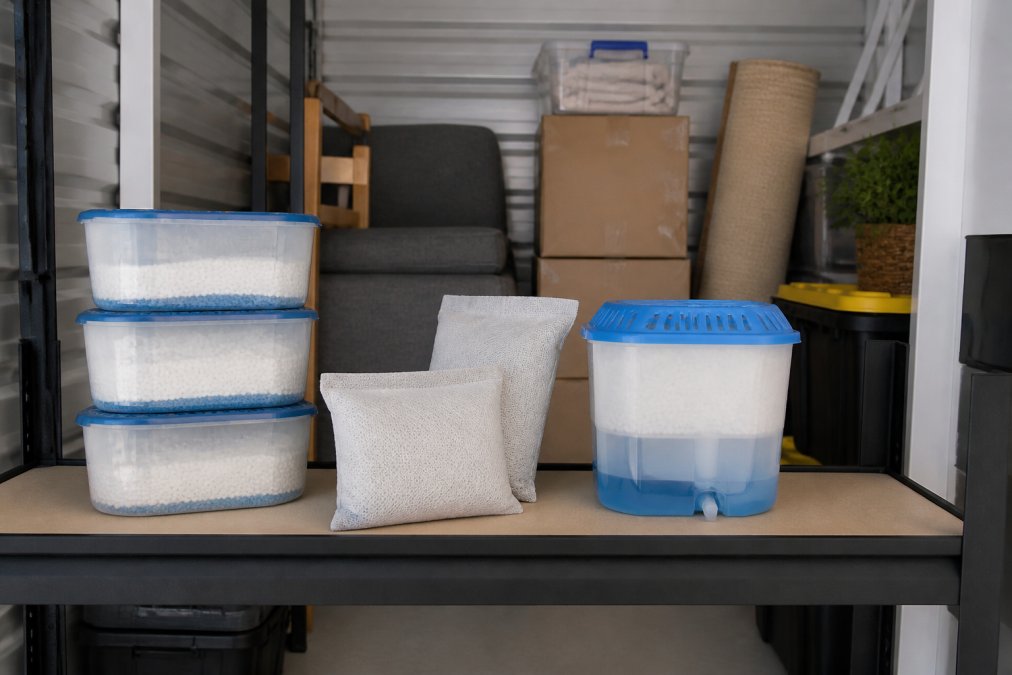
A practical approach combines methods. Use moisture absorbers as your primary defence, they’re affordable, low-maintenance, and effective. Pair them with a hygrometer (humidity meter) to monitor conditions. When humidity climbs above 50%, you know your absorbers need replacing (the CDC). In humid conditions, expect to replace silica gel every 4-8 weeks and calcium chloride every 6-12 weeks.
Ventilation and Air Circulation Strategies
Stagnant air is mold’s best friend. Without air flow, moisture settles on surfaces and creates conditions fungi need to colonise. Proper ventilation breaks this cycle by continuously moving air through your unit, preventing condensation from accumulating.
Climate-controlled units include built-in air circulation systems that maintain consistent temperature and humidity, the most reliable approach for valuable items or long-term storage. For standard units without climate control, small battery-powered fans positioned strategically can improve air flow significantly. Place them to push air across your stored items rather than circulating air in one corner.
Ensure your storage containers allow air circulation. Avoid wrapping items completely in plastic covers, which traps moisture directly against your belongings. Use breathable storage containers or leave small gaps in plastic wrapping to permit air exchange. Spacing your stored items also improves circulation, don’t pack your unit wall-to-wall. Leave gaps between furniture pieces and boxes so air can reach all areas.
If your facility permits, request a unit with air vents or positioning that allows maximum natural air movement. When choosing between similar-sized units, this factor alone can determine whether your items remain mold-free.
How to Pack Clothes for Long Term Storage
Textiles are mold’s preferred target. Fabric absorbs moisture readily, and once mold establishes itself in cloth, it’s nearly impossible to fully eliminate.
Start by ensuring all clothing is completely clean and dry before packing. Wash items thoroughly, dry them completely in direct sunlight (which has natural antimicrobial properties), and inspect them for remaining dampness before storage.
Use breathable storage containers rather than airtight plastic bins. Sealed plastic traps moisture directly against your clothes, creating a mold breeding ground. Cotton storage bags, acid-free boxes, or breathable plastic containers allow air circulation while protecting items from dust. Never store clothes in compressed plastic bags or vacuum-sealed containers, compression forces fabric together, preventing air movement and concentrating moisture where mold thrives.
Distribute moisture absorbers throughout your clothing storage, not just in one corner. For large containers, include multiple silica gel packets or small dehumidifier units. Inspect stored clothing periodically if your facility permits regular access. Monthly checks allow you to catch early signs of dampness before damage becomes extensive.
Signs of Damp in Storage Units and What to Do
Catching dampness early makes the difference between a minor inconvenience and catastrophic mold damage.
The first indicator is usually a musty odour, which signals that mold colonies are already establishing themselves. Don’t ignore it, open your unit, increase ventilation immediately, and deploy additional moisture absorbers.
Visible condensation on unit walls or stored items is a red flag indicating humidity has reached saturation point. Check your stored items directly for discolouration on fabric, wood, or cardboard. Dark spots or fuzzy growth indicate active mold. Inspect the underside of furniture and inside cardboard boxes where moisture accumulates unseen.
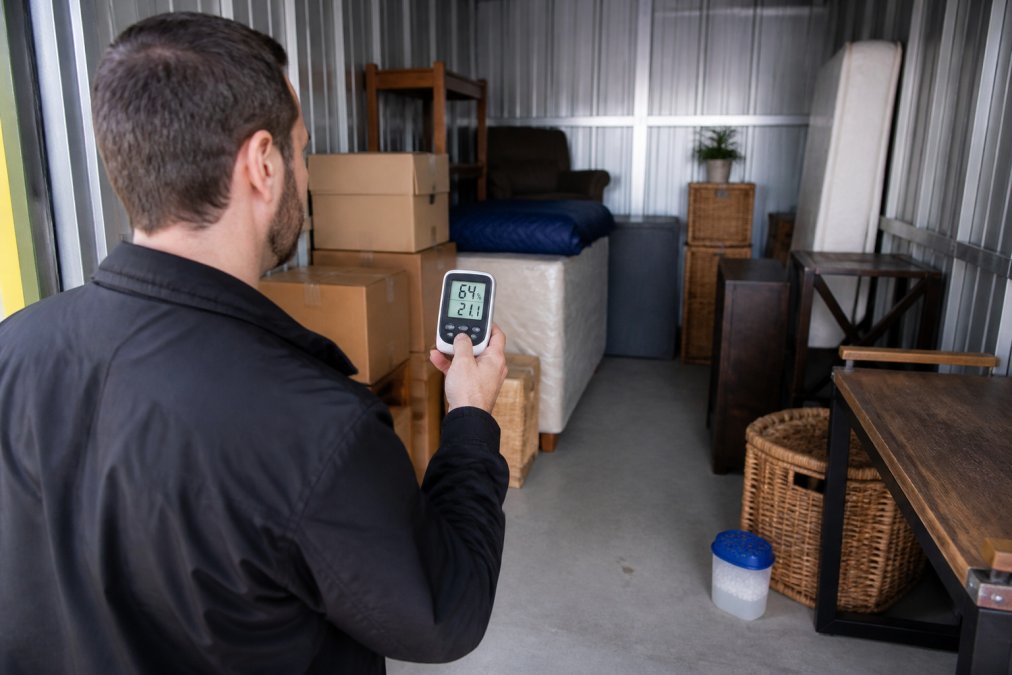
Use a hygrometer to monitor humidity objectively. If readings consistently exceed 60%, mold conditions are developing. Above 70%, mold growth accelerates rapidly. Place your hygrometer in a central location and check it during regular visits.
If you discover signs of damp, take immediate action. Increase ventilation, replace all moisture absorbers, and consider adding dehumidifiers. For items already showing mold, remove them from storage, clean them thoroughly, and dry them completely before returning them. Mold on textiles or wood requires professional treatment, home cleaning methods often spread spores deeper into material. Document any mold damage with photographs in case you have a claim against the storage operator.
Preparing Items Before Storage and Year-Round Monitoring
Success in preventing mold starts before you place items in your unit. Thoroughly clean and dry all items, dust and dirt feed mold growth. Wash wooden furniture, vacuum upholstered pieces, and wipe down all surfaces. Pay special attention to crevices and underside areas where moisture hides.
Disassemble large furniture when possible to create air gaps and improve circulation. Wrap wooden pieces in breathable cloth rather than plastic. Use furniture pads to elevate items slightly off the unit floor, preventing direct contact with any moisture that might accumulate.
Inspect all items for existing dampness before packing. If items feel damp, dry them further before storage. Create an inventory as you pack, documenting what you’re storing, where it’s located, and its condition. This provides a baseline for comparison during inspections and proves whether problems originated before storage or developed during it.
Visit your unit at least monthly during the storage period. Check humidity with your hygrometer, inspect items for signs of dampness, replace moisture absorbers, and ensure ventilation remains unobstructed. Early detection prevents expensive damage. Keep records of your visits and conditions observed, over time, these records reveal patterns that guide your prevention strategy.
If your facility offers climate-controlled storage, this monitoring becomes less critical because temperature and humidity remain stable year-round. Urban Self Storage’s climate-controlled units are ideal for long-term storage of valuable items.
Climate-Controlled Facilities vs. Standard Units
The choice between climate-controlled and standard storage units directly impacts your mold prevention workload.
Standard units offer lower costs and simpler logistics, but you’re entirely responsible for moisture control. Temperature and humidity fluctuate with external weather, creating seasonal risk periods. Mold prevention requires active effort: moisture absorbers, ventilation management, regular inspections, and replacement of absorbers as they saturate. Standard units work reasonably well for short-term storage (under 3 months) of items that tolerate humidity fluctuations.
Climate-controlled units maintain consistent temperature and humidity year-round, typically keeping humidity between 30-50% (the EPA). This eliminates the seasonal risk periods that plague standard units. Mold cannot establish itself when humidity stays below 60% continuously. The cost difference is significant, climate-controlled storage typically costs more than standard units.
Consider what you’re storing. Textiles, wooden furniture, electronics, and documents all benefit from climate control. Conversely, plastic storage containers, metal tools, and sturdy non-absorbent items tolerate standard storage better. Your personal capacity for monitoring also matters. If you can visit your unit monthly and actively manage moisture absorbers, standard storage is manageable. If you’re storing items remotely or lack regular access, climate-controlled storage removes the burden of ongoing maintenance.
For long-term storage (over 6 months) or items of high value, climate control becomes economical insurance against mold damage. Urban Self Storage’s climate-controlled facilities in East Bunbury and Picton provide this peace of mind, particularly valuable for customers relocating or undergoing long renovations.
Conclusion
Mold prevention in storage units isn’t complicated, it’s about understanding what mold needs and systematically removing those conditions. Moisture, darkness, and stillness are mold’s requirements. You control moisture through absorbers and dehumidifiers, manage air circulation through ventilation, and monitor conditions through regular inspections.
The most effective approach combines multiple strategies: proper item preparation, strategic moisture absorber placement, ventilation management, and consistent monitoring. For long-term storage or valuable items, climate-controlled facilities eliminate the variables entirely. Urban Self Storage’s secure, climate-controlled units in East Bunbury and Picton provide the controlled environment your belongings deserve, with modern facilities designed to prevent moisture problems before they start. Book online now to secure your storage space and protect your items year-round.
Frequently Asked Questions
Q: What causes mold in storage units?
A: Mould grows when moisture, warmth, and organic material combine in enclosed spaces. Storage units trap condensation from temperature shifts, especially during seasonal changes. Poor air circulation prevents moisture from escaping, and items like cardboard boxes, textiles, and upholstery absorb and hold dampness. Without ventilation and humidity control, these conditions create an ideal environment for fungi spores to develop. Regular monitoring with a hygrometer helps catch rising humidity before mould takes hold.
Q: How do I keep my storage unit dry during winter?
A: Winter creates condensation as warm air inside the unit meets cold external temperatures. Use moisture absorbers strategically throughout your unit, silica gel packets, calcium chloride containers, or dedicated dehumidifiers work well. Ensure air vents remain unobstructed to maintain circulation. Avoid plastic covers and wrapping on furniture, as these trap moisture against the surface. Leave small gaps between stacked items to allow air flow. Check humidity levels weekly with a hygrometer and replace or recharge moisture absorbers as needed. Climate-controlled facilities eliminate seasonal temperature shifts entirely.
Q: Are moisture absorbers effective for long-term storage?
A: Moisture absorbers are highly effective for long-term storage when used correctly. Silica gel, calcium chloride, and charcoal-based absorbers actively remove humidity from the air. Their effectiveness depends on unit size, climate conditions, and how often you replace or recharge them. For extended storage, combine moisture absorbers with ventilation and regular monitoring. Climate-controlled units reduce your reliance on absorbers significantly. Check product specifications for coverage area, a small packet works for a 2 m² space, but larger units need multiple absorbers or a dehumidifier to maintain optimal humidity levels below 50%.
Q: How often should I inspect stored belongings for damp?
A: Inspect your storage unit monthly, especially during autumn and winter when condensation risk peaks. Look for visible signs of damp: dark spots on cardboard, musty odours, soft patches on fabric, or white crystalline deposits on hard surfaces. Check humidity levels with a hygrometer, readings above 60% indicate rising moisture. If you notice early signs of damp, increase ventilation, add moisture absorbers, and ensure items aren't touching walls or the floor. Catching damp early prevents water damage and mould spread. For long-term storage beyond 6 months, quarterly inspections provide peace of mind and catch problems before they become costly.
This article was written using GrandRanker