
Table of Contents
- Why Secure Storage Matters More Than Cheap Options
- Self Storage Security Features You Should Verify
- Risks of Budget Self Storage for Your Valuables
- Climate Controlled Storage Benefits for Sensitive Items
- Storage Unit Insurance Coverage: What You Need to Know
- Cheap Storage vs Secure Storage: The Real Comparison
- Five Security Features to Verify Before Renting
- Conclusion
- Frequently Asked Questions
Last Updated: September 17, 2026
Why Secure Storage Matters More Than Cheap Options
Cheap storage often lacks the liability coverage and monitoring systems that prevent costly losses, which is why secure storage matters cheap alternatives simply cannot match. When your valuables are stored in a budget facility without proper security infrastructure, you’re essentially gambling with items that matter.
Secure storage differs from budget alternatives in risk mitigation and asset protection. Budget facilities offer minimal surveillance, basic locks, and no climate control. Secure facilities provide 24/7 CCTV monitoring, individual unit alarms, keypad access codes, and environmental controls that protect against theft, vandalism, and damage.
Urban Self Storage provides the security features you need without unnecessary complexity. Our facilities feature advanced 24/7 CCTV surveillance, modern access control systems, and on-site management across our Bunbury area locations. The question isn’t whether you can afford secure storage, it’s whether you can afford the consequences when secure storage matters cheap options fail, because that’s when losses multiply.
Self Storage Security Features You Should Verify
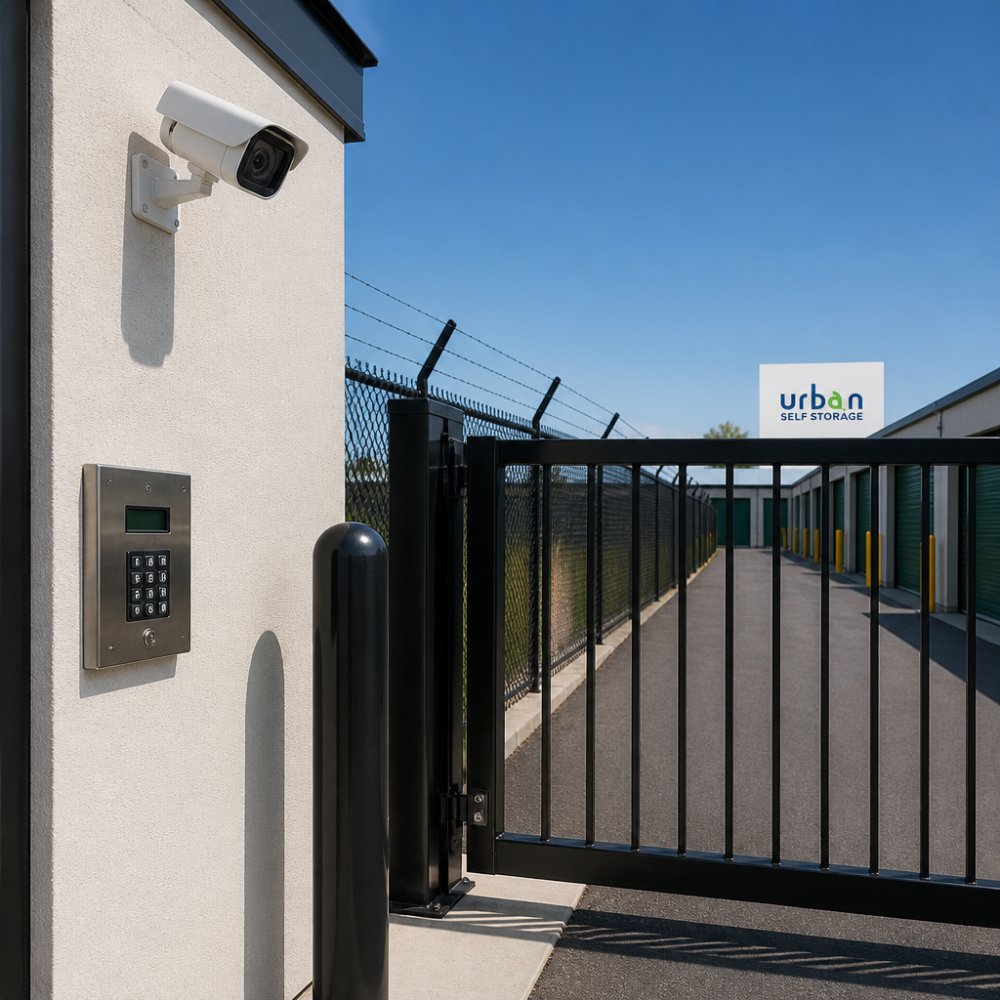
When evaluating any storage facility, specific security features determine whether your belongings stay protected. The best facilities combine multiple layers of security rather than relying on a single system.
24/7 CCTV Monitoring and Video Surveillance
24/7 CCTV monitoring creates a continuous record of entry and exit, deterring theft and providing evidence if incidents occur. However, not all surveillance systems are equal.
Effective CCTV systems cover all access points, corridors, and storage areas.
Access Control: Keypad Gates and High-Security Locks
Secure facilities use multiple layers of access control: electronic keypad gates requiring codes for entry, and individual unit alarms that alert staff to breach attempts.
Individual Unit Alarms and Tamper Detection
Individual unit alarms provide immediate alerts if someone attempts to breach your unit. Combined with 24/7 monitoring, alarms trigger staff response, creating accountability for valuables storage.
Risks of Budget Self Storage for Your Valuables
Choosing budget storage to save money often results in losses that dwarf the monthly savings. The risks fall into three measurable categories: theft and vandalism, environmental damage, and liability gaps that leave you uncompensated.
Theft and Vandalism: The Primary Risk
Budget storage relies on basic padlocks, minimal surveillance, and lacks on-site staff during evenings and weekends, creating an environment where theft is easy and unlikely to be detected.
Environmental Damage: Silent Deterioration
Environmental damage occurs without climate control. Temperature fluctuations and humidity extremes cause wood warping and cracking, electronics failure and corrosion, leather brittleness and mildew, document yellowing and fading, metal rust and corrosion, and artwork colour fading and mould growth.
Liability Gaps: The Hidden Risk
1. Facility liability limits are minimal or non-existent. Many budget facilities explicitly disclaim responsibility for stolen or damaged items in rental agreements, meaning the facility has no obligation to compensate you.
Real-World Scenario: The Cost of Budget Storage Failure
Consider this scenario: You store furniture, documents, and electronics in a budget facility. Someone cuts the padlock and removes high-value items. You discover the theft two weeks later. The facility provides no CCTV footage, no alarm record, and no witness account. They disclaim liability. Your renters insurance denies the claim because it excludes storage contents. You absorb a complete loss.
Climate Controlled Storage Benefits for Sensitive Items
Climate control maintains stable temperature and humidity, protecting furniture, artwork, electronics, documents, and inventory from warping, cracking, brittleness, mildew, and corrosion. The additional cost is minimal compared to replacing damaged items. For business storage, it protects inventory value. For residential storage, it protects sentimental and financial value. For tradespeople, it prevents rust and corrosion.
Storage Unit Insurance Coverage: What You Need to Know
Insurance is where many storage renters discover they are completely unprotected. Understanding the three layers of insurance, facility liability, renters insurance, and optional storage coverage, is essential before you sign a rental agreement.
Layer 1: Facility Liability Insurance
Facility liability insurance covers the building, not your personal belongings. Most budget facilities explicitly disclaim liability for stored items in rental agreements. Secure facilities may accept limited responsibility for items with proper security features, but typically cap liability per unit, far below most stored goods’ value.
Layer 2: Renters Insurance and Homeowners Insurance
Renters insurance and homeowners insurance are your primary protection for stored items. However, most policies exclude or severely limit coverage for items stored outside your primary residence.
Layer 3: Optional Storage Facility Insurance
Some facilities offer optional insurance coverage. This is typically limited: capped per unit, excludes high-value items and electronics, includes high deductibles, and requires extensive documentation for claims.
What Happens When Your Belongings Are Stolen or Damaged
When theft or damage occurs, you must navigate a claims process that often results in denial. Report the incident to the facility (which may have no CCTV footage). File a claim with your insurer, providing proof of loss and proof the items were in the unit. Insurance companies often deny claims if you lack receipts, the unit was not climate-controlled, the policy excludes storage contents, or the claimed value exceeds the limit.
Verification Checklist: Insurance Before You Rent
Before signing a rental agreement, verify the following:
-
Contact your insurer. Ask if your policy covers items in commercial self-storage. Request written confirmation of coverage limits and exclusions.
-
Ask the facility for their liability insurance certificate. Request the per-unit coverage limit and any liability waiver.
-
Review the facility’s rental agreement. Look for liability disclaimers and understand the facility’s responsibilities.
-
Evaluate optional facility insurance. Read the policy, understand limits and exclusions, and decide if it is worth the cost.
-
Document your stored items. Take photos and keep receipts. This is essential for insurance claims.
-
Verify adequate coverage for valuables. If storing high-value items, ensure your insurance coverage is adequate. Budget storage is not appropriate for valuables.
Secure facilities with 24/7 CCTV monitoring, individual unit alarms, and on-site staff significantly reduce theft and damage risk. Insurance remains essential as a final layer. The combination of facility security, personal insurance, and optional coverage creates comprehensive protection that budget storage cannot provide.
Cheap Storage vs Secure Storage: The Real Comparison
| Feature | Budget Storage | Secure Storage |
|---|---|---|
| Access Control | Open or basic lock | Keypad gates, electronic locks, biometric access |
| Surveillance | None or outdated cameras | 24/7 CCTV monitoring with real-time review |
| Unit Alarms | Not available | Individual unit alarms with tamper detection |
| Climate Control | Not available | Temperature and humidity regulated |
| On-Site Staff | Minimal or none | On-site management during business hours |
| Security Deposit | Standard | Standard with higher insurance verification |
| Liability Coverage | Minimal | Facility maintains comprehensive coverage |
| Fire Suppression | Basic or none | Fire suppression systems throughout facility |
| Pest Control | Reactive | Proactive pest management program |
| Peace of Mind | Low | High |
The cost difference between budget and secure storage provides comprehensive protection that budget facilities cannot offer.
Five Security Features to Verify Before Renting
Before signing a rental agreement, physically verify these five security features:
-
CCTV Coverage and Monitoring. Verify cameras cover all entry points, corridors, and storage areas. Confirm footage is monitored in real-time.
-
Perimeter Security and Access Control. Confirm fencing is secure, gates are electronic with keypad entry, and the gate system logs entry and exit times.
-
Individual Unit Alarms. Confirm each unit has an alarm that triggers if the door is opened without correct access, and the alarm alerts staff immediately.
-
Climate Control Capability. Verify the facility maintains specific temperature and humidity ranges and has backup systems.
-
On-Site Staff Presence. Confirm on-site staff during business hours and ask about after-hours security protocols.
Conclusion
The choice between cheap storage and secure storage is ultimately a choice between risk and protection. Cheap storage saves money upfront but exposes valuables to theft, environmental damage, and liability gaps that cost far more than the savings. Secure storage provides monitoring, access control, and environmental protection. The small additional cost is an investment in peace of mind and asset protection.
Frequently Asked Questions
Is cheap storage safe for valuables?
Budget storage facilities often lack 24/7 surveillance, access control systems, and on-site staff presence. Without these protections, theft and unauthorised access become genuine risks. Additionally, cheap storage rarely includes liability coverage, meaning you bear the full financial loss if your belongings are stolen or damaged. Secure facilities with CCTV monitoring, individual unit alarms, and gated access provide substantially better protection for valuables like jewellery, electronics, and business equipment.
What security features should a storage unit have?
Essential security features include 24/7 CCTV monitoring with recorded footage, electronic gate access with keypad or card entry, individual unit alarms, high-security disc or cylinder locks, on-site management during business hours, and perimeter fencing. Climate control is valuable for protecting furniture and sensitive items from environmental damage. Fire suppression systems and emergency lighting add further protection. Verify that surveillance is actively monitored, not just recorded, and ask whether staff respond to alarm triggers in real time.
What happens if my belongings are stolen from a storage unit?
Most standard storage rental agreements limit the facility’s liability significantly. Without proper insurance coverage, you may recover little or nothing. This is why storage unit insurance coverage is critical. Your contents are typically not covered by your home or business insurance once stored off-site. Secure facilities with comprehensive monitoring and access control reduce theft risk substantially. If theft occurs at a facility with documented security failures, you may have grounds for a liability claim, but recovery depends on your rental agreement and proof of negligence.
Is climate-controlled storage worth the extra cost?
Climate-controlled storage maintains stable temperature and humidity levels, preventing damage to furniture, electronics, artwork, and business inventory. Without climate control, extreme heat causes wood to warp, moisture promotes mould and rust, and temperature swings can damage delicate items. The cost difference between standard and climate-controlled units is modest compared to the replacement cost of damaged belongings. For furniture storage, business stock, or items of sentimental value, climate controlled storage benefits justify the additional investment.
Choosing the right storage facility means prioritising security alongside affordability. Urban Self Storage combines both, offering secure facilities with competitive pricing across our Bunbury area locations. Our advanced 24/7 CCTV surveillance, flexible rental options, and quick move-in process in less than 10 minutes make it simple to protect your belongings without unnecessary complexity. Book online now to secure your storage solution.