
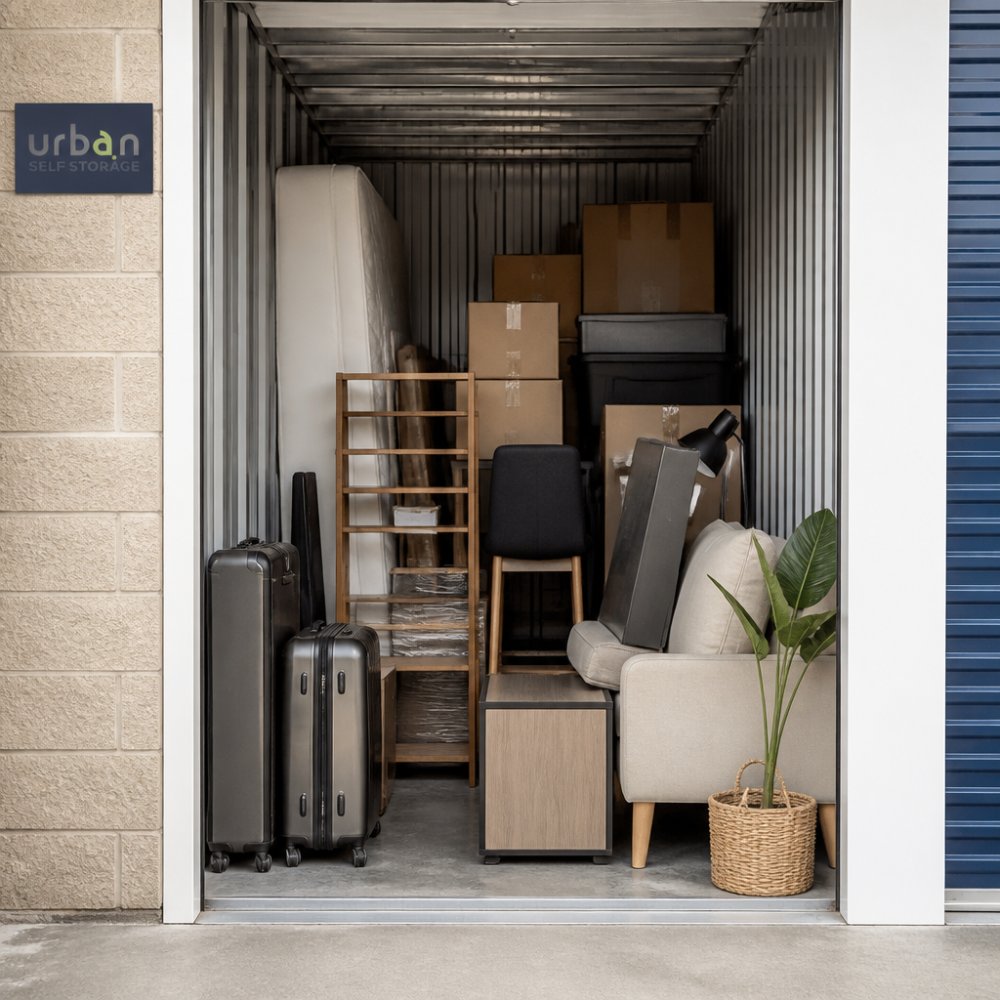
Table of Contents
- How Big Is a 5×10 Storage Unit? Dimensions Explained
- Storage Unit Comparison Chart: 5×5, 5×10, 5×15, 10×10 and 10×20
- What Actually Fits in a 5×10 Storage Unit?
- What Sizes Do Storage Containers Come In?
- Best Practices for Packing a Storage Unit
- Is a 5×10 Unit Right for You? A Quick Decision Guide
- Frequently Asked Questions
Last Updated: September 16, 2026
How Big Is a 5×10 Storage Unit? Dimensions Explained
A 5×10 storage unit offers 50 square feet of floor space, providing approximately 400 cubic feet of usable capacity with a standard ceiling height of around 2.4 metres. This makes it a popular mid-range option, substantial enough for the contents of a studio apartment but remaining an affordable choice. This guide from Urban Self Storage details precisely what fits, what doesn’t, and how to pack it efficiently.
The actual volume is more critical than the floor area. A 5×10 unit is akin to a single-car garage bay, but with the door on the shorter side. This configuration means a narrow entry, a deeper space to the back wall, and valuable vertical space to utilise.
Floor Plan Diagram: Square Footage and Cubic Capacity
Imagine a rectangular room approximately 1.5 metres wide and 3 metres deep. This is your floor plan. With the door at one end, all your belongings must pass through this single, narrow opening before reaching the rear of the unit.
The real advantage lies in the height. With a ceiling clearance of around 2.4 metres, you can stack items towards the roof. This is why cubic capacity, rather than just square footage, is the key determinant of whether your belongings will fit. A 5×10 unit packed from floor to ceiling holds significantly more than one packed only to waist height.
Storage Unit Comparison Chart: 5×5, 5×10, 5×15, 10×10 and 10×20
Selecting the right size depends on matching your belongings’ volume to the unit’s cubic capacity, rather than relying on guesswork. The table below compares common sizes, detailing floor space, approximate cubic capacity, and the ideal use case for each.
| Unit Size | Floor Space | Approx. Cubic Capacity | Ideal Use Case |
|---|---|---|---|
| 5×5 | 25 sq ft | ~200 cubic ft | Boxes, seasonal items, small furniture |
| 5×10 | 50 sq ft | ~400 cubic ft | Studio apartment contents, one-bedroom overflow |
| 5×15 | 75 sq ft | ~600 cubic ft | One-bedroom apartment, small business stock |
| 10×10 | 100 sq ft | ~800 cubic ft | Two-bedroom home, larger furniture sets |
| 10×20 | 200 sq ft | ~1,600 cubic ft | Three-bedroom home or vehicle storage |
How Big Is a 3×3 Storage Unit Compared to a 5×10?
A 3×3 storage unit is a compact locker-style space, approximately 9 square feet, comparable in size to a large wardrobe. It’s suitable for storing boxes, files, and small personal items only. Compared to a 5×10 unit, it offers less than a fifth of the floor area and cannot accommodate items like a mattress, sofa, or appliance.
Book Online in 3 Minutes & Get 50% Off Instantly →
What Sizes Do Storage Containers Come In?
Storage containers are typically available in standard lengths, most commonly 20-foot and 40-foot, with 10-foot containers also offered for smaller loads. Unlike an indoor storage unit, a container is a steel box loaded from one end. Its internal height is generally lower than a standard storage unit, limiting the potential for ceiling-stacked storage.
| Container Size | Approx. Internal Volume | Typical Use |
|---|---|---|
| 10 ft | ~15 cubic metres | Small moves, excess furniture |
| 20 ft | ~33 cubic metres | Two to three bedroom home |
| 40 ft | ~67 cubic metres | Full home or business relocation |
If you’re still uncertain about the best size, consult our self-storage unit sizes guide to compare your inventory against each unit type before making a booking.
What Actually Fits in a 5×10 Storage Unit?
A 5×10 unit can comfortably store the contents of a studio apartment or a single bedroom’s worth of furniture. This typically includes a queen bed, a dresser, a small sofa, and approximately 15 to 20 boxes. The key to maximising space is standing large items on their edges and stacking boxes vertically above them.
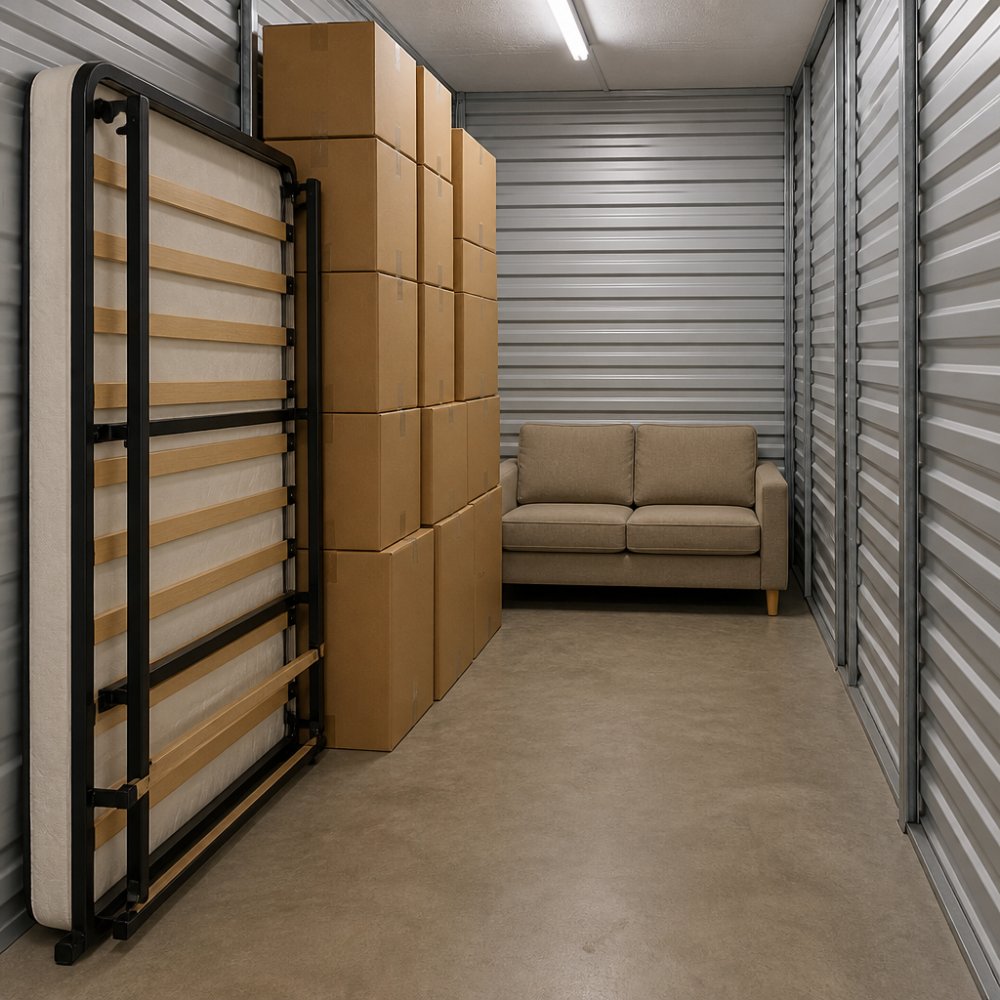
- Furniture: Queen mattress and base, one dresser, one small sofa or armchair, a coffee table.
- Appliances: A bar fridge or washing machine, provided door clearance is sufficient.
- Boxes: 15 to 20 standard moving boxes; more can fit if stacked to the ceiling.
- Miscellaneous: Bicycles, sporting gear, seasonal decorations, tools.
To optimise space, stand mattresses and bed bases on their long edge against a side wall, rather than laying them flat on the floor. This frees up the entire floor area for boxes and helps prevent moisture absorption from the concrete.
Packing List Example: Studio Apartment Contents and a Queen Bed
A studio apartment’s contents can fit into a 5×10 unit with space remaining when packed in the following order:
- Queen bed frame, disassembled, stood on edge along the left wall.
- Queen mattress, wrapped, placed on its long edge in front of the frame.
- Dresser and bedside table, with drawers removed, positioned at the back.
- Small sofa or armchair, tipped upright at the rear right.
- 15 to 20 boxes, with the heaviest placed on the floor and lighter ones stacked above.
- Bags of clothing and soft items filling any remaining gaps between furniture.
A 5×10 unit is suitable for the contents of a studio apartment, including a queen bed, dresser, small sofa, and approximately 15 to 20 boxes. By packing floor-to-ceiling in the rear section and maintaining clear access at the front, you can increase usable capacity by roughly one-third.
What Sizes Do Storage Containers Come In?
Storage containers are typically available in standard lengths, most commonly 20-foot and 40-foot, with 10-foot containers also offered for smaller loads. Unlike an indoor storage unit, a container is a steel box loaded from one end. Its internal height is generally lower than a standard storage unit, limiting the potential for ceiling-stacked storage.
| Container Size | Approx. Internal Volume | Typical Use |
|---|---|---|
| 10 ft | ~15 cubic metres | Small moves, excess furniture |
| 20 ft | ~33 cubic metres | Two to three bedroom home |
| 40 ft | ~67 cubic metres | Full home or business relocation |
Best Practices for Packing a Storage Unit
Effective packing of a storage unit relies on strategic sequencing and weight distribution. Load heavy, durable items first, maintain a narrow walkway to the rear, and position items needed soonest near the door. Proper packing can significantly increase the amount you can store in a 5×10 unit compared to hurried loading.
- Place the largest, heaviest items at the back and along the walls.
- Keep a narrow central walkway to access the rear without unloading.
- Stack boxes with the heaviest at the bottom and label all sides.
- Disassemble furniture where possible and bag fittings securely to the frame.
- Leave a gap between your belongings and the unit walls to allow for airflow.
Never store items directly against the unit’s door or block the entry. This is a common cause of damage when the door is opened and makes retrieving a single item extremely difficult.
Weight Limits, Insurance and Your Inventory Checklist
Most self-storage units are designed for household and light commercial goods, not for dense materials like bricks, tiles, or engine blocks. Always check your agreement before storing unusually heavy items and confirm your contents insurance coverage for items in storage.
Book Online in 3 Minutes & Get 50% Off Instantly →
- Furniture: item, condition, value
- Electronics: serial numbers, condition, value
- Boxes: contents summary, room, value
- Valuables: photographed separately, preferably kept off-site
The most common oversight when using a 5×10 unit is underutilising its height. By packing floor-to-ceiling in the rear half while keeping the front clear for access, you can effectively increase the usable capacity by approximately one-third.
Is a 5×10 Unit Right for You? A Quick Decision Guide
A 5×10 unit is suitable if you are storing the contents of a studio apartment, a single bedroom’s furniture, or business stock that fits within a small van load. For a full one-bedroom apartment or larger items, consider sizing up to a 5×15 or 10×10 unit.
Use this quick guide:
- Studio or single room of furniture: 5×10
- One-bedroom apartment, full contents: 5×15
- Two-bedroom home: 10×10
- Three-bedroom home or a vehicle: 10×20
Frequently Asked Questions
What can I fit in a 5×10 storage unit?
A 5×10 storage unit can hold roughly the contents of a studio apartment or a small one-bedroom. This typically includes a queen bed, a dresser, a small sofa, a dining table with two chairs, and around 15 to 20 medium boxes. Tall items such as a fridge, bookshelf, or mattress can stand upright against the walls, utilising the full ceiling height of about 2.4 metres. It’s ideal for furniture storage during a move, renovation, or downsizing.
Is a 5×10 storage unit enough for a one-bedroom apartment?
For many one-bedroom apartment storage needs, a 5×10 unit is sufficient if packed carefully and utilising vertical space. A queen bed, bedside tables, a two-seater sofa, a small dining set, and 15 to 20 boxes can fit comfortably. However, if you also need to store a washing machine, a large wardrobe, and bulky outdoor gear, a 5×15 or 10×10 unit would offer more space. Contacting the facility can help confirm the most suitable size before you book.
Can a king size bed fit in a 5×10 storage unit?
A king-size mattress measures approximately 1.8 by 2 metres, meaning it can fit flat on the floor of a 5×10 unit, but this leaves minimal space for other items. A more efficient approach is to stand the mattress on its side against a wall. This strategy frees up floor space for boxes and smaller furniture. If a king bed is your primary item for storage, a 5×10 unit can work. However, if you’re storing a full bedroom suite, consider a 5×15 or 10×10 unit.
How do I calculate the cubic capacity I need for my furniture?
Begin by listing each item and estimating its volume in cubic metres, then sum these volumes. For example, a queen bed frame requires roughly 1.5 cubic metres, a sofa about 1.2 cubic metres, and each medium box around 0.06 cubic metres. A 5×10 unit provides approximately 11 cubic metres of usable space. If your total estimated volume is within 80 percent of this figure, the unit should accommodate your belongings with room to manoeuvre. Consulting a storage unit comparison chart and speaking with the facility team can help confirm your estimate before committing.