

Last Updated: November 6, 2026
Quick Summary
Decluttering your home is easiest room by room with a written checklist, sorting every item into keep, donate, sell, store or toss before moving to the next room. Store only what is bulky, seasonal or sentimental, and most three-bedroom declutters fit in a 6 sq m unit.
- Apply the 90-day rule: unused, non-seasonal and non-sentimental items are candidates to go.
- Never store flammables, perishables, living plants or pets in a storage unit.
- A 3 sq m unit suits one room, 6 sq m most three-bedroom declutters, 9 sq m whole homes.
- Set a 90-day review date, with twelve months the outer limit for most household goods.
- WA summer heat can warp furniture and damage photos, so choose a ventilated, shaded unit.
Table of Contents
- Start with a declutter checklist and one room at a time
- Living room: clear the shared space first
- Kitchen and pantry: tackle the busiest room efficiently
- Bedrooms and wardrobes: out-of-season clothes and sentimental items
- Kids’ rooms and the spare room: what to keep, store or pass on
- Garage and shed clear-out: tools, seasonal gear and bulky items
- What to put in a storage unit when decluttering
- Storage unit size guide: match your belongings to the right space
- Frequently Asked Questions
Start with a declutter checklist and one room at a time
Decluttering your home works best as a room-by-room job with a written plan, not a weekend blitz. Pick one room, sort every item into keep, donate, sell, store or toss, and finish it before starting the next. People who plan arrive at storage with labelled boxes and a clear idea of what they need; people who rush arrive with a garage full of maybes.
Decluttering your home is a series of small decisions, repeated. The 90-day rule makes them easier: if you haven’t used something in three months and it isn’t seasonal or sentimental, it’s a candidate to go. Apply that test before you buy a single box.
The sorting decision checklist: keep, donate, sell, store or toss
Work through these questions for every item. Stop at the first “yes”.
- Keep: Do you use it at least once a month, and does it have a home already?
- Store: Is it seasonal, sentimental, or needed later this year, but in the way right now?
- Sell: Is it worth your time to list on Facebook Marketplace or in a garage sale?
- Donate: Is it clean, working and wanted by a Bunbury op shop or charity bin?
- Toss: Is it broken, expired or unsafe to pass on?
If you’re weighing a short declutter-and-store burst against committing to long-term storage, this short-term vs long-term storage comparison sets out how each option suits different situations.
Living room: clear the shared space first
The living room is where clutter is most visible, so it’s the right place to build momentum. Give every surface one job: the coffee table holds coasters and a candle, not a month of mail. Books, games and spare throws nobody reaches for can go into storage for the season, and anything you’ve replaced but kept “just in case” can be sold or donated.
- Keep: everyday furniture, the TV setup, one throw per seat
- Store: spare furniture for guests, out-of-season bedding, board games for holidays
- Donate: books you’ve read, duplicates, working lamps
- Toss: broken electronics, worn cushions, tangled cables
Kitchen and pantry: tackle the busiest room efficiently
The kitchen collects more small decisions than any other room, so work in zones: pantry, cupboards, benches, then the junk drawer. Check use-by dates as you go and set aside good-but-unwanted items for donation. Anything you use only at Christmas or for big family gatherings can live in storage and free up whole shelves.
- Keep: daily cookware, the appliances you actually use
- Store: seasonal bakeware, platters, spare glassware, camping cooking gear
- Donate: duplicate utensils, working small appliances you’ve replaced
- Toss: expired food, cracked plastics, missing lids
Watch out: don’t pack pantry goods or anything perishable into storage. Food attracts pests and spoils in the heat.
Bedrooms and wardrobes: out-of-season clothes and sentimental items
Bedrooms are where the 90-day rule earns its keep. Turn every coat hanger around at the start of the season, and anything still facing backwards at the end goes on your donate or sell pile. Out-of-season clothes, spare doonas and formal wear are ideal candidates for storage, especially where summer heat can damage fabrics left in a hot shed.
- Keep: current-season clothing, everyday linen
- Store: out-of-season clothes, spare bedding, formal wear, sentimental items in sealed tubs
- Donate: clothes that no longer fit or suit you
- Toss: worn-out underwear, stained linen, broken hangers
Sentimental items deserve a labelled tub each. Keep the school certificates and family photos, and let the rest go with a clear conscience.
Kids’ rooms and the spare room: what to keep, store or pass on
Kids’ rooms turn over fast, and the spare room is often where the whole house hides its overflow. Sort kids’ gear by size and stage: outgrown clothes and toys can be passed to friends, donated, or stored for a younger sibling. The spare room should end the process as a usable room, not a holding pen.
- Keep: current favourites, school gear, one comfort item per child
- Store: outgrown baby gear, next-size clothing, kids’ bikes and sporting gear
- Donate: toys and clothes in good condition
- Toss: broken toys, dried-out pens, incomplete sets
If the spare room has become a dumping ground, be honest about what’s actually there. Most of it is storage, not living.
Garage and shed clear-out: tools, seasonal gear and bulky items
The garage and shed are the biggest win in any declutter, and the most physical. Pull everything onto the driveway, group like with like, then decide. Surfboards, camping gear, Christmas decorations and spare furniture are all well suited to a storage unit.
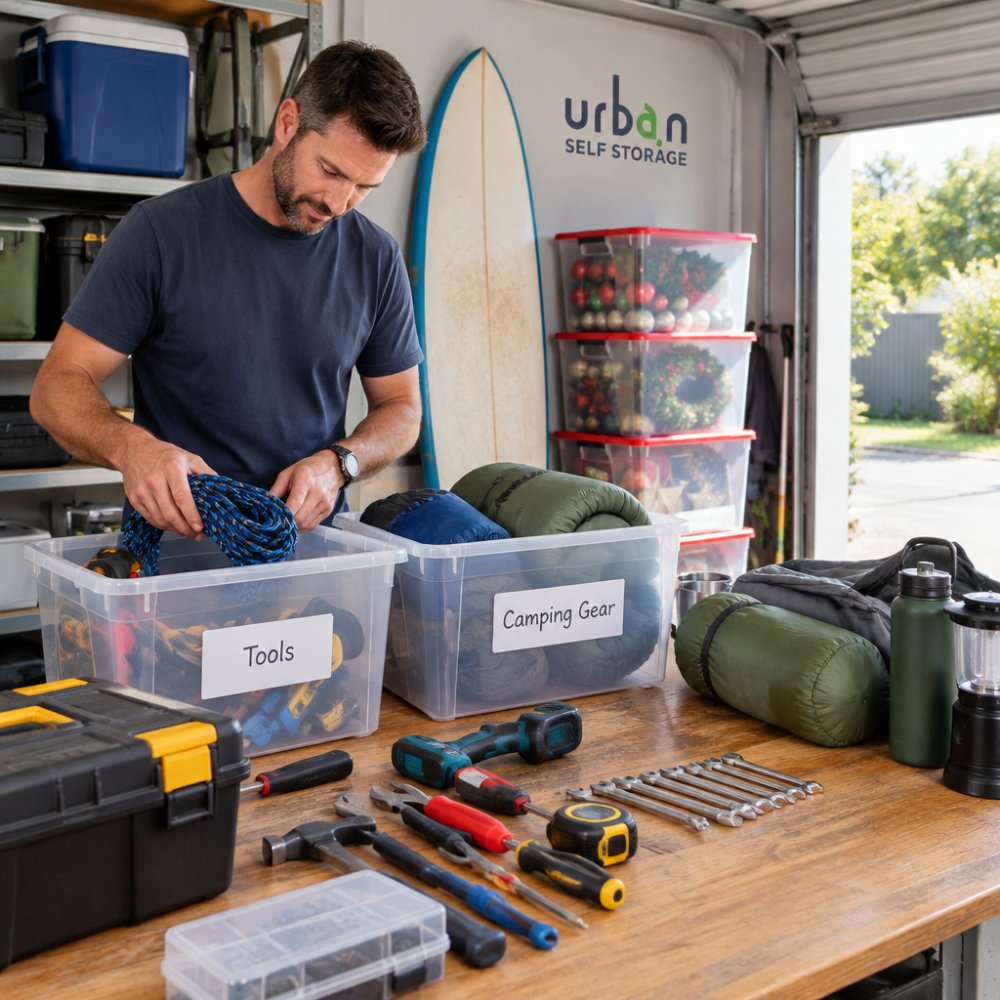
- Keep: tools you use weekly, the mower, everyday bikes
- Store: surfboards, camping gear, Christmas decorations, spare furniture, trade equipment
- Donate: duplicate tools, working gear you’ve outgrown
- Toss: rusted, broken or leaking items
Watch out: fuels, gas bottles, paint thinners and other flammables can’t go into a storage unit, and the local tip or a recycling centre is the right destination for them. For tips on keeping tools and gear safe from humidity and salt air, this guide to protecting belongings in coastal conditions is worth a read before you pack.
What to put in a storage unit when decluttering
The short answer: store what is bulky, seasonal, sentimental or temporarily in the way, and let go of anything you would not pay to keep.
Use this five-question test before anything goes into a box. Stop at the first “yes”.
- Store: Is it seasonal, sentimental, or needed again within twelve months, and genuinely in the way right now?
- Keep at home: Do you use it at least monthly and does it already have a home?
- Sell: Is it worth your time to list on Facebook Marketplace or include in a garage sale?
- Donate: Is it clean, working and wanted by a Bunbury op shop or charity bin?
- Toss: Is it broken, expired, unsafe, or would a replacement cost less than a few months of storage?
That last question is the one most guides skip. A common pattern is people paying to store a spare couch or second fridge that would cost less to replace than to keep.
What suits storage in a Bunbury home
- Seasonal items: Christmas decorations, winter bedding, out-of-season clothes, camping gear and surfboards that clutter the shed between trips.
- Spare furniture: the guest bed, a spare dining setting, or furniture you are keeping through a renovation or between homes in Australind, Eaton or Dalyellup.
- Kids’ gear: outgrown baby equipment, next-size clothing and bikes held for a younger sibling.
- Tools and trade equipment: bulky items that crowd the garage and shed clear-out.
- Sentimental items: labelled tubs of school certificates, family photos and heirlooms that deserve a dry, secure home rather than a hot shed.
What does not belong in a unit
- Flammables: fuels, gas bottles, paint thinners, aerosols and solvents. These go to the local tip or a recycling centre, not into storage.
- Perishables: food, pantry goods and anything that spoils. Food attracts pests and spoils quickly in the heat.
- Living plants and pets.
- Anything you will need next week: your everyday tools, current-season clothing and the pram you still use.
WA summer heat and South West WA conditions
Summer heat is the quiet risk in any storage decision. A metal shed in the South West WA sun can reach temperatures that warp furniture, degrade electronics, melt candles and damage photos and documents.
How long should items stay in storage?
Set a review date the day you move in. Ninety days is a sensible first checkpoint: if you haven’t needed an item by then, ask the five questions again.
When storing beats donating
Storage wins when the item is expensive to replace, genuinely seasonal, sentimental, or tied to a known future event such as a renovation, a move or a new baby. If you’re unsure whether an item is allowed, check this list of items that cannot be stored in a storage unit before you pack the car.
Storage suits people who are renovating, downsizing or between homes, and it buys time when you genuinely cannot decide. When you’re ready to book, you can view affordable self storage units in Bunbury and reserve online in minutes.
Storage unit size guide: match your belongings to the right space
Most three-bedroom declutters fit comfortably in a 6 sq m unit, a single room fits in 3 sq m, and a full house move or bulky garage contents need 9 sq m.
Here is how the standard sizes line up for a Bunbury declutter.
| Unit size | Roughly the size of | Best for | Typical declutter use |
|---|---|---|---|
| 3 sq m | A small walk-in wardrobe | Boxes, out-of-season clothes, small furniture | One room, spare room overflow, sentimental tubs |
| 6 sq m | A single garage bay | A one-bedroom flat or a few rooms | Most three-bedroom declutters, bedroom and living room contents |
| 9 sq m | A large garage bay | A full house or bulky gear | Whole-home moves, tools, furniture, garage and shed clear-out |
Size by inventory, not by feel
A simple method works for most homes. Stack your packed boxes in one corner of a room and measure the footprint and height.
What fits in each size
Match the unit to the room
If you’re only storing the garage and shed clear-out, a 3 sq m unit often covers surfboards, camping gear, Christmas decorations and tools.
Before you book
Measure your bulkiest items, remember you can stack boxes but not sofas, and check whether you need drive-up access for heavy furniture. If you’re still unsure, our storage unit size guide shows what fits in each size, and the team can talk you through the options before you commit.
Once you have sorted, packed and labelled, the last step is simple.
The hardest part of decluttering isn’t the sorting, it’s trusting that your stored belongings are safe while you get on with life.
Frequently Asked Questions
How do I declutter my whole house room by room?
Work through one room at a time, starting with the living room, then kitchen, bedrooms, kids’ rooms and finally the garage and shed. Use a declutter checklist to sort items into keep, donate, sell, store or toss. Set a timer for each session, label boxes clearly and avoid moving to the next room until the current one is finished. This approach keeps you focused and prevents overwhelm.
What size storage unit do I need to declutter a three-bedroom home?
A three-bedroom home usually suits a 6 sq m unit for furniture and boxes from one or two rooms, or a 9 sq m unit if you are storing larger items like lounges, beds and appliances. Use our storage unit size guide as a starting point, then confirm with the facility. Urban Self Storage offers multi-size units and a simple move-in process.
Is it better to declutter or store?
Declutter first, then store only what you genuinely need but cannot keep at home. Storage suits seasonal items, spare furniture during renovations, tools and business stock. Donate or sell anything you have not used in 12 months. Urban Self Storage offers flexible short- and long-term storage options.
How long should I keep items in storage?
Apply the 90-day rule: review stored items every three months and ask whether you have needed them since they went in. If not, consider donating, selling or tossing. Set a calendar reminder and keep an inventory list. Urban Self Storage provides 24/7 CCTV surveillance for security.
Storage unit sizes for decluttering
