
Table of Contents
- Hazardous Goods Storage Regulations and Why They Matter
- Prohibited Items: The Complete List
- How to Prepare Items for Self Storage Safely
- What to Do If You’re Unsure About an Item
- Insurance and Liability: Why Rules Protect You
- Conclusion
- Frequently Asked Questions
What Items Cannot Be Stored in a Storage Unit
Last Updated: September 2, 2026
Most self-storage facilities prohibit hazardous materials, flammable goods, perishable items, living things, illegal goods, and high-value irreplaceable possessions. Storage operators enforce these restrictions to protect customer property, prevent fire and safety hazards, comply with insurance requirements, and meet legal obligations under hazardous goods storage regulations. Understanding what items cannot be stored in a storage unit helps you avoid contract violations, potential liability, and damage to your belongings. At Urban Self Storage, we maintain clear guidelines on prohibited items to keep our facilities safe and secure for all customers.
A single prohibited item can trigger a fire, contaminate surrounding goods, attract pests, or expose the entire facility to legal liability. This guide explains which items are restricted, why each restriction matters, and what you should do if you’re unsure whether something is allowed.
Hazardous Goods Storage Regulations and Why They Matter
Hazardous goods storage regulations in Australia are enforced under the Work Health and Safety Act 2011 and the Dangerous Goods Safety Work Group Code of Practice. Storage operators must follow strict protocols for items classified as hazardous, including flammable liquids, compressed gases, corrosive chemicals, and toxic substances.
Self-storage facilities typically cannot accommodate hazardous goods because most standard units lack the ventilation, fire suppression systems, and containment infrastructure required by law. Storing prohibited hazardous materials in a regular unit exposes the operator to regulatory fines, insurance claims, and potential criminal liability.
Insurance is another critical reason why storage facilities enforce these rules. Standard storage unit insurance does not cover loss or damage caused by hazardous materials. If a prohibited item causes a fire or chemical spill, the facility’s insurer may refuse to pay claims, leaving the operator and other customers unprotected. This is why storage unit rules Bunbury and across Western Australia are consistent on this point: hazardous goods simply cannot be stored in conventional self-storage units.
Work Health and Safety Act 2011
Prohibited Items: The Complete List
Understanding what items cannot be stored in a storage unit helps you plan your move and protect your investment.
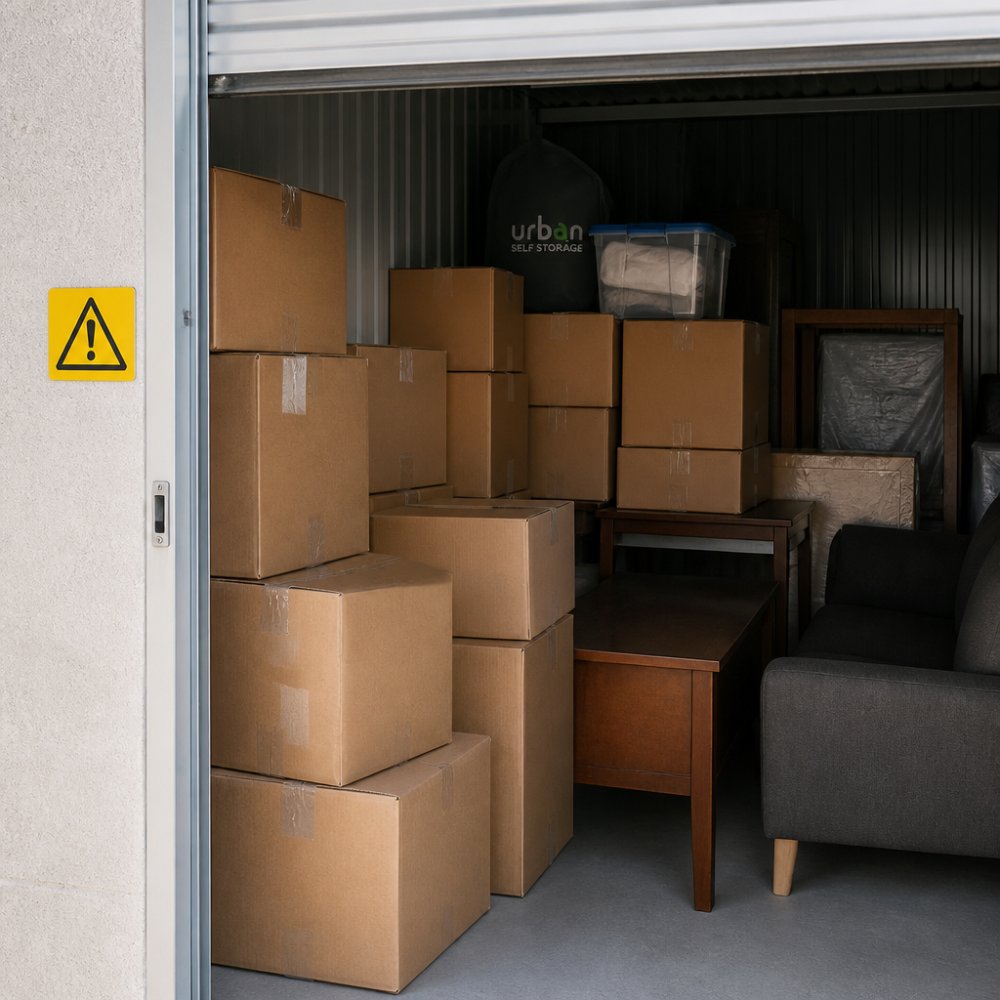
Flammable and Combustible Materials
Flammable and combustible materials pose an extreme fire risk in enclosed spaces. These include petrol, diesel, paint thinners, turpentine, lacquers, varnishes, solvents, propane bottles, butane canisters, and compressed gas cylinders. Even small quantities can ignite and spread rapidly through a storage facility, destroying the building and endangering neighbouring units. If you have tools or equipment that require fuel or solvents, store them at home or dispose of the fuel before placing items in storage.
Perishable Goods and Food Items
Food, animal feed, and other perishable goods attract rodents, insects, and pests that can infest an entire storage facility. Even sealed containers can leak or deteriorate over time, creating odours and mould that spread to neighbouring units. Remove all food and perishables before placing boxes or furniture into a unit.
Living Things and Plants
Animals, plants, and living organisms cannot be stored in self-storage units. This includes pets, livestock, seeds, and potted plants. Living things require proper care, ventilation, temperature control, and regular attention that storage facilities cannot provide. Storing animals in a unit is also illegal under animal welfare legislation.
Illegal and Stolen Goods
Storage facilities cannot knowingly accept illegal items or stolen property, including drugs, counterfeit goods, and unlicensed firearms. Storing illegal goods exposes the facility operator to criminal liability and law enforcement action. Your storage agreement gives the operator the right to inspect units if they suspect illegal activity. Always ensure that everything you store is legally owned and lawfully possessed.
Weapons, Ammunition and Explosives
Firearms, ammunition, explosives, and fireworks cannot be stored in self-storage units. These items pose extreme safety and security risks in shared facilities. If you own firearms legally, store them at home in a secure, locked cabinet or with a licensed firearms dealer. Ammunition must be stored separately in a cool, dry place away from combustible materials.
Corrosive Chemicals and Toxic Substances
Corrosive acids, alkalis, and toxic chemicals cannot be stored in standard self-storage units. These materials can leak, spill, or off-gas, contaminating neighbouring units and creating serious health hazards. Cleaning chemicals, pesticides, herbicides, and industrial solvents fall into this category. Dispose of hazardous chemicals responsibly through your local council’s hazardous waste collection service before moving.
High-Value and Irreplaceable Items
Whilst self-storage facilities offer secure storage with CCTV surveillance and access control, they are not designed as high-security vaults for extremely valuable or irreplaceable items. Jewellery, art, antiques, important documents, and sentimental heirlooms are better protected at home, in a bank safe deposit box, or in a specialised vault. Most storage agreements exclude liability for theft or loss of high-value items.
Wet, Damp and Moisture-Prone Materials
Items that are wet or damp when placed in storage can develop mould, mildew, and rust, damaging the items themselves and spreading to neighbouring units. Wood, leather, textiles, and electronics are particularly vulnerable to moisture damage. Ensure all items are completely dry before storage.
How to Prepare Items for Self Storage Safely
Preparing your items correctly before moving them into storage reduces the risk of damage and ensures compliance with storage unit rules.
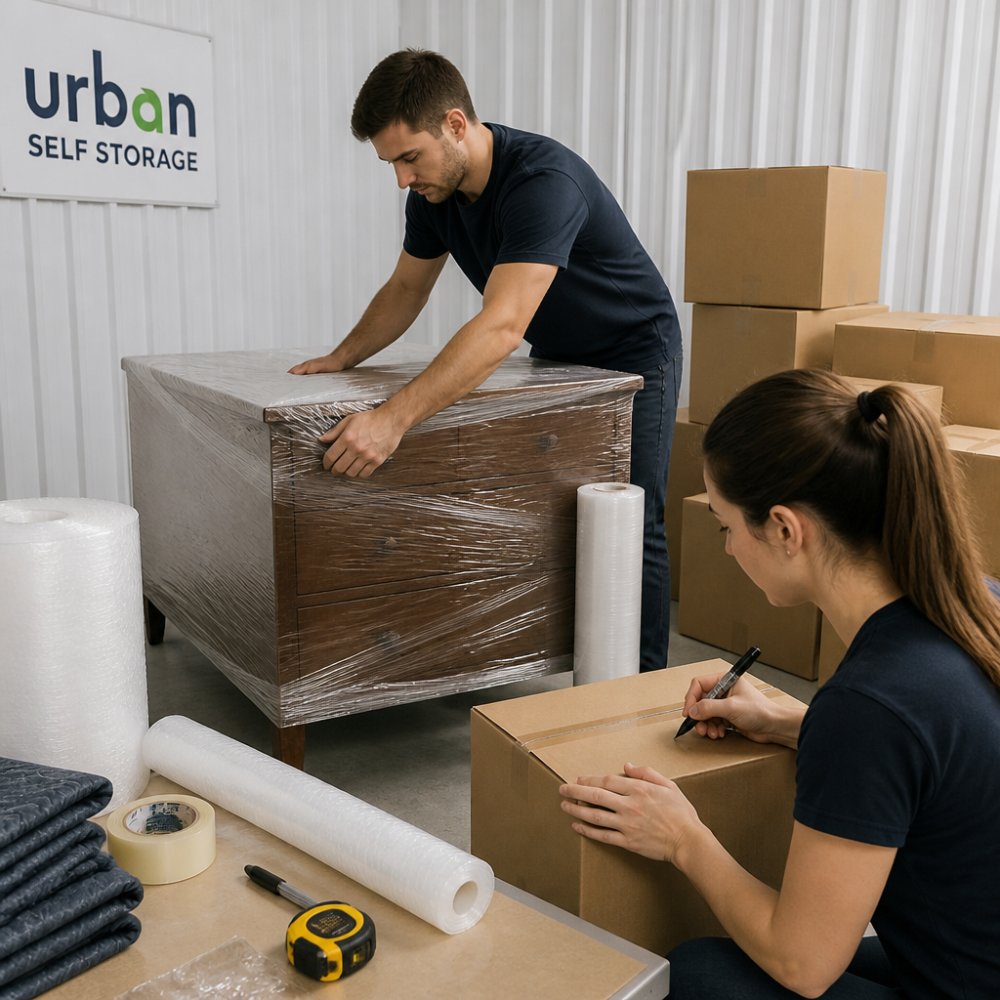
Start by decluttering and removing anything you won’t need, including expired medications, old cleaning supplies, and perishable items. Clean and dry all items thoroughly before packing. Pack items in sturdy, labelled boxes rather than loose piles. Use protective coverings for furniture, electronics, and fragile items. Bubble wrap, moving blankets, and plastic sheeting prevent dust, scratches, and moisture damage. Stack boxes carefully to avoid crushing items at the bottom, and leave a small gap between stacks for air circulation.
Keep a detailed inventory of what you’re storing, including photographs if possible. This helps you locate items later and is useful for insurance purposes if something is damaged or lost.
What to Do If You’re Unsure About an Item
If you’re not certain whether something is allowed in a self-storage unit, contact Urban Self Storage before moving it in. It’s far better to ask than to violate your storage agreement and risk eviction or liability.
Grey-Area Items That Often Confuse Customers
Many items fall into grey areas because their classification depends on composition, quantity, or condition:
Batteries: Lithium-ion batteries (found in power tools, laptops, and phones) are particularly restricted because they can ignite spontaneously. Lead-acid batteries from vehicles are also prohibited. Ask Urban Self Storage whether batteries can remain in items or must be removed.
Asbestos-containing materials: Asbestos is illegal to store in most cases. Insulation, floor tiles, roofing materials, and some textiles from homes built before the 1980s often contain asbestos. Contact a licensed asbestos removal contractor for safe disposal.
Fertiliser and garden chemicals: Some organic fertilisers may be acceptable, whilst synthetic fertilisers and pesticides are prohibited because they’re combustible or toxic. Check the product label or contact Urban Self Storage with the product name and safety data sheet.
Paint and solvents: Empty or nearly empty paint cans may be acceptable if completely dry and sealed, but full or partially full cans are prohibited. Solvents and thinners are always prohibited.
Electronics and appliances: Most are acceptable, but refrigerators, freezers, and air-conditioning units may be prohibited if they contain refrigerant gas. Ask Urban Self Storage about specific items before storing them.
Furniture and textiles: Most are acceptable, but items that are wet, damp, or mouldy are prohibited because they spread contamination. Ensure all items are completely dry before storage. Urban Self Storage’s Furniture Storage in Bunbury service is ideal for protecting your household items in a clean, controlled environment.
Safe Disposal and Storage Alternatives for Prohibited Items
Hazardous chemicals and solvents: Contact your local council’s hazardous waste collection service. Most councils in Western Australia offer free or low-cost drop-off days for household hazardous waste.
Fuel and compressed gas: Petrol, diesel, and propane must be stored at home in a secure, well-ventilated location, away from ignition sources.
Batteries: Lithium-ion and lead-acid batteries should be recycled through a battery recycling scheme. Many retailers accept used batteries for free recycling.
Asbestos-containing materials: Hire a licensed asbestos removal contractor who will safely contain, remove, and dispose of the material in accordance with regulations.
Perishable food and animal feed: Consume or donate food before moving. Animal feed should be used or donated to local farms or animal shelters.
Plants and seeds: Transport living plants to your new home or donate them to friends, family, or local community gardens.
Firearms and ammunition: Store legally owned firearms at home in a secure, locked cabinet that meets Australian firearms regulations, or with a licensed firearms dealer or shooting club.
Illegal or stolen goods: Do not store these items anywhere. If you possess stolen property, contact the police or the original owner to return it.
When to Contact Urban Self Storage
Before you rent a unit, reach out to Urban Self Storage with specific questions about items you plan to store. Provide the item name and description, product label or safety data sheet (for chemicals), quantity and condition, and how long you plan to store it. Urban Self Storage’s team can answer specific questions about your items and help you understand what’s allowed. Never assume an item is allowed just because it seems harmless. Storage facilities take these rules seriously, and violations can result in immediate removal of items or termination of your rental agreement.
Insurance and Liability: Why Rules Protect You
Storage facility rules exist partly to protect your insurance coverage, but this protection only works if you follow the agreement.
How Prohibited Items Void Your Coverage
Your renters or contents insurance may not cover items stored in a self-storage unit, depending on your policy. Many standard home and contents policies exclude coverage for items in external storage, or they cover storage only under specific conditions. If you store prohibited items and something goes wrong, your insurer will investigate the cause. If prohibited materials are found, your insurer can deny your claim entirely, potentially leaving you without coverage for all your belongings in that unit.
The Facility’s Insurance and Your Liability
Storage operators carry public liability insurance that covers damage to the facility and other customers’ property. However, this insurance has exclusions. If a prohibited item causes a fire, explosion, or chemical spill, the facility’s insurer will investigate and may refuse to pay claims if prohibited materials are discovered. In some cases, you, the customer who stored the prohibited item, can be held personally liable for damage to the facility and neighbouring units.
What Happens When You Breach the Storage Agreement
Your storage agreement is a legal contract. By signing it, you acknowledge that you understand which items are prohibited and accept responsibility for any breach. Violating the agreement gives the operator grounds to remove your items immediately, terminate your rental without notice, charge you for any damage caused by prohibited materials, and take legal action to recover costs.
Protecting Your Coverage
To keep your insurance valid and avoid liability:
- Review your contents insurance policy before renting a storage unit and confirm what is covered
- Read your storage agreement carefully and ask Urban Self Storage to clarify any items you’re unsure about
- Never store prohibited items, even in small quantities
- Keep receipts and photographs of what you store, in case you need to prove the contents to your insurer
- If something is damaged in storage, report the facility immediately and document the damage with photos
Understanding and respecting storage unit rules in Bunbury protects your belongings, keeps the facility safe for everyone, and ensures your insurance coverage remains valid.
Conclusion
Knowing what items cannot be stored in a storage unit is essential before you rent. Hazardous materials, flammable goods, perishable items, living things, illegal goods, and high-value irreplaceables are universally prohibited because they pose safety, legal, and insurance risks.
Storage facilities enforce these rules consistently to protect all customers and comply with hazardous goods storage regulations. Violating the restrictions can result in eviction, loss of your deposit, and potential liability for damage to the facility or neighbouring units.
If you’re planning a move or need temporary storage in Western Australia, Urban Self Storage offers secure, flexible storage solutions with 24/7 CCTV surveillance and easy access. Our team can answer any questions about what you can store and help you choose the right unit for your needs. Book online now or contact us to discuss your storage requirements and confirm what items are allowed.
Frequently Asked Questions
Why are flammable liquids prohibited in self storage?
Flammable liquids like petrol, diesel, paint thinners and turpentine pose serious fire and explosion risks in enclosed storage units. These materials can ignite from heat, friction or electrical sources, endangering the entire facility and neighbouring units. Storage facilities restrict them to comply with fire safety regulations and protect all customers’ belongings and safety.
Can I store food or perishable items in a storage unit?
No, perishable goods and food items are not permitted in storage units. They attract pests, develop mould and create health hazards as they decompose. Even sealed containers can leak or fail over time. If you need to store non-perishable items temporarily during a house move, ensure they are sealed and protected from moisture in a climate-controlled unit.
What happens if I accidentally store a prohibited item?
If a prohibited item is discovered, the storage facility will typically contact you to remove it immediately. Depending on the item and your storage agreement, you may face suspension of access, contract termination, or liability for any damage or safety issues caused. Always review your storage agreement and contact Urban Self Storage if you’re unsure whether an item is allowed.
Are batteries and gas bottles allowed in storage?
Most batteries and all compressed gas bottles, including propane tanks, are prohibited in self-storage units due to explosion and fire risks. Some facilities may permit certain sealed, non-rechargeable batteries in small quantities, but this varies. Check your storage agreement or contact the facility directly before storing any battery or gas-related items.
Planning a move or renovation? Urban Self Storage Bunbury provides secure, flexible storage solutions with advanced CCTV surveillance and quick access. Our team understands what items cannot be stored and can help you prepare your belongings safely. Get started with Urban Self Storage today and enjoy peace of mind knowing your items are protected in a clean, secure facility.
This article was written using GrandRanker