
Table of Contents
- Understanding Storage Unit Dimensions and Capacity
- How to Choose the Right Storage Unit Size for Your 3-Bedroom Home
- Decluttering Before Moving Into Storage
- How to Pack a Storage Unit for Maximum Space Efficiency
- Average Storage Unit Prices and Cost-Saving Options
- Climate Control and Long-Term Storage Considerations
- Conclusion
Last Updated: August 22, 2026
Understanding Storage Unit Dimensions and Capacity
The storage unit size you need for a 3-bedroom home depends on how much furniture, appliances, and household goods you’re storing. Most 3-bedroom homes require between 400 and 800 cubic metres of storage capacity, though this varies based on how much you’re decluttering first.
Storage units are measured in two ways: square footage (floor space) and cubic feet (total volume). A unit that’s 3 metres by 3 metres offers 9 square metres of floor space, but the actual storage capacity depends on ceiling height. Understanding the difference between these measurements is critical because you could have plenty of floor space but run out of vertical space if you don’t stack efficiently.
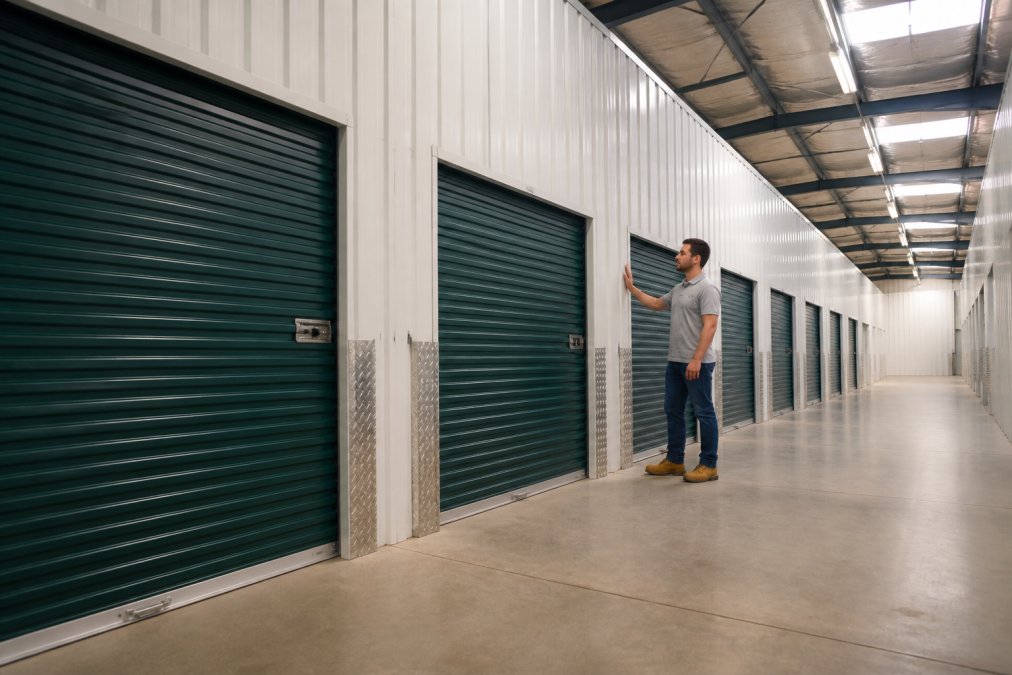
Common storage unit dimensions include 2m × 2m (small), 3m × 3m (medium), and 4m × 4m (large). A 2m × 2m unit works for studio apartments or seasonal items. A 3m × 3m unit suits one-bedroom homes and modest household goods. For a 3-bedroom home, you’ll typically need a 4m × 4m unit or larger, depending on how much you’re keeping.
The key insight most people miss: cubic feet matters more than square footage when you’re storing furniture and boxes. A tall unit with a high ceiling gives you more usable space than a wide, shallow one. This is where vertical stacking becomes your best friend. Urban Self Storage facilities across Western Australia offer units with varying ceiling heights specifically to match different storage needs.
How to Choose the Right Storage Unit Size for Your 3-Bedroom Home
Choosing the right storage unit size starts with a realistic inventory of what you’re actually storing. Most people overestimate how much they need because they haven’t decluttered yet. The process isn’t complicated, but it does require honesty about what you’ll actually keep.
Room-by-Room Inventory Assessment
Start by going through your home room by room. In the bedroom, you’re likely storing a bed frame, mattress, wardrobe, and nightstands. A queen bed frame alone takes up roughly 2 metres by 1.5 metres of floor space (peer-reviewed research). Add drawers, a wardrobe, and bedside tables, and you’re looking at a significant footprint.
The living room typically contains the largest items: sofa, TV stand, coffee table, and shelving units. A standard three-seater sofa is about 2 metres wide and 1 metre deep. If you’re storing multiple pieces of lounge furniture, you’re already committing substantial space.
The kitchen presents a different challenge. Most people store small appliances, boxes of dishes, and sometimes a small table and chairs. These items are easier to stack than furniture but harder to access if you need something mid-storage.
Bedrooms, bathrooms, and hallways usually contain smaller items, linen, towels, seasonal decorations, and personal belongings. These pack efficiently into boxes but add up in quantity.
Create a simple spreadsheet listing each room and the major items you’re storing. Next to each item, estimate its dimensions. This becomes your baseline for sizing decisions. Many storage facilities offer free consultations where staff can help you estimate based on photos or descriptions of your items.
Comparing Square Footage and Cubic Feet
Square footage tells you how much floor space you have. Cubic feet tells you the total volume available. A unit that’s 3m × 3m × 2.4m high gives you 9 square metres of floor space but 21.6 cubic metres of actual storage capacity.
This distinction matters because stacking changes everything. You can’t stack a sofa on top of another sofa safely, but you can stack boxes of household goods several metres high. A unit with higher ceilings gives you more usable space per square metre of floor space.
When comparing units, always ask for both measurements. A narrow, tall unit might offer the same cubic capacity as a wider, shorter one, but the narrow unit is harder to pack efficiently. You need enough floor space to move around and access items at the back.
For a 3-bedroom home, aim for at least 20-25 cubic metres if you’re storing furniture and household goods together. If you’re only storing boxes and seasonal items, 15 cubic metres might suffice. If you’re storing a fully-furnished home including dining furniture and multiple wardrobes, you may need 30+ cubic metres.
Urban Self Storage provides detailed specifications for each unit size, including ceiling height and access points.
Decluttering Before Moving Into Storage
Here’s where most people go wrong: they move everything into storage, then realise halfway through that they’re paying to store things they don’t want.
Decluttering before storage is a single decision that saves money and reduces stress. Go through each room and sort items into three categories: keep, sell, and discard. The "keep" pile goes into storage. Everything else either generates a bit of cash or goes to the tip.
Be ruthless about clothing. If you haven’t worn it in two years, you won’t wear it in storage. Kitchen items follow the same rule, if you don’t use it now, you won’t use it later. Sentimental items deserve a category of their own, but limit them. One box of memories is reasonable; five boxes is hoarding.
Books are surprisingly heavy and take up volume quickly. If you’re storing books long-term, consider whether you’ll actually read them again. Many people find that digital versions serve them better in storage situations.
This process typically reduces your storage needs by 20-30%. A 4m × 4m unit might become a 3m × 3m unit after decluttering. That’s a meaningful saving on monthly rental costs, especially for long-term storage.
How to Pack a Storage Unit for Maximum Space Efficiency
Packing a storage unit efficiently means thinking vertically and strategically. Don’t just shove items in and hope they fit. A well-packed unit lets you access anything without moving other items first. tips for downsizing.
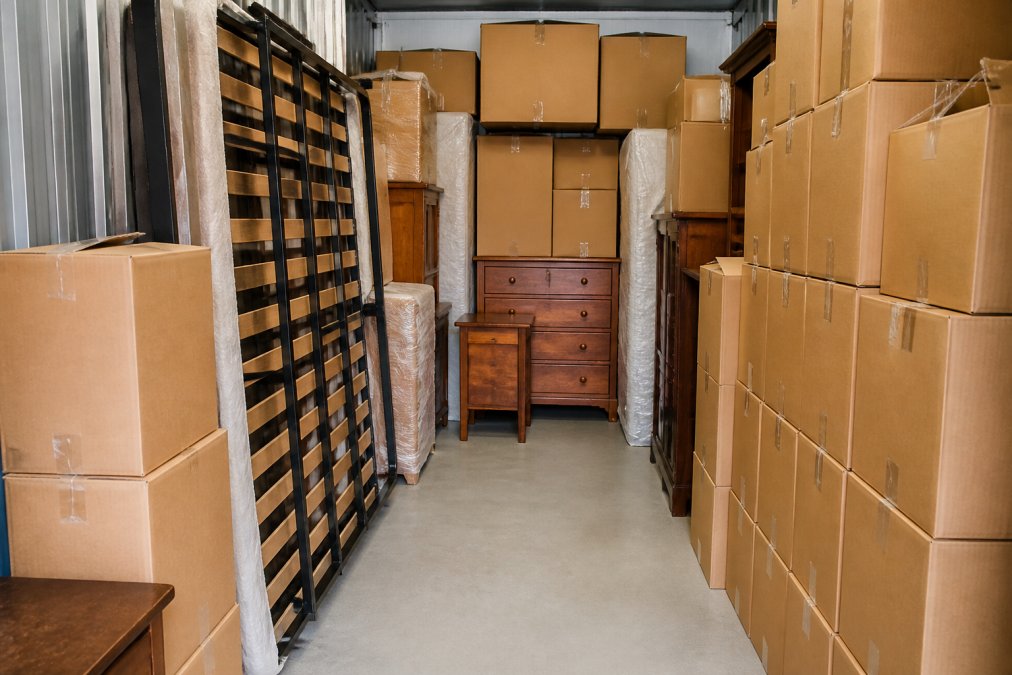
Start by placing your largest, heaviest items first. Bed frames, wardrobes, and sofas form the foundation. Position them along the walls, not in the middle of the unit. This preserves the central pathway you’ll need for access.
Boxes go on top of and around furniture. Stack them in uniform columns, not haphazardly. A neat stack is more stable and lets you reach items at the back without toppling boxes. Use boxes of similar size together, large boxes on the bottom, smaller boxes on top.
Create an aisle down the centre of the unit. This might seem wasteful, but it’s essential for accessing items without moving everything. If you need something from the back in month three, you’ll be grateful for that pathway.
Label every box clearly with its contents and the room it came from. Use a permanent marker on multiple sides. When you need to find something, you shouldn’t have to open boxes to locate it. Many people use colour-coded stickers for different rooms, blue for bedroom, green for kitchen, and so on.
Vertical Stacking and Layout Strategies
Vertical space is your biggest asset in a storage unit. Most ceilings are 2.4 metres or higher, giving you room to stack boxes several metres high. The key is doing it safely and logically.
Heavy items go on lower shelves or the floor. Lighter boxes stack on top. Never put heavy boxes above light ones, gravity doesn’t negotiate. A box of books should never sit on top of a box of linens.
Furniture can be stood on end to save floor space. A wardrobe that’s 1.8 metres tall and 0.6 metres wide takes up less floor space when stood upright than when laid down. Bed frames can be leaned against walls or stood vertically. Sofas take up enormous floor space if laid flat, but they can be turned on end to save room.
Disassemble furniture where possible. Remove bed frame legs, take apart wardrobes, and disassemble shelving units. Keep all hardware in labelled bags taped to the relevant furniture piece. This saves space and reduces the risk of damage during storage.
Protecting Your Household Goods and Furniture
Damage inside a storage unit usually comes from moisture, dust, or items shifting during storage. Protect against all three.
Wrap furniture in blankets or furniture pads before storing. This prevents dust accumulation and protects against minor impacts. Mattresses should go into mattress bags. These are inexpensive and prevent dust mites and moisture from settling into the fabric.
Use plastic bins for items that need extra protection. Cardboard boxes absorb moisture; plastic bins shed it. For long-term storage, plastic is worth the extra cost.
Climate control becomes important if you’re storing items sensitive to humidity or temperature changes. Wooden furniture can warp in high humidity (peer-reviewed research). Electronics and important documents can be damaged by moisture. If you’re storing anything valuable or sensitive, ask about climate-controlled options.
Average Storage Unit Prices and Cost-Saving Options
Storage pricing varies based on unit size, location, and how long you’re renting. Smaller units start at one price point, while larger units cost more. The monthly cost depends on supply and demand in your area and the facility’s features.
Urban Self Storage provides transparent pricing on their website. You can see exactly what a 3m × 3m unit or 4m × 4m unit costs for your duration before committing.
Several cost-saving strategies exist. First, rent only what you actually need. Oversizing costs money every month. Second, ask about short-term discounts. Many facilities offer promotional rates for first-month rentals. Third, consider whether climate control is necessary for your items. Standard units cost less than climate-controlled ones, and you don’t need climate control for most household goods.
Long-term rentals sometimes qualify for better rates than short-term ones. If you’re storing for 6+ months, ask whether a longer lease reduces your monthly cost. Conversely, if you’re only storing for a few months, don’t commit to a long contract.
Climate Control and Long-Term Storage Considerations
Climate control matters for certain items but not for everything. Understanding when you need it saves money.
Climate-controlled units maintain consistent temperature and humidity. They’re essential if you’re storing electronics, important documents, artwork, or wooden furniture in areas with extreme seasonal humidity. Western Australia’s climate varies significantly by region, and humidity can be high during summer months.
Standard units work fine for most household goods, seasonal decorations, and items you don’t plan to access frequently. They cost less and suit temporary storage situations.
For long-term storage lasting 6+ months, climate control becomes more valuable. The small additional monthly cost prevents moisture damage that could cost hundreds to repair. A wardrobe stored for a year in high humidity might develop mould. A wooden bed frame could warp. These aren’t hypothetical risks, they happen regularly.
If you’re unsure whether your items need climate control, describe them to Urban Self Storage staff. They can advise based on your specific situation and storage duration.
Choosing the right storage unit size for a 3-bedroom home comes down to honest assessment and strategic packing. Most homes fit comfortably in a 4m × 4m unit, though smaller homes might manage with 3m × 3m. Declutter first, measure your furniture, and don’t oversise, you’ll pay for every cubic metre whether you use it or not.
Urban Self Storage’s locations across Western Australia offer flexible short- and long-term options with 24/7 CCTV surveillance and easy access. The quick move-in process means you can secure your storage in under 10 minutes. Book online now to find the right unit size for your 3-bedroom home and get started with competitive pricing and transparent terms.
| Storage Unit Size | Best For | Typical Contents | Access Frequency |
|---|---|---|---|
| 2m × 2m | Studio/1-bed flat | Seasonal items, small furniture | Occasional |
| 3m × 3m | 1-2 bed home | Bedroom furniture, boxes | Monthly |
| 4m × 4m | 3-bed home | Full household goods, furniture | Weekly |
| 5m × 5m+ | 4+ bed home, business stock | Multiple rooms, large items | Frequent |
Frequently Asked Questions
Q: What size storage unit do I need for a 3-bedroom home?
A: A 3-bedroom home typically requires 10 cubic metres to 15 cubic metres of storage space, depending on how much furniture and household goods you're storing. If you're storing a fully-furnished home, aim for at least 12 cubic metres. For partial contents or furniture only, 8 cubic metres may suffice. Consider whether you have large appliances, outdoor equipment, or vehicles, these require additional space and may necessitate a larger unit or specialised storage.
Q: How do I calculate the storage capacity I need before packing?
A: Start with an inventory assessment by listing items room by room: lounge furniture, bedroom sets, kitchen appliances, and household goods. Measure larger items like sofas and wardrobes. Use the cubic feet or cubic metres measurement rather than floor space alone, as vertical space matters significantly. Most storage facilities provide dimension guides; multiply length × width × height to determine cubic capacity. Add 20% extra for packing materials and access pathways.
Q: What's the difference between a 10×10 unit and a 10×20 unit?
A: A 10×10 unit provides approximately 9 cubic metres of storage space and suits small apartments or partial furniture storage. A 10×20 unit offers roughly 18 cubic metres, accommodating a fully-furnished 3-bedroom home with appliances and outdoor equipment. The 10×20 unit allows better space optimisation through vertical stacking and organised layout. If you're uncertain, a 10×20 is the safer choice for a 3-bed home, as cramped units make access difficult and risk damage to furniture.
Q: Do I need climate control for storing household furniture and goods?
A: Climate control is recommended for long-term storage of valuable furniture, electronics, and sensitive items. Fluctuating temperatures and humidity in uncontrolled units can cause wood to warp, leather to crack, and electronics to malfunction. If you're storing for under 3 months during a renovation or short-term move, standard storage may suffice. For items worth protecting or storage exceeding 6 months, climate-controlled units prevent moisture damage and preserve condition, though they cost more than standard units.
This article was written using GrandRanker