
Last Updated: November 8, 2026
Quick Summary
Protect caravan tyres from cracking by blocking UV with snug, breathable, light-coloured covers and never storing them soft. Inflate to the placard pressure or slightly above, park on hard level ground in shade, and relieve static load with cushions or by moving the van. Check pressure and sidewalls monthly.
- UV exposure and static load are the two forces that do most of the damage to caravan tyres.
- Check pressure with a gauge and feel each sidewall for cracks every month while parked.
- Fit covers only over clean, dry tyres, since covers over wet tyres trap moisture against the rubber.
- Never store on soft tyres, and bleed back down to towing pressure before you hit the road.
- Replace rather than repair when cracks reach the bead or expose the cords.
Table of Contents
- Why Caravan Tyres Crack and What Speeds It Up
- A Caravan Tyre Maintenance Routine That Actually Works
- Caravan Tyre Covers for UV Protection: Choosing and Fitting Them
- Caravan Tyre Pressure When Stored: What to Set Before Parking
- How to Store a Caravan Long Term Without Damaging the Tyres
- When Cracking Means Replacement, Not Repair
- Book Secure Caravan Storage With Urban Self Storage
- Frequently Asked Questions
Why Caravan Tyres Crack and What Speeds It Up
Caravan tyres crack because rubber loses its flexibility over time, and that decline speeds up sharply when a van sits still in the sun for months. Vans often arrive with sidewalls already showing fine surface cracks, and owners are usually surprised.
Two forces do most of the damage: UV exposure and static load. Understand those and the rest of the maintenance routine makes sense.
Sunlight, Heat and Rubber Ageing
Ultraviolet light breaks down the chemical bonds in rubber. The surface dries, fades and starts to craze into a network of fine cracks. Add heat and the process accelerates.
Rubber ageing happens even in shade, just slower. According to Tyre Stewardship Australia’s guidance on tyre care and ageing, tyres degrade with age regardless of tread wear, which is why the manufacturing date on the sidewall matters as much as the kilometres travelled.
Static Load, Flat Spots and Underinflation
A parked caravan puts its full weight on one small patch of each tyre, hour after hour. Rubber that would normally flex as the wheel turns instead sits compressed. Over months, that patch flattens and the sidewall takes uneven stress.
Underinflation makes it worse. A soft tyre squashes further under load, flexes more at the sidewall, and runs hotter when you finally tow it.
A Caravan Tyre Maintenance Routine That Actually Works
The routine that works is boring, short and repeated. Check the tyres monthly while parked, note what you see, and act on changes early. Fifteen minutes a month is enough.
Monthly Checks While Parked
Work through this list on the same day each month:
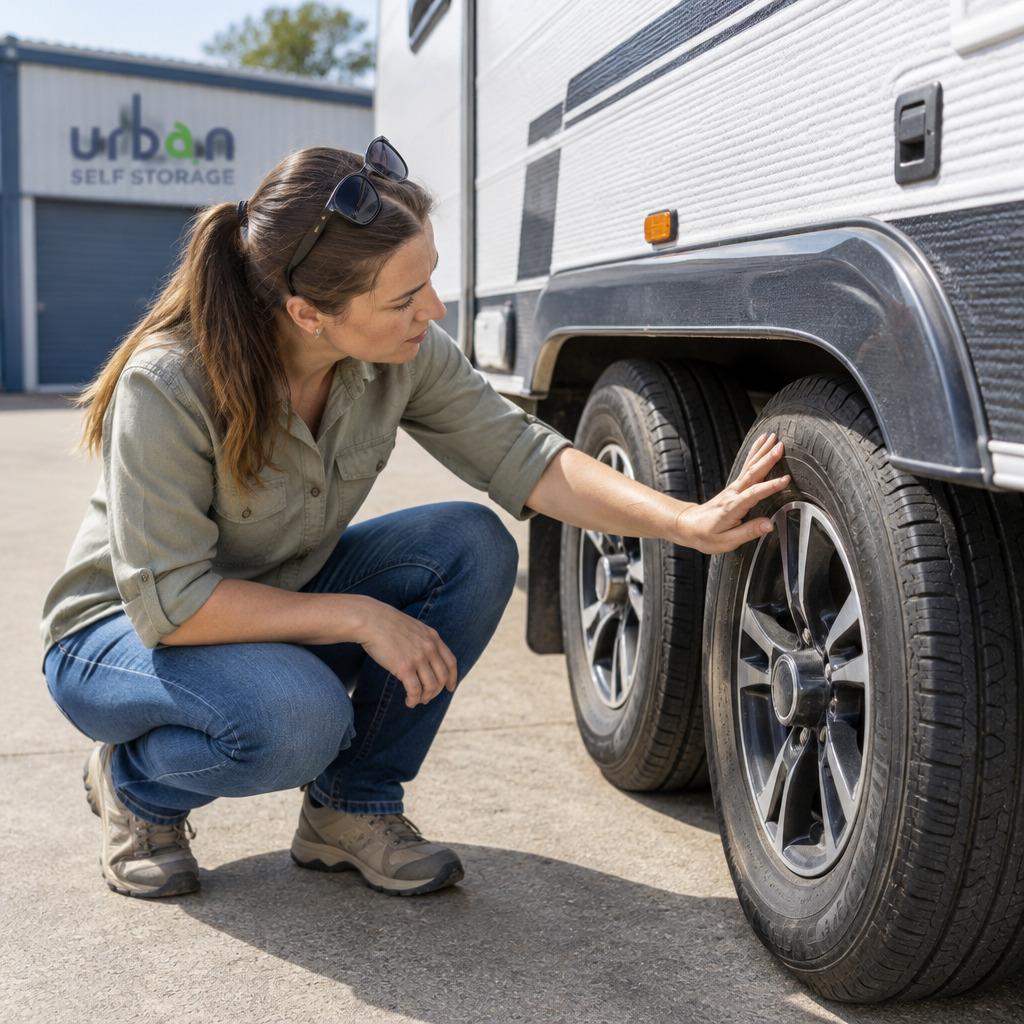
- Run a hand over each sidewall and feel for cracks, bulges or rough patches
- Check tyre pressure with a gauge and compare to the placard figure
- Look for colour fading or a chalky grey surface on the rubber
Write the results down. A photo on your phone works fine. Trends matter more than any single reading.
Reading Sidewall Cracks, Colour Fading and Tread Depth
Surface cracks are the early warning. Fine crazing across the sidewall means the rubber is drying out.
Colour fading tells you the same thing from a distance. A healthy tyre looks dark and slightly satin. A weathered one looks grey and chalky.
Tread depth is the easiest check. Use a tread depth gauge or a coin, and compare across the whole tread face.
Caravan Tyre Covers for UV Protection: Choosing and Fitting Them
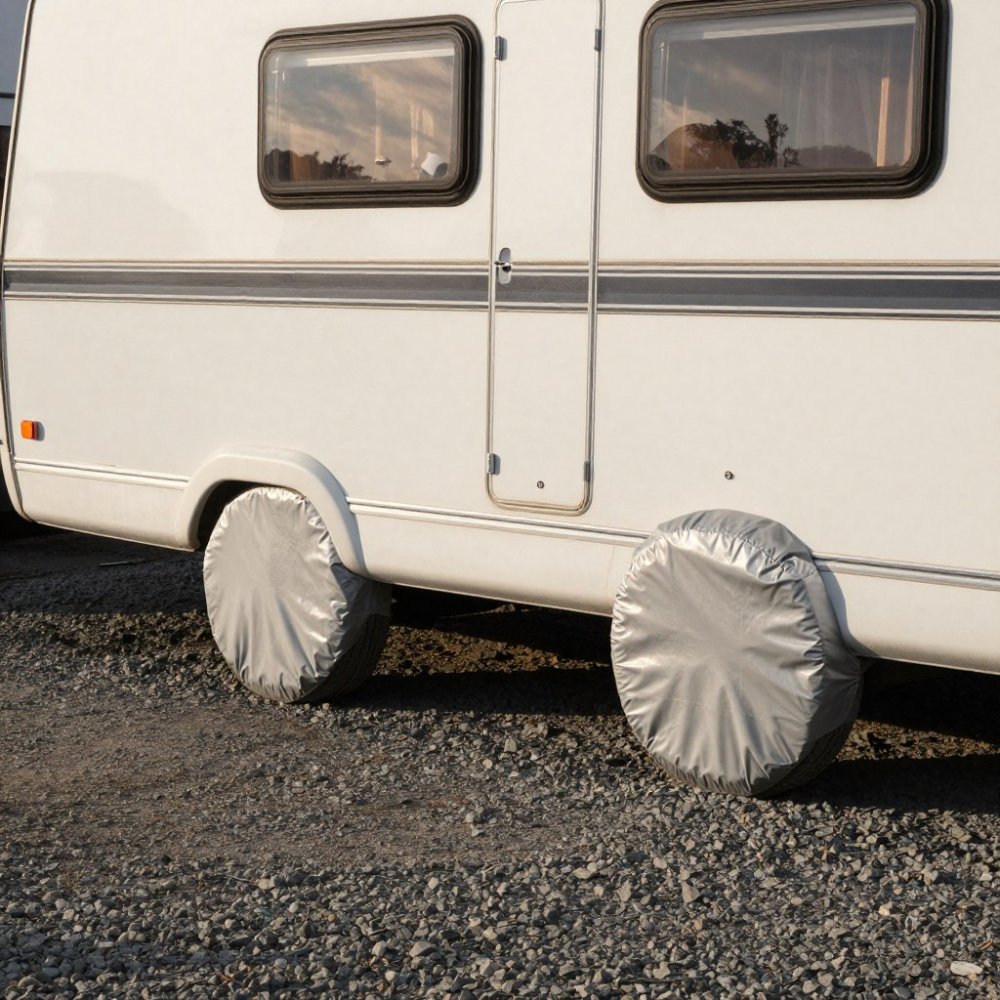
Tyre covers are one of the simplest ways to slow UV damage, and they work only if they fit properly.
When choosing covers, look for:
- UV-blocking fabric rated for outdoor use, not a thin tarp
- A snug fit over the specific wheel size, with elastic or straps
- Breathability, so trapped moisture can escape
Fit them dry. Clean the sidewall first so grit does not sit under the fabric. Secure every strap, and check them monthly, because wind works straps loose over time.
Let the tyres dry before fitting covers, as covers fitted over wet tyres can trap moisture against the rubber.
Caravan Tyre Pressure When Stored: What to Set Before Parking
There is no single correct storage pressure that suits every caravan. The right figure depends on the tyre specification, the van’s load rating and the manufacturer’s guidance, so the placard on the van and the tyre manufacturer’s documentation are the only reliable starting points. Use those rather than a number from a forum or a friend’s van.
Why Slightly Higher Helps, and Where the Limit Is
A stored tyre slowly loses pressure over weeks and months. Starting slightly above the placard figure can give more time between checks, though the placard and manufacturer documentation remain the reference points. The limit matters: overinflating beyond the tyre manufacturer’s maximum cold pressure is unsafe, and it does not prevent cracking. The aim is a firmer starting point, not the maximum the tyre will take.
Two rules matter more than the exact number:
- Never store on soft tyres. Underinflation plus static load is the fastest route to sidewall damage, and a soft tyre runs hotter when you finally tow it.
- Adjust back before towing. Bleed down to the correct towing pressure before you hit the road, using the placard figure for the load you are carrying.
Load Guidance While Parked
Pressure and load work together. A van parked with heavy items left aboard puts more static load on each tyre, and that load concentrates on one contact patch for months. Where practical:
- Remove heavy items that do not need to stay in the van, or redistribute them so weight is not concentrated over one axle.
- Avoid leaving the van loaded to its limit for long periods. The tyre and caravan manufacturers specify load limits for towing, and prolonged static loading at or near those limits accelerates sidewall stress.
- If the van must stay loaded, check pressure more often and inspect sidewalls monthly rather than quarterly.
How to Check Pressure Correctly
Check pressure when tyres are cold, using a proper gauge rather than a service station unit that may be inaccurate. Record the reading each month alongside the date.
Watch out: do not rely on a visual check. A tyre can look fine and still be significantly underinflated, and the sidewall damage from months of soft storage may only show up when the van is next towed.
How to Store a Caravan Long Term Without Damaging the Tyres
Long-term storage is where most caravan tyre cracking begins. The goal is to reduce UV exposure, reduce static load, keep the rubber from drying out, and control the conditions around the van, not just the sun. Our guide to protecting caravan tyres in storage walks through the full process, but the routine below is the practical version you can run on a calendar.
A Step-by-Step Storage Routine
Work through this in order before the van goes into storage, then repeat the checks on the schedule further down.
- Clean the tyres. Wash off dirt, brake dust and any chemical residue, then let them dry fully before covers go on.
- Inflate to the placard pressure or slightly above. Use the van’s tyre placard, not a forum figure. A firmer starting point buys time between checks and reduces sidewall flex under static load.
- Park on a hard, level surface. Concrete or sealed hardstand is better than soft ground, which holds moisture against the tread and can let the tyre sink unevenly.
- Choose shade over full sun. A covered bay or a site with shade reduces UV and reflected heat. If you have no choice, covers become more important, not less.
- Fit tyre covers over every wheel, including the spare. Clean, dry sidewalls only. Secure every strap.
- Relieve static load. Either move the van slightly every few weeks, or fit tyre cushions or flat-spot prevention pads under each wheel to spread the load across a wider contact patch.
- Log the starting point. Record pressure, tread depth, sidewall condition and the manufacturing date code for each tyre. A photo on your phone is enough.
Storage Conditions Beyond Sunlight
UV is the headline problem, but it is not the only one. Ozone, heat, moisture and chemicals all age rubber.
- Heat. A van parked on exposed concrete or gravel in full sun takes reflected heat from below as well as direct sun from above. Shade and a light-coloured cover both help.
- Ozone. Electric motors, welders and some workshop equipment generate ozone, which attacks rubber. Avoid storing right next to a workshop or plant room if you can.
- Moisture. Damp ground and trapped water under covers encourage sidewall degradation. Let tyres dry before covering, and avoid soft ground that stays wet.
A Calendar-Based Maintenance Schedule
A routine only works if it is repeated. Use this schedule while the van is parked:
- Monthly: check pressure with a gauge, run a hand over each sidewall for cracks, bulges or rough patches, confirm covers are secure, and look for flat spots or a visible dip where the tyre meets the ground.
- Every three months: check tread depth across the full width of each tyre, note any change in colour or chalkiness, and confirm the manufacturing date code on each tyre.
- Every six months: move the van a short distance to flex the tyres and change the contact patch, or rotate the cushions if the van cannot be moved. Re-check strap tension on covers.
Write the results down each time. Trends matter more than any single reading, and a log makes a professional inspection far more useful.
Watch out: covers fitted over wet tyres trap moisture against the rubber, which is worse than leaving them off. Always let the tyres dry first.
When Cracking Means Replacement, Not Repair
Replace rather than repair when cracks are deep, reach the bead, or expose the cords. Surface crazing can be monitored. Structural cracking cannot.
Use this to decide:
| What you see | What it means | What to do |
|---|---|---|
| Fine surface crazing | Early weathering | Monitor monthly, fit covers |
| Cracks you can open with a fingernail | Rubber drying through | Book a professional inspection |
| Cracks near the bead or cords visible | Structural damage | Replace before towing |
| Bulges or soft spots | Internal failure | Replace immediately |
| Tyre past its safe service life | Ageing regardless of tread | Replace |
Tyre age matters as much as appearance. Check the manufacturing date code on the sidewall, and have any tyre of uncertain age inspected by a qualified tyre professional before a long trip. Tread depth alone does not tell you whether a tyre is safe.
Book Secure Caravan Storage With Urban Self Storage
Good tyre care starts with good storage. A covered, secure site reduces UV exposure and keeps your van out of the weather between trips, which is half the battle against cracking.
Urban Self Storage offers caravan storage in Bunbury at our Bunbury area locations in East Bunbury and Picton, along with flexible short and long term storage in Bunbury WA if your plans change from one season to the next. If you are weighing up the decision, our guide to whether long term caravan storage is worth it covers the trade-offs, and our article on choosing the right storage unit size helps you pick a bay that fits your van without wasting space.
For local readers, there is also practical guidance on caravan and boat storage in Bunbury and a full rundown of the best ways to store a caravan.
Protecting caravan tyres from cracking comes down to three habits: block the sun, keep the pressure right, and check monthly. Do those and you will catch problems while they are still cheap to fix.
At Urban Self Storage, we give you a secure, monitored site with flexible terms and easy access, so your van sits protected between adventures.
Frequently Asked Questions
What causes caravan tyres to crack?
Cracking usually comes from a combination of UV exposure, heat, rubber ageing and sitting still for long periods. Sunlight breaks down the rubber compounds on the sidewall, while static load and underinflation let the tyre flatten at the contact patch. Add infrequent use and the flexing that normally keeps rubber supple stops happening. Inspect sidewalls regularly, keep tyres covered and maintain correct pressure to slow the process.
Do caravan tyre covers actually prevent cracking?
Covers help by blocking direct sunlight and reducing surface heat, which are two of the main drivers of sidewall cracking. They work best as part of a broader routine: correct caravan tyre pressure when stored, periodic inspection and moving the van to flex the tyres. Choose breathable, well-fitted covers that shed water rather than trapping moisture against the wheel.
How often should I check caravan tyres in storage?
A monthly walk-around is a sensible baseline. Check pressure with a gauge, look for new sidewall cracks, colour fading or bulges, and confirm covers are still secure. Every few months, move the caravan slightly or rotate the wheels to change the contact point and reduce flat spots. Record the manufacturing date so you can plan replacement before the rubber ages out.
How do I know if cracked caravan tyres need replacing?
Surface crazing is common with age, but cracks deep enough to catch a fingernail, exposed cords, bulges or sidewall damage near the bead are reasons to stop towing and get a professional assessment. Tyre age matters too: check the manufacturing date on the sidewall and replace tyres that are well past their service life regardless of tread depth. When in doubt, have a tyre specialist inspect them.
