

Table of Contents
- Why 24/7 CCTV Matters in Storage Facilities
- Deterrence of Theft and Vandalism Through Continuous Surveillance
- Tenant Peace of Mind: How Constant Monitoring Builds Confidence
- Secure Self Storage Australia: Professional-Grade Security Features
- Storage Unit Security Features Australia: What Modern Systems Offer
- Remote Monitoring Storage Facilities Australia: Real-Time Alerts and Evidence
- Cost of Secure Storage Australia: Weighing Investment Against Protection
- Cybersecurity and Privacy: Protecting Your Data in Monitored Facilities
Last Updated: July 22, 2026
Why 24/7 CCTV Matters in Storage Facilities
Security breaches at self-storage facilities cost operators significant money in liability claims, insurance increases, and reputation damage. Yet many facilities still operate with limited monitoring or coverage gaps during off-hours. 24/7 surveillance represents a fundamental shift in how the storage industry approaches risk management and tenant confidence.
This guide covers the seven most important benefits you should understand before choosing a storage provider. Whether you’re storing household items, business inventory, or vehicles, knowing what round-the-clock CCTV actually delivers helps you make an informed decision about facility security.
Real 24/7 surveillance means continuous recording with immediate alert capability, not just cameras pointed at empty hallways. Ask your provider whether they actively monitor feeds or rely on passive recording for later review.
Deterrence of Theft and Vandalism Through Continuous Surveillance
Visible cameras act as a powerful psychological deterrent, but only when potential offenders know they’re actually monitored. Criminals assess risk before acting, and the knowledge that footage is being reviewed in real-time dramatically increases perceived risk.
Professional-grade surveillance systems create multiple layers of deterrence. Visible cameras signal that the facility takes security seriously. Professional signage indicating 24/7 monitoring tells would-be offenders that their actions will be captured and reviewed. Active monitoring means suspicious behaviour triggers immediate response rather than waiting for a tenant to report damage.
Storage unit security features in Australia increasingly include motion-activated recording and night-vision capability. A person attempting to force open a unit at 2 AM faces the same recording quality as someone attempting it at 2 PM, a reality that changes their cost-benefit calculation.
Facilities with established records of prosecuting theft and vandalism develop reputations that spread through local communities. Insurance companies recognize this pattern, which often translates to lower premiums for facility operators who maintain rigorous surveillance protocols.
Visible, professionally maintained surveillance systems reduce theft and vandalism incidents by creating immediate consequences for criminal behaviour. The deterrent effect is strongest when combined with clear signage and evidence that the facility actively reviews footage.
Tenant Peace of Mind: How Constant Monitoring Builds Confidence
Peace of mind is the outcome that matters most to tenants. When someone stores items they value, they need confidence that those items remain secure throughout the rental period. 24/7 CCTV storage facilities deliver that confidence through transparent, continuous protection.
Many tenants report that knowing surveillance operates around the clock fundamentally changes their experience. They move items in without worry about what happens during night hours and access their units during early mornings or late evenings without concern about security gaps.
The assurance extends beyond protection from theft. Tenants gain confidence that any incidents, accidental damage, disputes over access, or environmental concerns, are documented. This documentation protects both tenant and facility operator. A tenant can request footage to verify their unit wasn’t damaged during an incident they weren’t present for. A facility operator can demonstrate that access was properly authorized.
Remote monitoring storage facilities Australia now offer tenants additional assurance through mobile apps and alerts. Some facilities allow tenants to receive notifications when their unit is accessed, transforming CCTV from a passive security measure into an active communication tool.
Secure Self Storage Australia: Professional-Grade Security Features
Professional-grade surveillance systems differ significantly from basic security cameras. High-definition recording at 1080p or higher ensures that facial features, vehicle license plates, and specific details are captured with clarity. Standard-definition footage often fails to provide identifying information, making it useless for investigation.
Night-vision capability represents another critical distinction. Many theft and vandalism incidents occur during low-light hours when standard cameras produce grainy, unusable footage. Professional systems use infrared technology to capture clear images regardless of lighting conditions.
Storage unit security features Australia increasingly includes integration with access control systems. Modern facilities connect CCTV with gated entry systems, creating a complete audit trail. When a gate opens or a unit is accessed, the timestamp correlates with surveillance footage.
Motion detection and analytics flag unusual activity automatically. Rather than requiring staff to review hours of footage, these systems alert personnel to a person lingering near a unit, attempting to force a lock, or accessing an unauthorized area.
Cloud storage ensures that footage isn’t lost if equipment fails or is tampered with. Local recording devices can be disabled; cloud-based systems maintain redundancy across multiple locations.
Basic surveillance systems often fail during critical moments because they lack adequate resolution, night-vision capability, or integration with access control. When theft occurs and police request footage, poor-quality video makes prosecution nearly impossible.
Remote Monitoring Storage Facilities Australia: Real-Time Alerts and Evidence
The distinction between passive recording and active monitoring defines modern secure self storage Australia. Passive systems capture footage but rely on manual review after an incident occurs. Active monitoring systems watch feeds in real-time, detect suspicious behaviour, and trigger immediate response.
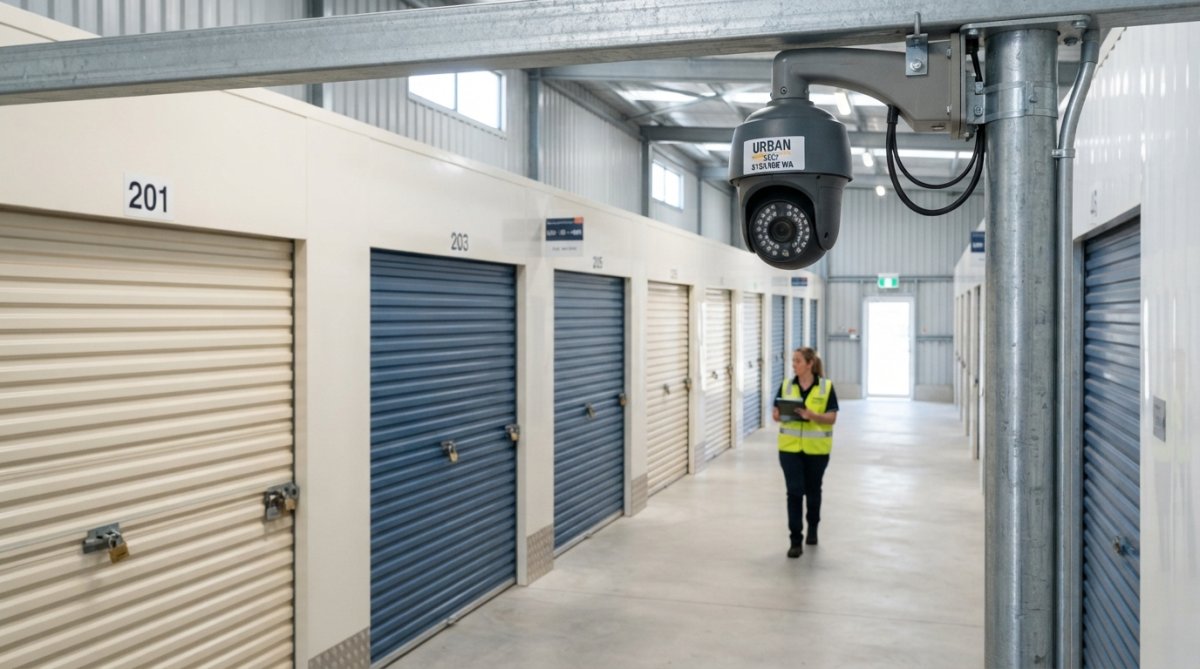
Real-time alerts represent an effective capability. When motion is detected in a restricted area, when a gate is forced, or when unauthorized access is attempted, facility staff or security personnel receive instant notification. This immediacy allows for intervention before theft or vandalism is completed.
How Real-Time Alerts Improve Incident Response
Response time is the critical variable that separates effective security from ineffective monitoring. A theft that takes 15 minutes can be stopped if someone responds in 10 minutes. Real-time alert systems compress this timeline dramatically.
Professional monitoring services operate 24/7, meaning alerts are received and acted upon regardless of time or day. A facility operator cannot reasonably monitor their own CCTV feeds around the clock. Professional monitoring services exist specifically to maintain constant vigilance.
Sophisticated systems use motion analytics to distinguish between normal activity (a tenant accessing their unit) and suspicious activity (someone attempting to force a lock). This filtering ensures that alerts indicate genuine security concerns.
Integration with local law enforcement improves response effectiveness. Facilities with professional monitoring can provide police with real-time information about ongoing incidents. "We have a person on camera attempting to force unit 237, they’re wearing a blue jacket, they arrived in a silver sedan," allows police to respond with accurate information.
Video Evidence and Legal Protection
The legal value of surveillance footage depends entirely on quality and chain of custody. Poor-quality footage has minimal evidentiary value. Footage that’s been tampered with or has gaps becomes inadmissible.
Professional CCTV systems maintain rigorous documentation standards that preserve legal defensibility. Timestamps are embedded in video files, making it impossible to claim footage is from a different time. Recording redundancy ensures continuous coverage without gaps. Cloud storage creates an audit trail showing when footage was accessed and by whom.
When theft occurs, clear video evidence dramatically changes the outcome. Law enforcement can identify offenders with precision. Prosecutors can present compelling evidence that secures convictions. Without this evidence, theft investigations often stall.
Liability protection extends beyond theft cases. If a tenant is injured on the facility premises, video footage establishes what occurred and whether the facility was negligent. If a tenant disputes damage to their unit, footage shows whether damage occurred during their tenancy or was pre-existing.
Video evidence that meets legal standards, clear quality, unbroken chain of custody, professional documentation, transforms CCTV from a deterrent into a prosecution tool. Facilities with professional systems secure convictions; facilities with basic systems rarely do.
Cost of Secure Storage Australia: Weighing Investment Against Protection
Professional surveillance systems require significant upfront capital investment. High-definition cameras, network infrastructure, storage systems, and integration with access control systems represent substantial expenses. A facility with 200 units might invest $50,000-$150,000 in initial system installation.
Ongoing operational costs include professional monitoring services, system maintenance, cloud storage subscriptions, and equipment replacement. Professional 24/7 monitoring typically costs $500-$2,000 per month. Cloud storage for continuous high-definition recording costs $200-$800 monthly.
A facility with professional 24/7 surveillance typically charges 15-25% more than a facility with minimal security. For a tenant renting a 5×10 unit at a basic facility for $100 monthly, the equivalent unit at a professional facility might cost $120-$125 monthly.
The value proposition depends on what’s being stored. A tenant storing business equipment, tools, or valuable inventory should strongly consider the premium for professional security. The cost of theft often exceeds the security premium within weeks.
Insurance premium discounts provide additional financial value. Many insurance policies offer lower premiums for items stored at facilities with professional surveillance. A tenant with a $10,000 inventory might save $200-$500 annually in insurance costs. These savings can offset the rental premium within one to two years.
Urban Self Storage provides competitive pricing while maintaining professional-grade security infrastructure. The combination of modern facilities, 24/7 CCTV surveillance, and flexible rental terms positions the service as a value proposition rather than a premium option.
Compare total cost of ownership including insurance premiums, potential loss exposure, and the value of your peace of mind. A $25 monthly security premium that prevents even one theft pays for itself immediately.
Cybersecurity and Privacy: Protecting Your Data in Monitored Facilities
Network-connected surveillance systems require strong cybersecurity protocols. Weak security allows unauthorized access to live feeds, recorded footage, or system controls. Professional facilities implement network segmentation, encrypted communications, and regular security audits to prevent these scenarios.
Cloud storage introduces data privacy considerations. Footage containing images of tenants, their belongings, and access patterns represents sensitive personal information. Facilities must comply with privacy regulations that govern how this data is collected, stored, and accessed. In Australia, the Privacy Act 1988 (Cth) establishes standards for handling personal information.
Access controls determine who can view footage and when. Professional systems implement role-based access; security staff can view live feeds and alerts, but administrative staff cannot. Audit trails track every instance of footage access, creating accountability.
Professional facilities establish clear policies: cameras monitor common areas and unit access points but not the interior of units. Tenants understand what’s monitored and why. This transparency builds trust rather than creating an atmosphere of pervasive surveillance.
Data retention policies determine how long footage is kept. Most facilities retain footage for 30-90 days, balancing the need for evidence in case incidents occur against privacy and storage considerations.
Frequently Asked Questions
How does 24/7 CCTV actually deter theft and vandalism in storage units?
Visible CCTV cameras and continuous surveillance act as a powerful deterrent because potential offenders know their actions are being recorded and can be used as evidence. The presence of professional-grade security infrastructure signals that a facility takes protection seriously, making it a less attractive target compared to unsecured alternatives. Many thieves deliberately avoid facilities with obvious surveillance systems, choosing easier targets instead.
What storage unit security features Australia should I look for beyond CCTV?
Modern secure self storage Australia facilities combine CCTV with gated access control, individual unit locks, motion detection systems, and night vision capability. Integration with access control systems ensures only authorised entry occurs. Look for facilities offering cloud storage of footage, high-definition recording, and 24/7 coverage without gaps. These layered security features work together to provide comprehensive risk mitigation and operational efficiency.
Can I access CCTV footage if something happens to my stored belongings?
Yes, reputable facilities maintain security footage as evidence for incident response. If theft or damage occurs, you can request relevant footage to support insurance claims or legal action. This video evidence is crucial for proving what happened and establishing liability. Most facilities store footage for extended periods, though retention policies vary. Always confirm a facility's footage access procedures and retention timeframes before signing a lease.
How does remote monitoring storage facilities Australia improve response times?
Remote monitoring enables real-time alerts when motion is detected or access occurs outside authorised times. Security personnel or facility management receive instant notifications, allowing them to respond immediately to potential incidents rather than discovering problems during routine checks. This rapid incident response capability significantly reduces loss severity and helps protect tenant peace of mind by demonstrating active, continuous oversight of the facility.
This article was written using GrandRanker