

Table of Contents
- Pricing and Fees: Storage Unit Questions That Protect Your Budget
- Access and Security: Storage Unit Access Hours Explained
- Contract Terms: Self Storage Lease Agreement Terms to Read Line by Line
- Unit Condition and Suitability: Inspecting Before You Sign
- What Good Answers Look Like: A Worked Example
- Frequently Asked Questions
Last Updated: September 13, 2026
Pricing and Fees: Storage Unit Questions That Protect Your Budget
Questions to ask before renting a storage unit (checklist) start with money, because the headline rate rarely tells the full story. The three questions below cover the total move-in cost, the fee schedule, and how to avoid hidden fees in self storage contracts.
What Is the Total Move-In Cost, Including Any Admin Fee?
Ask for one figure that covers everything: first period’s rent, any admin fee, deposit requirements, and a padlock if you need one. A good answer is itemised in writing before you sign the rental contract, not delivered verbally at the counter.
- What is the total move-in cost, including any admin fee? A good answer is a written, itemised figure covering rent, admin fee, deposit requirements and padlock, with nothing added later.
How Do I Avoid Hidden Fees in Self Storage Contracts?
Request the full fee schedule in writing and check it against the lease agreement terms. Watch for late payment charges, lockout or overlock fees, and a notice period that keeps billing after you leave. We have broken this down further in our guide to avoiding hidden fees in self storage contracts.
- Are there any other fees not in the headline price? A good answer lists late fees, lockout charges and notice period terms openly, with no surprises at renewal.
Access and Security: Storage Unit Access Hours Explained
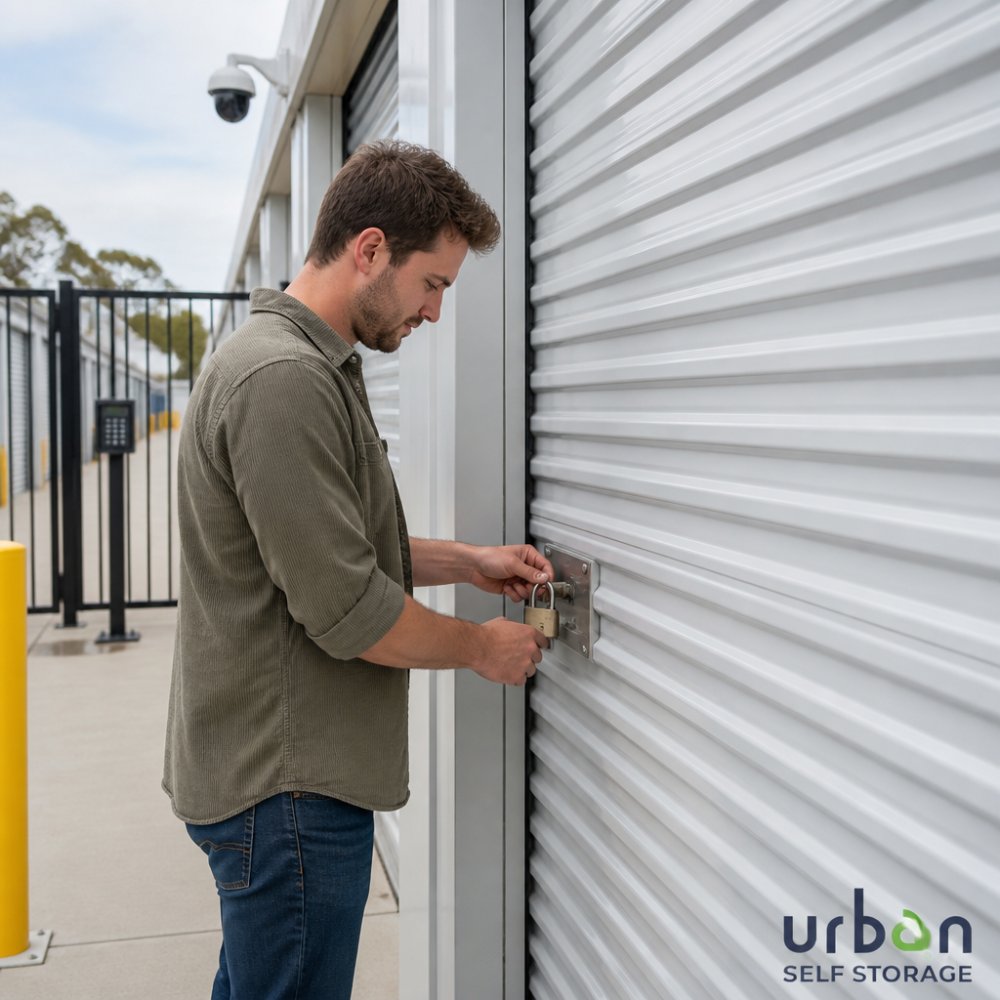
Access hours are where cheap storage quietly becomes inconvenient storage. Ask what the gate actually does outside business hours, not what the brochure implies. Storage unit access hours explained properly means knowing your PIN, your gate access log, and whether after-hours entry is genuinely available.
What Questions Should I Ask to Confirm After-Hours Access Policies?
Ask directly: what are the access hours, is there a separate after-hours access policy, and does my PIN work at 2am? A good answer names specific hours, confirms gate access is logged, and explains how to reach a facility manager if something fails.
- What are the access hours, and does my PIN work after hours? A good answer gives exact hours, confirms after-hours access in writing, and explains the gate access log and manager contact process.
How Do I Choose a Secure Storage Facility?
Walk the site and look for working CCTV, gated access, lighting, and a facility manager you can actually reach. Ask to see the unit condition and the walkways yourself. Our guide to storage unit access hours explained covers what to check on site.
- How do I choose a secure storage facility? A good answer shows you working CCTV, gated access, individual unit locks, and a named manager, rather than describing security in general terms.
Contract Terms: Self Storage Lease Agreement Terms to Read Line by Line
Self storage lease agreement terms decide how easily you can leave, how much you pay over time, and what happens if your circumstances change. Read the contract before you sign, not after you have loaded the trailer. The questions below cover the clauses that cause the most disputes.
Is This Month-to-Month or a Fixed Contract?
Ask whether the agreement rolls month-to-month or locks you into a fixed contract with a minimum rental period. A good answer states the minimum rental period, the notice period, and any price lock-in period in writing before you sign. Month-to-month is more flexible; a fixed contract may offer a lower rate but usually carries a longer commitment.
- Is this month-to-month or a fixed contract? A good answer states the minimum rental period, the notice period, and any price lock-in period in writing before you sign, so you know exactly how long you are committed.
What Is the Notice Period, and How Do I Terminate the Agreement?
This is the question most renters forget to ask, and it is the one that costs them money. Ask how much notice you must give to terminate, whether notice must be in writing, and whether it can be given mid-cycle or only at the end of a billing period. A good answer is a short, clearly stated notice period with no exit or cancellation fee, and a written termination and move-out procedure that explains the final billing cycle and how any deposit is returned.
-
What is the notice period if I want to leave? A good answer is a short notice period, confirmed in the lease agreement, with no exit or cancellation fee attached.
-
How do I terminate the agreement and move out? A good answer explains the termination and move-out procedure in writing, including the notice period, the final billing cycle, and how your deposit is returned. Ask whether you need to remove your padlock, sweep the unit, or complete a condition report on exit.
Can the Price Change During My Rental Period?
Ask whether the rate is locked for a set period or can be increased with notice. A good answer names the price lock-in period and explains how much notice you would receive before any increase. If a moving-in discount is offered, ask what the rate reverts to when the discount ends, so you are not surprised by the second invoice.
- Is the price locked in, and for how long? A good answer states the price lock-in period and the notice you would receive before any increase, and explains what the rate reverts to after any moving-in discount.
Is Insurance Mandatory, and What Proof Do You Need?
Ask what insurance requirement applies and whether your existing home or contents policy already covers goods held in storage. Many facilities require proof of cover before you move in, and some exclude certain items. A good answer explains the insurance requirement plainly and tells you exactly what documentation to bring on move-in day.
- Is insurance mandatory, and what proof do you need? A good answer states the insurance requirement clearly and tells you exactly what to provide before move-in day.
Do not assume your home contents policy automatically covers goods in a storage unit. Many policies exclude items held off-site, and discovering that after a break-in is expensive.
For a deeper walk-through of the fee clauses that sit alongside these terms, see our guide to avoiding hidden fees in self storage contracts.
Unit Condition and Suitability: Inspecting Before You Sign
The unit you are shown should match the unit you rent. Check the size, the door, the floor, the airflow and the pest-control routine before you commit. This is also where vehicle owners need to ask harder questions than most, because a unit that fits a box trailer may not fit a caravan.
Does the Unit Size Match What Was Advertised?
Ask to stand inside the actual unit and confirm the storage unit dimensions yourself, rather than trusting a floor plan. A good answer is a unit size that matches the advertised storage capacity, with the door width and ceiling height stated accurately. If the size is wrong, ask whether a different unit is available before you sign.
- Can I see the actual unit before signing? A good answer is a walk-through of the exact unit, with unit size accuracy confirmed against the advertised dimensions and the door width and ceiling height stated.
Is the Facility Clean, Dry and Pest-Controlled?
This is the question that protects your furniture, stock and electronics. Ask what pest control schedule the facility runs, whether units are inspected between tenancies, and how damp or humidity is managed. A good answer explains the pest control schedule, shows you a dry unit with no damp smell, and confirms facility maintenance routines. Look for evidence of rodents, insect activity, water stains or musty odours, and ask whether bait stations or regular treatments are in place.
- Is the facility clean, dry and pest-controlled? A good answer explains the pest control schedule, shows you a dry unit with no damp smell, and confirms facility maintenance routines and how humidity is managed.
Is Climate Control Available if I Need It?
Ask whether climate control availability exists at that site, and what it actually does. A good answer states plainly whether the unit is climate-controlled, what temperature and humidity range it maintains, and whether it costs more. If you are storing timber furniture, instruments, electronics or documents, humidity control matters more than temperature alone.
- Is climate control available if I need it? A good answer states plainly whether climate control availability exists at that site, and what humidity control it provides.
Can I Fit My Caravan, Boat or Trade Vehicle?
Ask for the vehicle access width and the drive-up access clearance before you book, and confirm whether the unit is drive-up or indoor hallway access. A good answer is a measured gate width and a unit that fits your caravan, boat or trade vehicle without guessing. Drive-up access suits heavy or bulky items; indoor hallway units may be cheaper but harder to load.
-
What is the vehicle access width? A good answer gives you a measured gate width and confirms drive-up access to the unit, so you are not guessing whether your vehicle fits.
-
Do you have storage for caravans, boats and jet skis? A good answer confirms dedicated vehicle storage with the same security and access terms as indoor units.
-
What items are prohibited? A good answer lists prohibited items clearly: food, flammables, living plants, and anything illegal or perishable.
| Question | Why It Matters | A Good Answer Sounds Like |
|---|---|---|
| Unit size accuracy | You get what you paid for | Walk-through before signing |
| Pest control | Protects furniture and stock | Scheduled treatment program |
| Climate control | Prevents humidity damage | Stated temperature and humidity range |
| Vehicle access width | Determines if it fits | Measured gate width |
| Drive-up access | Makes loading easier | Confirmed drive-up clearance |
Bring a tape measure and a torch to your site inspection. Checking the door width, ceiling height and floor condition yourself takes two minutes and prevents a costly mismatch.
What Good Answers Look Like: A Worked Example
Urban Self Storage is one example of how these answers should land. Ask us the fifteen questions above and here is what you get: a simple and hassle-free move-in process, with the paperwork, ID and insurance details sorted at the counter. Our facilities at East Bunbury and Picton run advanced 24/7 CCTV surveillance, and we offer flexible short and long-term storage options across multi-size units, from furniture storage to caravan, boat and jet ski storage. A customer recently noted that the units are clean, secure, and easy to access, and another mentioned choosing a unit and receiving a discount on their first month. We also publish our pricing on our website, so you can check the numbers before you call.
Bring your ID and proof of insurance to your first visit. Facilities that promise a fast move-in still need both, and having them ready is the difference between ten minutes and a second trip.
Do not assume your home contents policy automatically covers goods in a storage unit. Many policies exclude items held off-site, and discovering that after a break-in is expensive.
Frequently Asked Questions
What are the most common hidden fees in self-storage contracts?
The usual suspects are an admin or set-up fee charged at sign-up, a mandatory lock purchase, insurance sold on top of the base rate, and a rate increase after an introductory period. Ask for the total move-in cost in writing, then ask what the rate becomes after any discount ends. If a facility cannot give you those two figures before you sign, treat that as a red flag and keep looking.
What questions should I ask to confirm after-hours access policies?
Ask whether the gate uses a PIN, fob or app, whether access is genuinely 24/7 or restricted to set hours, and whether there is an after-hours call-out charge if something goes wrong. Confirm the gate keeps an access history or log, since that record matters if your stored items ever go missing. A good answer names the exact hours, the access method and the fee (or confirms there is none) without vague promises.
Is insurance mandatory for self-storage units in Australia?
Most facilities require you to hold some form of cover before you move in, either through your own home and contents policy or a storage-specific policy offered by the facility. Ask what the insurance requirement actually is, what it covers, and whether your existing household policy already extends to goods in storage. Get the answer in writing, because the storage facility’s own insurance typically covers the building, not your belongings.
How do I determine the right storage unit size for my needs?
Ask the facility for the internal dimensions in metres, not just a label like ‘medium’ or ‘large’, then compare that against what you are storing. A three-bedroom home usually needs a larger unit than people expect once furniture, boxes and appliances are stacked. For vehicles, ask for the door width and vehicle access width so you know a caravan, boat or trade ute will actually fit before you book.
Comparing facilities is easier when you know exactly what to ask. Urban Self Storage answers every question above in plain terms, with 24/7 CCTV surveillance, flexible short and long-term options, multi-size units and a move-in process that takes under ten minutes. Get started with Urban Self Storage and book online now to secure the right unit with no guesswork.