
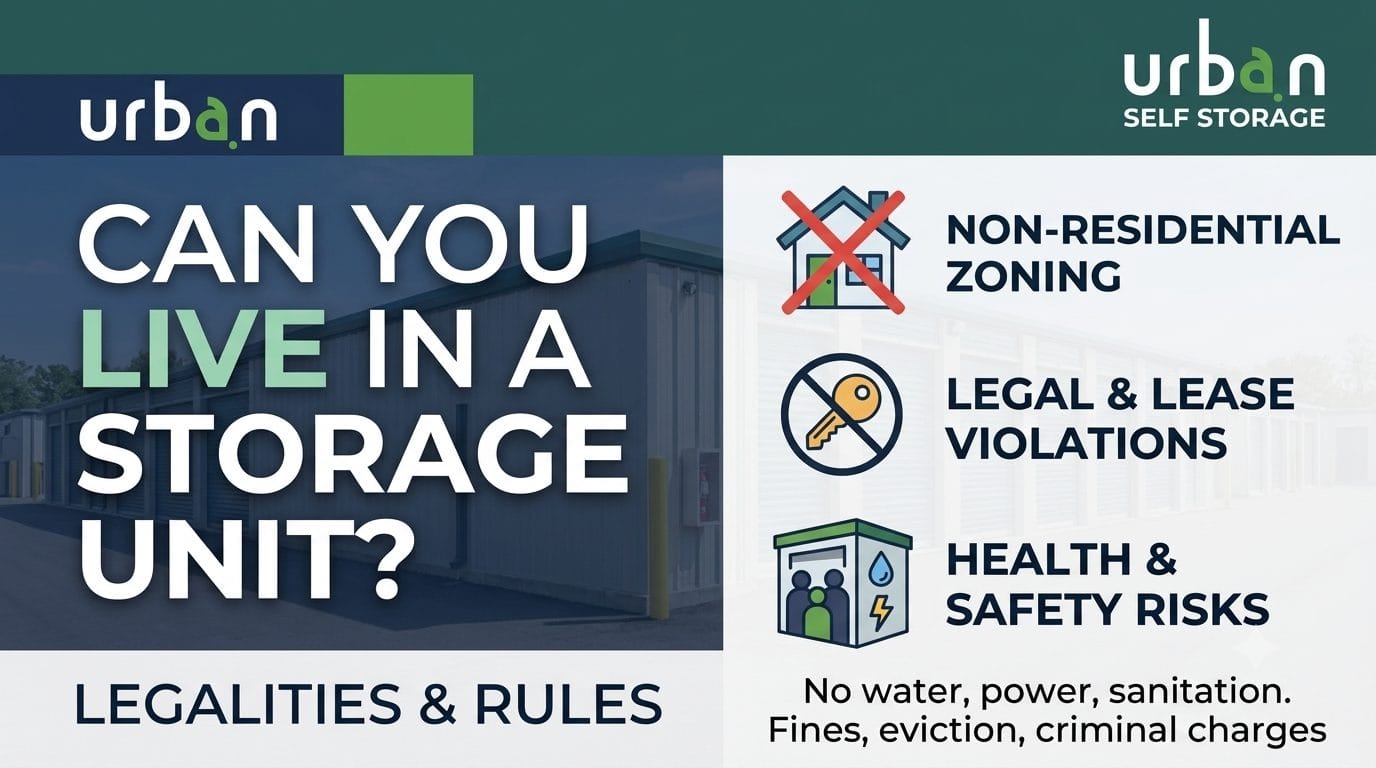
Facing tight housing options or high rental costs may lead you to wonder about storage as shelter. The direct answer: No, living in a storage unit is illegal and unsafe, but renting space for your belongings provides crucial support during housing transitions.
With rising rental prices and tight housing markets across Australia, many people searching for affordable housing alternatives ask a simple question:
Can You Live in a Storage Unit? On paper, a private, secure, and lockable space might seem like a budget friendly temporary fix. However, the reality is straightforward: you cannot legally or safely reside in a storage space.
This comprehensive guide breaks down the legal rules, health and safety hazards, facility policies, and smart ways to use self storage properly during life transitions.
Can You Live in a Storage Unit?
If you are asking whether you can move into a storage space to save on rent, the quick answer is no: living in a self storage unit is legally prohibited everywhere.
When people wonder, could you live in a storage unit, they are often trying to solve a temporary accommodation squeeze.
However, when evaluating can you live in a storage unit Australia wide, state planning laws and commercial facility policies provide an absolute answer: no, overnight stays and human residency are strictly forbidden.
Storage units are purpose-built for physical goods, furniture, personal collections, and business inventory not human habitation. While you cannot move yourself into a facility, partnering with a trusted provider like Urban Self Storage gives you a secure home for your belongings while you navigate moves, renovations, or housing changes.
Why Is Living in a Storage Unit Illegal in Australia?
In response to whether living in a storage unit is allowed under local laws, government zoning codes strictly classify these spaces as commercial facilities, banning residential occupancy entirely.
If you are questioning can i legally live in a storage unit, the legal framework across Australian states is definitive. Local council planning schemes and the National Construction Code (NCC) classify self storage facilities under commercial or industrial land use. To be legally designated as a residential dwelling, a property must meet strict structural standards regarding habitable rooms, natural lighting, emergency egress, and permanent sanitation. Storage buildings do not meet any of these criteria.
Furthermore, when evaluating are you allowed to live in storage units, your rental contract plays a central role. Storage agreements are bailment contracts for storing personal items they are not residential leases. Inhabiting a unit constitutes a major breach of contract, leaving facility managers legally obligated to intervene immediately.
Serious Health and Safety Hazards You Cannot Ignore
Addressing the extreme risks of residing in a storage space, the absence of fresh airflow, running water, and proper fire exits creates life threatening hazards for anyone inside.
When people ask can a person live in a storage unit safely, the physical design of storage facilities highlights why it is impossible. Storage units are built to protect inanimate objects, which means they lack basic features essential for human survival:
- Poor Ventilation and Oxygen Deprivation: Most standard units are sealed without windows or continuous HVAC ventilation suitable for human breathing. Sleeping inside can cause carbon dioxide buildup and severe respiratory distress.
- No Sanitation or Running Water: Units lack plumbing, toilets, sinks, and showers. Attempting to live without running water leads to major hygiene issues and health risks.
- Fire Entrapment: Heavy metal roll-up doors generally lock from the outside and lack quick-release internal handles designed for rapid evacuation during a fire. Using portable cookers or heaters inside creates extreme fire traps.
- Temperature Extremes: Without residential insulation, storage units can reach dangerously high temperatures in summer and freezing cold in winter.
Facility leases strictly prohibit residential living due to municipal zoning laws, safety codes, and insurance requirements. Understanding facility rules and operational standards clarifies what features like 24/7 security, climate control, and loading docks are included strictly for property preservation. If you need budget-friendly ways to secure your belongings legally during housing transitions, look into options for finding cheap storage rental units.
What Happens If Someone Tries Staying Overnight?
For anyone wondering if they can stay undetected, facility management actively monitors premises around the clock, meaning unauthorized stays result in rapid eviction and police involvement.
Many ask, are people allowed to live in storage units if they pay their monthly fee on time? Paying rent grants rights to store items, not to sleep on site. If someone asks can i live in my storage unit quietly without being noticed, modern facility technology makes sneaking in nearly impossible:
- 24/7 High-Definition Surveillance: Facilities maintain extensive CCTV networks covering hallways, driveways, and entry gates.
- Access Control Logs: Individual PIN codes track exactly when someone enters and leaves the premises. System alerts trigger when a gate entry is recorded without a corresponding exit.
- On Site Staff Inspections: Managers conduct daily walk throughs to ensure site security and safety compliance.
If caught staying overnight, the customer faces immediate termination of their agreement, loss of access privileges, potential forfeiture of security deposits, and escort from the property by authorities.
Legal and Safe Housing Alternatives During Transitions
To solve housing instability without risking your safety or breaking the law, accessing dedicated support services, crisis accommodation, or coliving offers a safe, legal pathway forward.
If financial hardship or sudden relocation has made finding shelter difficult, turning to a storage space is never the right answer. Instead, consider these legitimate housing alternatives:
- Community and Emergency Housing Services: Local council outreach teams, government housing departments, and charitable organizations offer short-term emergency shelter and rental relief support.
- Subletting or House-Sharing: Renting a room in an established share house provides an affordable, fully furnished living arrangement with working amenities.
- Modular or Micro-Housing Solutions: Looking into temporary boarding houses, caravan parks, or registered tiny home communities provides legal shelter equipped with proper sanitation.
While securing your next home, utilizing a secure unit at Urban Self Storage ensures your furniture, electronics, and personal treasures stay protected, clean, and dry throughout the transition.
Conclusion:
Concluding whether are people allowed to live in storage units, self-storage works best as a secure extension of your home rather than a substitute for residential living.
While the question Can You Live in a Storage Unit? receives a clear “no” under Australian law, self-storage remains an invaluable tool for simplifying your life. Whether you are downsizing, renovating, traveling, or moving between homes, renting a clean, secure unit gives you complete peace of mind.
For reliable, convenient, and top-tier storage solutions tailored to your space needs, visit Urban Self Storage today to find the perfect space for your belongings!