
Table of Contents
- Understanding short-term storage rental options
- Cost of short-term storage Australia: What to expect
- Storage unit sizes Australia: Choosing the right fit
- Packing tips for short-term storage Australia
- Mobile storage Australia: Flexible alternatives
- Insurance requirements for short-term rentals
- Easy access and loading facilities: What to expect
- Making your short-term storage rental decision
Last Updated: July 31, 2026
When you need temporary storage for furniture, equipment, or household goods, understanding your short-term storage rental options becomes essential. Whether you’re renovating your home, relocating temporarily, or managing seasonal inventory, the right storage solution can make the difference between a smooth transition and costly complications. At Urban Self Storage, we’ve helped thousands of Western Australian customers find flexible storage that fits their specific needs and budget.
Most people don’t plan far enough ahead when searching for short-term storage, rushing into the first available unit or overlooking hidden fees. Below, we’ll show you exactly how to evaluate your options, avoid common pitfalls, and select a storage solution that actually serves your situation.
Understanding Short-Term Storage Rental Options
Short-term storage rental typically runs from a few weeks to six months, offering flexibility without lengthy commitments. The key distinction between short-term and long-term storage lies in flexibility, pricing structure, and access patterns rather than duration alone.
The storage industry in Australia has shifted considerably toward accommodating short-term renters, evolving from long-term vault storage to include climate-controlled units, 24/7 access, and transparent pricing that doesn’t penalise shorter rental periods.
Personal vs Business Storage: Which Do You Need?
Personal storage addresses household needs during life transitions, while business storage serves commercial inventory, equipment, and operational requirements. Understanding which category fits your situation helps you select the right unit size, access frequency, and facility features.
Personal storage typically involves furniture, seasonal items, or household goods during renovations or relocations. Business storage demands frequent access and operational flexibility, tradespeople need daily access to tools, e-commerce retailers require inventory management, and small businesses need temporary overflow space.
Urban Self Storage offers dedicated solutions for both categories, with personal customers benefiting from secure, clean environments and business customers gaining from loading bays, flexible hours, and appropriately sized units.
Flexible Month-to-Month Rental Terms Explained
Month-to-month rental agreements provide the flexibility that short-term storage customers need without financial risk of longer commitments. Most facilities require 30 days’ notice for termination, protecting both you and the storage provider.
The rental agreement should clearly specify the monthly fee, access hours, insurance requirements, termination notice, and what happens to belongings if rent isn’t paid. Reading the full agreement before signing takes 15 minutes and prevents costly misunderstandings later.
Cost of Short-Term Storage Australia: What to Expect
Storage unit pricing varies significantly based on unit size, location, facility features, and rental duration. Pricing typically breaks down into monthly fees plus optional add-ons like insurance or climate control. Location matters considerably, units in Bunbury or Perth metro areas command different pricing than regional facilities. Seasonal pricing fluctuations also affect costs, with peak moving season (December through February) seeing higher demand.
Short-Term vs Long-Term: Cost-Benefit Analysis
The decision between short-term and long-term storage involves more than monthly pricing, it requires understanding your actual storage duration. A three-month short-term rental at a premium rate might cost less overall than a long-term contract that locks you in for longer than needed.
However, if your storage need extends beyond six months, long-term rates typically become more economical, with 12-month agreements reducing monthly costs by 15-20%. The hidden cost-benefit factor is flexibility: short-term storage costs more financially but buys operational flexibility, while long-term commitments lock in lower pricing but eliminate that flexibility.
Hidden Fees and Transparency: What You Need to Know
Storage facility pricing should be transparent, but industry practice often includes charges customers don’t anticipate. Standard fees include monthly rental, but many facilities add access fees for retrieving items outside business hours, late payment penalties, unit cleaning charges, insurance markups, lock replacement fees, and document fees for agreement changes.
A facility advertising "$150/month" might actually cost $185 after insurance, access fees, and administrative charges. Always request a written quote that itemises every charge, not just the base rental rate.
Transparency in pricing is a competitive advantage. Urban Self Storage maintains straightforward pricing with no surprise charges, what you see on the website is what you pay, plus any optional add-ons you select.
Storage Unit Sizes Australia: Choosing the Right Fit
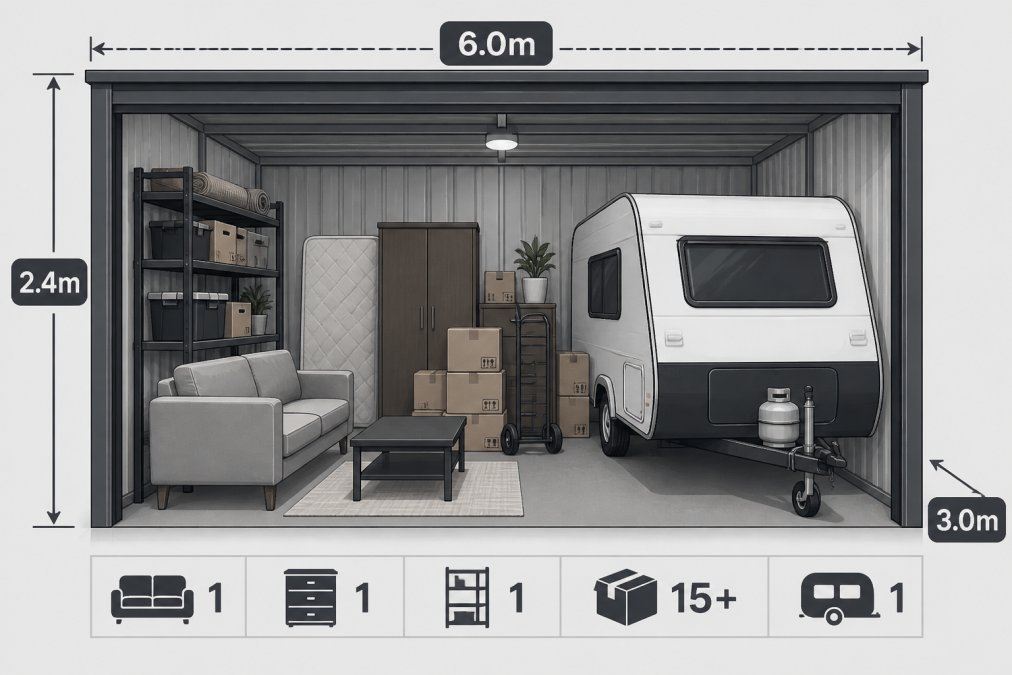
Selecting the correct storage unit size prevents overpaying for space you don’t need while ensuring your belongings fit comfortably. Standard storage unit sizes in Australia typically range from 2×2 metres to 4×6 metres, with the most common sizes for short-term residential storage being 2x2m, 2x3m, 3x3m, and 3x4m.
| Unit Size | Typical Contents | Best For |
|---|---|---|
| 2x2m | Single bedroom contents, small furniture | Students, small households |
| 2x3m | Two-bedroom contents, moderate furniture | Renovations, temporary moves |
| 3x3m | Three-bedroom contents, large furniture | Full household goods |
| 3x4m | Furniture + vehicle or extensive inventory | Business inventory, multiple vehicles |
A common mistake is overestimating space needs, most people rent units 25-30% larger than necessary. Before committing, visualise your actual items and compare against unit dimensions. Height matters as well as floor area; a 2×3-metre unit with 2-metre ceilings holds significantly less than one with 2.5-metre ceilings.
Vehicle and Furniture Storage Solutions
Furniture storage demands climate control if items are valuable or sensitive to humidity. Wooden furniture, upholstered pieces, and antiques suffer damage from temperature fluctuations and moisture. Vehicle storage ranges from standard covered spaces to fully enclosed units that prevent rust, fading, and environmental damage.
For furniture, wrap pieces in blankets or moving pads, disassemble large items to maximise space, and stack strategically. For vehicles, ensure the fuel tank is less than half full, disconnect the battery if storing for extended periods, and position the vehicle to allow access to other stored items.
Security Features and 24/7 CCTV Monitoring
Security is the primary concern for customers storing valuable possessions. Advanced CCTV surveillance is now standard at quality facilities, with 24/7 monitoring meaning cameras record continuously. However, quality and coverage vary significantly.
High-security facilities use individual unit locks, gate access codes that log entry and exit times, motion sensors, staff presence during business hours, and perimeter fencing and lighting. The most secure facilities combine multiple layers, CCTV, individual unit locks, gate access codes, and regular staff patrols.
Urban Self Storage features advanced 24/7 CCTV surveillance at both Bunbury locations, with recorded footage maintained for security verification. Individual unit locks ensure only you access your belongings, and gated entry prevents unauthorised access to the facility.
Packing Tips for Short-Term Storage Australia
How you pack your storage unit directly affects the safety of your belongings and how efficiently you use available space. Create an inventory list before packing, noting every item with quantities, this helps you remember what you stored and is essential for insurance claims.
Pack heavier items in smaller boxes and lighter items in larger boxes. Label every box clearly with its contents and which room it came from. Disassemble large furniture pieces to save space, keeping hardware in labelled plastic bags taped to the corresponding furniture piece. Stack boxes strategically, leaving aisles for access and 30 centimetres of space between stacks and unit walls for air circulation. Wrap furniture in blankets or moving pads to prevent scratches, avoiding plastic wrapping which traps moisture.
Move-In and Move-Out Checklist for Hassle-Free Rental
A structured approach to move-in and move-out prevents disputes and ensures the process runs smoothly.
Move-In Checklist:
- Inspect the unit for existing damage and photograph any issues
- Verify that the lock works and you have the only key
- Test access to the unit at different times to confirm 24/7 availability
- Confirm CCTV cameras are operational and positioned to cover your unit
- Review the rental agreement and clarify any unclear terms
- Provide proof of insurance if required by the facility
- Take photos of your belongings as you pack them into the unit
- Keep a copy of the rental agreement and your unit number in a safe place
Move-Out Checklist:
- Schedule the move-out appointment at least one week in advance
- Remove all belongings from the unit
- Clean the unit to the condition specified in your rental agreement
- Return all keys and access devices to the facility
- Request a final inspection and walkthrough with facility staff
- Obtain written confirmation that you’ve fulfilled all rental obligations
- Take photos of the empty unit after removal
- Keep documentation of your move-out date for insurance and tax purposes
Urban Self Storage’s quick move-in process, completed in less than 10 minutes, simplifies the initial setup. The straightforward rental agreement and transparent fee structure eliminate confusion at move-out, ensuring you recover your full security deposit without disputes.
Mobile Storage Australia: Flexible Alternatives
Mobile storage containers offer an alternative to traditional facility-based storage, providing flexibility for customers who prefer items delivered to their location. A container is delivered to your property, allowing you to pack at your own pace, then stored in a facility and delivered back when needed.
Mobile storage typically costs 20-30% more than traditional self-storage because of delivery and handling expenses. It suits specific situations like renovation projects, relocations, or temporary overflow during business growth. For standard short-term storage, traditional facilities usually offer better value.
Insurance Requirements for Short-Term Rentals
Insurance protection is essential when storing valuable items. Most storage facilities require you to carry insurance on your belongings. Your existing home or contents insurance may cover storage unit items, but you should confirm this with your insurer before relying on it.
Facility-provided insurance typically covers theft and fire damage but may exclude certain items like electronics, jewellery, or valuable documents. Budgeting an additional 5-10% of your rental cost for coverage is reasonable.
Document your stored items with photos and keep receipts for valuable pieces. This documentation is crucial if you need to file an insurance claim.
Easy Access and Loading Facilities: What to Expect
Convenient access and proper loading facilities significantly improve the short-term storage experience. Quality facilities provide loading bays or covered areas where you can load and unload items without weather exposure. Wide aisles allow you to manoeuvre trolleys and furniture easily, with adequate lighting ensuring safe navigation at any time.
24/7 access means you can retrieve items whenever you need them. Some facilities offer trolleys, dollies, or moving equipment for rent, eliminating the need to bring your own. Ground-floor units eliminate the need to navigate stairs, making access easier if you’re moving heavy items or have mobility limitations.
Making Your Short-Term Storage Rental Decision
Selecting the right short-term storage rental requires evaluating facility features, pricing, location, and your specific storage needs. Start by identifying your storage duration and what you’re storing. Compare at least three facilities using criteria that matter most to you: price, location, security features, and access convenience.
Request written quotes that itemise all charges. Visit facilities in person if possible, clean, well-organised facilities with responsive staff typically provide better service. Check online reviews and ask the facility for references from current customers. Real customer feedback reveals whether advertised features actually deliver in practice.
Urban Self Storage provides secure, flexible storage solutions across Western Australia with transparent pricing and responsive customer service. Our two Bunbury locations, East Bunbury and Picton, offer convenient access, advanced 24/7 CCTV surveillance, and flexible month-to-month terms designed for short-term customers. The quick move-in process, competitive pricing, and straightforward rental agreements eliminate the complications that make storage stressful.
The challenge with short-term storage rental options is finding a provider that balances affordability with genuine security and convenience. Urban Self Storage simplifies this decision by offering secure facilities with 24/7 CCTV monitoring, flexible month-to-month rental terms, and a move-in process completed in less than 10 minutes. Whether you’re storing household goods during a renovation, managing business inventory, or securing a vehicle temporarily, our Bunbury locations provide the flexibility and security your situation demands. Book online now and discover why over 5,000 Western Australian customers trust Urban Self Storage.
Frequently Asked Questions
What is the typical cost of short-term storage rental in Australia?
Short-term storage rental costs in Australia vary based on unit size, location, rental duration, and facility features. Pricing depends on whether you need climate-controlled storage, security features like CCTV monitoring, and access frequency. Month-to-month flexible rental terms typically cost more per month than longer commitments, but offer greater flexibility. Visit Urban Self Storage's pricing page for current rates tailored to your specific needs and storage duration.
Do I need insurance for short-term storage rental in Australia?
Whilst not always legally mandatory, insurance is strongly recommended for short-term storage rentals. Your household or business contents insurance may not automatically cover items in external storage facilities. Check your existing policy's terms and consider additional storage insurance to protect valuable items like furniture, equipment, or inventory. Many storage facilities can advise on recommended coverage levels based on what you're storing and the rental duration.
Can I access my short-term storage unit whenever I need it?
Access hours depend on your storage facility's operating model. Many modern facilities offer 24/7 access with secure PIN codes or key card systems, allowing you to retrieve items at any time. However, some facilities have restricted access hours. Before committing to a short-term rental, confirm access availability, especially if you need regular weekday or weekend access for business tools, renovation materials, or other frequently needed items.
What size storage unit do I need for furniture and household goods?
Unit size depends on what you're storing. A small unit (3x3m) suits a few boxes or small furniture pieces; medium units (3x6m) accommodate a bedroom's contents; larger units (6x6m or bigger) fit entire household contents or commercial inventory. Measure your items before selecting a unit, and consider vertical stacking to maximise space. Urban Self Storage offers various sizes, visit their facility or website to see options and get guidance on choosing the right fit for your specific storage needs.
This article was written using GrandRanker