
Last Updated: November 3, 2026
Quick Summary
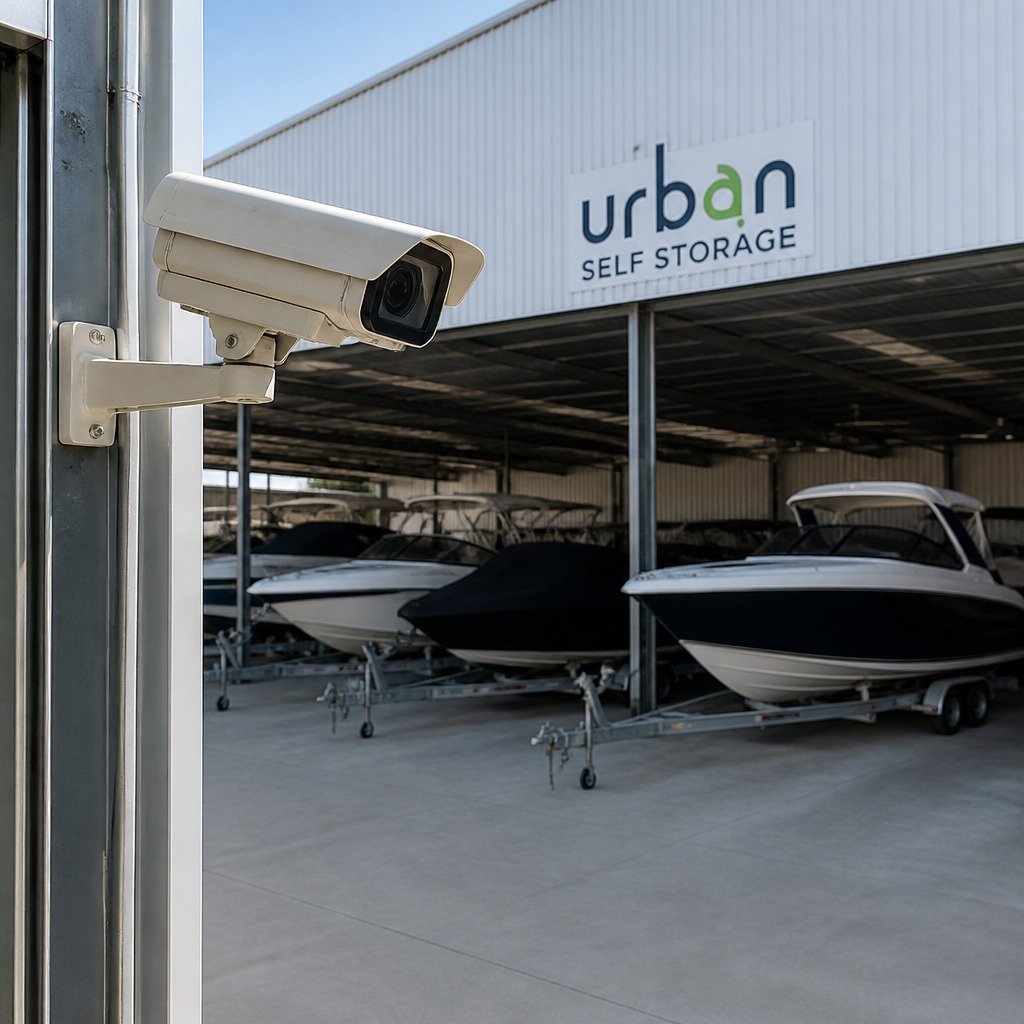
24/7 CCTV matters for boat storage because boats are easy to lift, sell or damage, and most theft and vandalism happens at night. Round-the-clock cameras deter intruders and record clear footage that helps police and insurers after an incident.
- Most boat theft and vandalism is opportunistic and happens at night.
- Visible cameras make intruders less likely to act.
- Ask what resolution the cameras record at and whether they offer night vision.
- Ask how long footage is kept and whether monitoring is live or recorded-only.
- Keep photos and serial numbers of your boat, motor and trailer as evidence.
Table of Contents
- What Makes a Boat Worth Protecting Around the Clock
- How 24/7 CCTV Deters Boat Theft and Vandalism
- CCTV Coverage and Monitoring: What to Check Before You Commit
- Boat Storage Security Features Beyond the Camera
- Footage, Evidence and Insurance: Why Recorded Records Matter
- Boat Storage Checklist: Preparing Your Vessel and Your Facility Tour
- Booking a Secure Boat Space in Bunbury or Picton
- Frequently Asked Questions
What Makes a Boat Worth Protecting Around the Clock
A boat is often one of the most valuable things a Western Australian owns outside the home. Outboard motors, trailers, electronics and fit-out gear add up quickly, and most of it is easy to lift, sell or damage. That is why more owners are looking for storage that stays watched all day and night.
Owners who store boats and jet skis often want to know their vessel is safe when they are not standing next to it. Round-the-clock surveillance is one way to address that concern.
Boats are also attractive to thieves because they are portable and often carry removable items. Engines, batteries, fishing gear and navigation equipment can all be taken in a short window. The longer a vessel sits unwatched, the more opportunity that window gives.
How 24/7 CCTV Deters Boat Theft and Vandalism
CCTV deters crime mainly by making the risk visible. Someone planning theft or vandalism is far less likely to act when they can see cameras covering the entrance, the boat rows and the perimeter. A recorded facility also gives police clear footage to work with if something does happen.
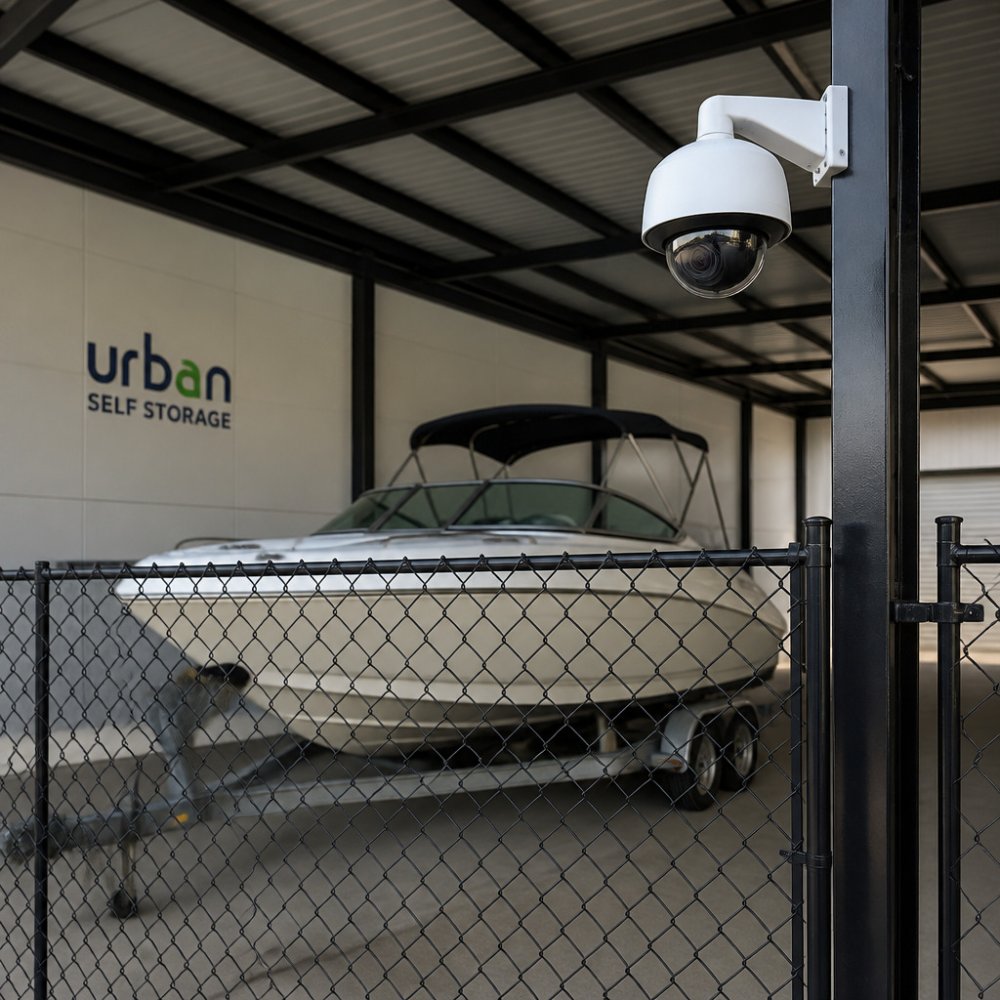
Round-the-clock coverage matters because most boat theft and damage is opportunistic and happens at night. A camera that only runs during business hours leaves the most vulnerable period unprotected.
Vandalism is the other concern. Scratched hulls, slashed covers and damaged trailers are often the work of people who simply found an unwatched site. Visible cameras and steady recording discourage that behaviour before it starts.
- Visible cameras reduce the chance an intruder will try.
- Continuous recording creates evidence if an incident occurs.
- Night coverage closes the gap when most incidents happen.
CCTV Coverage and Monitoring: What to Check Before You Commit
Not all camera systems offer the same protection, and the difference matters most for high-value vessels. Before you commit to a facility, ask questions that get past the marketing and into how the system actually performs.
Resolution and image quality
Ask what resolution the cameras record at. Standard-definition footage is often too soft to read a number plate or identify a face at distance, which is exactly what police need after a theft. Higher-definition cameras produce clearer stills and video, but the real test is whether the facility can show you a sample frame from a night-time incident, not just a daytime demo.
Night vision and low-light performance
Most boat theft and vandalism happens after dark, so night performance is the single most important specification. Ask whether the cameras use infrared illumination, and how far that illumination reaches across the boat rows. Infrared gives clear black-and-white images in complete darkness; colour low-light cameras can retain colour detail but need some ambient light. Neither is useful if the camera is pointed at a dark corner the lighting does not reach.
Coverage and blind spots
A camera at the gate does not protect the back row. Ask for a site map or walk the yard and check that every boat row, the perimeter fence line and the entry and exit points are covered. Look for gaps where a person could approach a vessel out of frame, and ask whether cameras are fixed or can pan, tilt and zoom to follow movement.
Recording, retention and monitoring
Ask whether footage is recorded continuously or only on motion, and how long it is kept. Retention periods vary between facilities, and a short retention window can mean footage is overwritten before an owner notices damage. Then ask how the system is monitored: is someone watching live, or is footage only reviewed after an incident? Active monitoring with real-time alerts can prompt a response while an intruder is still on site, whereas recorded-only systems help investigation but not prevention.
Book Online in 3 Minutes & Get 50% Off Instantly →
Watch out: a facility that cannot tell you its retention period or show you a night-time sample is asking you to take the system on trust.
Who has access to footage
Ask who can view recordings, how access is logged and what the facility’s policy is on releasing footage to owners, police or insurers. A clear policy on data handling is a sign the facility takes both security and privacy seriously.
You are welcome to ask how our coverage is set up, including retention and monitoring, before you book. If you are comparing options, our Bunbury boat storage facility is a useful place to start, and owners with a trailer or jet ski can also look at our Jet Ski Storage in Bunbury options.
Boat Storage Security Features Beyond the Camera
Cameras work best as one part of a wider security setup. Several other features make a facility harder to target.
Lighting, Gated Entry and Access Control
Good lighting removes the dark corners where people hide. Well-lit rows make it harder for anyone to approach a vessel unseen and easier for cameras to capture clear detail.
Gated entry with controlled access limits who can come and go. When each visit is linked to a known access code or card, there is a record of who was on site and when.
Perimeter fencing adds a physical barrier. Combined with lighting and cameras, it creates several layers an intruder must get past.
Remote Monitoring and Real-Time Alerts
Remote monitoring lets staff watch the site without being on the premises. When motion is detected outside normal hours, alerts can prompt a fast response.
Ask whether alerts are sent in real time and what the response process looks like. A system that flags an issue within minutes is far more useful than footage reviewed a week later.
Several features beyond the camera make a facility harder to target, and each one has a specific job.
| Feature | What it does | Key point |
|---|---|---|
| Lighting | Removes dark corners | Lit rows make intruders easier to spot |
| Gated entry | Controls who comes and goes | Each visit linked to an access code or card |
| Perimeter fencing | Adds a physical barrier | Works with lighting and cameras |
| Remote monitoring | Lets staff watch the site off-site | Alerts can prompt a fast response |
| Real-time alerts | Flags motion outside normal hours | Far more useful than footage reviewed a week later |
Footage, Evidence and Insurance: Why Recorded Records Matter
Recorded footage is valuable after an incident, but its value goes further than catching a thief. Clear, time-stamped video can help identify people, confirm what happened and support a police report. It can also strengthen an insurance claim by showing the vessel was stored in a secured, monitored facility and by documenting the condition of the boat and equipment at the time of loss.
How surveillance can affect insurance
Insurance is a related concern that few storage guides address properly. Insurers assess risk, and the way a vessel is stored is one factor they may consider. A secured, monitored facility with controlled access and continuous recording can present a lower risk profile than an open yard or a driveway, and some policies include conditions about storage that owners need to meet. The effect on premiums varies by insurer, vessel value and policy terms, so the practical step is to ask your insurer directly what they require and whether a monitored facility changes your cover or premium. We cannot speak to your individual policy, but we can confirm what security features our facilities provide so you can put those questions to your insurer.
Building your own evidence file
Footage helps most when it is paired with your own records. Photograph your vessel, motor and trailer from several angles before storage, record serial numbers for motors, electronics and trailers, and keep receipts for equipment. If a claim is needed, this file makes assessment faster and supports the footage the facility holds.
Book Online in 3 Minutes & Get 50% Off Instantly →
Liability, privacy and footage access
Ask the facility who owns the footage, how long it is retained, who can view it and under what circumstances it is released to owners, police or insurers. A clear policy protects both the owner and the facility, and it gives you confidence that recordings are handled responsibly rather than sitting indefinitely on an unsecured system.
Watch out: do not assume footage will be available indefinitely. Retention periods are finite, so report any suspected incident promptly and ask the facility to preserve relevant recordings.
Boat Storage Checklist: Preparing Your Vessel and Your Facility Tour
Before you move your boat in, prepare it and inspect the facility properly.
Preparing your vessel:
- Remove valuables and loose gear you do not need to store
- Photograph the boat, motor and trailer from several angles
- Record serial numbers and keep them somewhere safe
- Check the trailer, tyres and covers are in good condition
Touring the facility:
- Walk the full site and check where cameras are positioned
- Look at lighting in the boat rows, especially at night
- Ask how gate access is controlled and logged
- Ask how long footage is kept and how monitoring works
- Check the access hours suit how often you visit
Taking this checklist with you makes the tour quicker and gives you a clear comparison between sites.
Booking a Secure Boat Space in Bunbury or Picton
If you are looking for secure boat storage in the Bunbury area, Urban Self Storage operates two locations in East Bunbury and Picton. Our boat storage options are designed for owners who want their vessel covered by surveillance and secure access.
Advanced 24/7 CCTV surveillance is one of our key features. Ask us about it before you decide. Owners who need space for a caravan or a larger load can also look at our Large Storage Units in Picton WA.
Pricing depends on the size of space and the length of your stay, so please check our website for current pricing. Get started with Urban Self Storage today to find a secure space that suits your boat, your schedule and your budget.
Frequently Asked Questions
Why is 24/7 CCTV important for boat storage?
Boats are valuable, portable and often stored away from the owner’s home, which makes them attractive to thieves. Round-the-clock cameras mean there is no unwatched period in which a theft or act of vandalism can go unrecorded. Continuous recording can give you a timeline if something happens. When assessing a facility, ask whether the cameras run every hour of every day, whether footage is retained, and whether someone can respond to an alert outside business hours.
Does CCTV prevent theft or vandalism at a boat storage facility?
Visible cameras deter many opportunistic offenders, because the risk of being recorded is high and the chance of getting away with it falls. Cameras do not physically stop anyone, so deterrence works best alongside fencing, lighting, gated access and monitoring. A camera that is watched or linked to real-time alerts is far more effective than one that only records. Ask the facility how its footage is reviewed and how quickly staff respond to an incident.
What should I check when assessing CCTV coverage for boat storage?
Check that cameras cover entry points, the boat row or compound, and any areas where a vessel could be moved or tampered with. Ask about image quality, including night performance, since boats are often targeted after dark. Confirm how long footage is kept and whether it is backed up. Ask who monitors the system and what happens when an alert is triggered. Walking the site yourself is the best way to spot blind spots.
Is CCTV alone enough to protect a high-value boat in storage?
No. CCTV is one layer of protection. It is most effective when combined with perimeter fencing, security lighting, controlled gated access, and a boat cover, wheel lock or trailer lock on your own vessel. It is also worth keeping your boat’s registration, serial number and photos of its fittings on file, as these help with recovery and insurance claims if the worst happens.
