
Table of Contents
- Storage Unit Rental Requirements: What You Need to Know
- Understanding Your Self Storage Rental Agreement Template
- Minimum Rental Period for Storage Units
- Storage Unit Insurance Requirements
- Prohibited Items in Self Storage
- Legal Compliance and 2026 Tenancy Reforms
- Your Unit Inspection Checklist
- Conclusion
Last Updated: August 11, 2026
Storage Unit Rental Requirements: What You Need to Know
Storage unit rental requirements have evolved significantly, particularly with 2026 tenancy reforms introducing stricter disclosure standards and compliance obligations. Whether you’re relocating, downsizing, or managing business inventory, understanding what’s required before you sign a rental agreement can save you time, money, and frustration.
This guide breaks down the essential provisions you’ll encounter, insurance obligations, prohibited items, and the legal landscape shaping self-storage agreements in 2026.
Understanding Your Self Storage Rental Agreement Template
A self-storage rental agreement is a binding contract between you and the facility operator that outlines your rights, obligations, and the terms under which you can use your storage unit.

Key Provisions in Rental Agreements
The most important provisions in any self-storage rental agreement define your rental duration, payment obligations, access rights, and facility rules.
Rental duration specifies whether you’re committing to a fixed term (typically 3, 6, or 12 months) or a month-to-month arrangement. Fixed-term agreements often offer better rates, while month-to-month options provide flexibility for short-term needs.
Access rights are critical if you need regular access during business hours or for equipment storage. Your rental agreement should clearly state facility hours, whether 24/7 access is available, and any restrictions on when you can enter your unit.
Facility rules and regulations cover occupancy restrictions, prohibited activities, and safety protocols. Common restrictions include no hazardous materials, no commercial manufacturing, and no living in units.
Liability and indemnity clauses define what the facility operator is responsible for and what falls on you as the tenant. Most agreements limit the operator’s liability and require you to maintain insurance for your stored items.
Default procedures outline what happens if you miss a payment or violate the agreement, including notice periods, late fees, and lien enforcement processes.
Fee Disclosure and Payment Terms
Transparent fee disclosure is now a legal requirement under 2026 tenancy reforms. Your rental agreement must clearly itemise all fees before you sign.
Base rental fees are your primary monthly or annual cost, varying by unit size, location, and facility features. Urban Self Storage publishes transparent pricing on its website.
Security deposits are held to cover potential damage or unpaid rent. The agreement should specify the deposit amount and when it’s refunded.
Administrative and access fees may apply for special services like after-hours access or key replacement. These should be listed upfront.
Late payment fees are charged if rent arrives after the due date. The agreement must specify the grace period and fee amount.
Insurance and liability fees may be charged separately. Your agreement should clarify what’s included and what additional insurance you need.
Minimum Rental Period for Storage Units
Most facilities offer flexible options: month-to-month tenancies for temporary storage and fixed-term agreements (typically 3, 6, or 12 months) for longer-term needs. Urban Self Storage provides both options.
Month-to-month arrangements offer maximum flexibility but may carry slightly higher monthly rates. These suit homeowners undergoing renovations or businesses with unpredictable storage needs. You can exit with proper notice (typically 30 days) without penalty.
Fixed-term agreements usually offer competitive rates in exchange for your commitment. A 12-month term often provides the best value. These agreements typically require you to honour the full term or pay an early termination fee.
Notice of termination requirements are critical. Most facilities require 30 days’ written notice before your tenancy ends. Check your agreement for the exact notice period and how to provide it.
Storage Unit Insurance Requirements
Insurance requirements for storage units protect your belongings and clarify liability in case of damage, theft, or loss. Many renters mistakenly assume the facility operator’s insurance covers their stored items. It doesn’t. You’re responsible for insuring your belongings.
Liability Limits and Coverage Options
Facility operator liability is typically limited by the rental agreement. Most facilities are not liable for loss, theft, or damage to your stored items. This is why personal insurance is essential.
Personal insurance options include renters insurance policies that extend to storage units, standalone storage unit insurance, contents insurance specifically designed for stored items, or coverage through your home or business insurance policy. Contact your insurance provider to confirm whether your current policy covers items in storage.
Liability coverage protects you if someone is injured in your unit or your stored items damage someone else’s property. This is particularly important if you’re storing equipment or vehicles.
Coverage limits vary widely. Standard renters insurance might cover $2,500-$5,000 in storage contents, while dedicated storage insurance can cover significantly more. Choose a limit based on what you’re storing and its replacement value.
Deductibles affect your out-of-pocket costs if you file a claim. Higher deductibles lower your premiums but mean you pay more if something happens.
Prohibited Items in Self Storage
Self-storage facilities prohibit certain items for safety, legal, and practical reasons. Understanding what you cannot store protects you from contract violations and liability issues.
Hazardous materials are strictly prohibited, including petrol, diesel, explosives, ammunition, firearms, chemicals, pesticides, solvents, paint, varnish, thinners, hazardous batteries, and asbestos. These items pose fire, explosion, and contamination risks.
Perishable items including food, plants, and organic materials attract pests and create odours. Clarify exceptions with your facility before storing anything perishable.
Living arrangements are prohibited in all self-storage facilities. You cannot use a storage unit as a residence.
Illegal items including stolen goods and counterfeit merchandise are obviously prohibited.
Animals cannot be kept in storage units except in rare circumstances.
Vehicles and fuel-powered equipment have specific rules. Most facilities allow vehicles but prohibit fuel in tanks. Caravans, boats, and jet skis are often permitted in dedicated outdoor storage areas. Urban Self Storage offers specialised caravan, boat, and jet ski storage.
Weapons including firearms and explosives are prohibited in most facilities.
Always review your rental agreement’s prohibited items list, as different facilities have different rules.
Legal Compliance and 2026 Tenancy Reforms
The 2026 tenancy reforms have introduced significant changes to self-storage rental requirements, particularly around disclosure, transparency, and tenant protections.
Regulatory Updates and Disclosure Standards
Mandatory fee disclosure is now required before you sign any agreement. Facilities must provide a clear, itemised breakdown of all fees. Hidden fees are no longer legally permissible.
Rental agreement standardisation has improved across the industry. Many facilities now use standardised templates that comply with regulatory requirements. Urban Self Storage uses clear, transparent agreements aligned with 2026 standards.
Notice requirements for termination, rent increases, and abandonment have been formalised. Facilities must provide written notice according to specified timeframes.
Abandonment and lien procedures are now more strictly regulated. If a unit is abandoned after 30-60 days of non-payment and non-access, the facility must follow specific legal procedures before selling contents.
Insurance disclosure is now mandatory. Rental agreements must clearly state what insurance covers and what tenants need to arrange themselves.
Zoning laws and prohibited uses are more clearly defined. Facilities must disclose any restrictions on how units can be used, particularly regarding commercial activities or specific item types.
Compliance with these standards protects your rights as a tenant and ensures the facility operates legitimately.
Your Unit Inspection Checklist
Before you move items into your unit, conduct a thorough inspection and document the unit’s condition. This protects you from being charged for pre-existing damage when you leave.
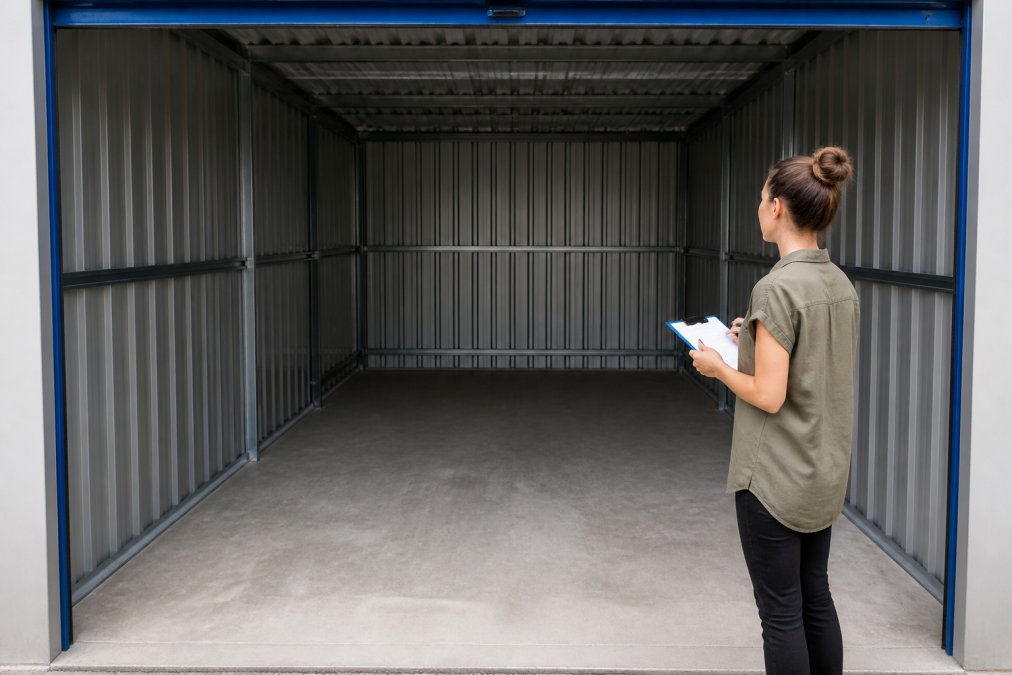
Structural inspection:
-
Check walls for cracks, water damage, or stains
-
Inspect the ceiling for leaks, water marks, or damage
-
Examine the floor for cracks, moisture, or uneven surfaces
-
Verify the door opens and closes smoothly
-
Test the lock mechanism and ensure it functions properly
Cleanliness check:
- Confirm the unit is clean and free of debris
- Look for signs of pests, droppings, or insect damage
- Check for odours or mould
- Ensure shelving or fixtures (if included) are clean and functional
Climate and access:
- Test lighting (if available) to ensure it works
- Check ventilation or climate control features if applicable
- Verify 24/7 access is working if promised
- Confirm the facility’s security measures are visible (CCTV, gates, lighting)
Documentation:
- Take photos or video of the empty unit from multiple angles
- Note the date and time of inspection
- Get the inspection report signed by facility staff
- Keep a copy for your records
This checklist protects you by creating a documented baseline. Many facilities, including Urban Self Storage, provide inspection forms and encourage customers to document the unit’s condition.
Storage unit rental requirements in 2026 centre on transparency, clear communication, and understanding your obligations before you sign. The key is reading your rental agreement carefully, confirming insurance coverage, and inspecting your unit thoroughly before moving in. With Urban Self Storage’s straightforward rental process, transparent pricing, and secure facilities, you can store your belongings with confidence. Check Urban Self Storage’s rental agreements and terms to see how we simplify the rental process, or visit one of our Bunbury area locations to inspect available units. Book online now for a hassle-free move-in experience completed in less than 10 minutes.
| Requirement | What It Means | Your Action |
|---|---|---|
| Rental agreement | Binding contract outlining terms | Read carefully before signing |
| Fee disclosure | All costs itemised upfront | Compare total costs across facilities |
| Insurance | You must cover your items | Contact your insurer or purchase storage insurance |
| Prohibited items | Items you cannot store | Review facility’s list and plan accordingly |
| Inspection | Document unit condition | Take photos and get facility sign-off |
| Notice of termination | Written notice to end tenancy | Provide 30 days’ notice per your agreement |
Frequently Asked Questions
What documentation do I need to rent a storage unit in 2026?
Most facilities require a valid form of identification, proof of address, and a completed rental agreement. You may also need to provide insurance details and emergency contact information. Some operators request references or proof of income for longer-term rentals. Always ask your facility operator upfront what documents they require so you can prepare in advance and speed up your move-in process.
What is the minimum rental period for storage units?
Minimum rental periods vary by facility. Many operators offer flexible short-term options starting from one month, while others may require longer commitments. Check your rental agreement carefully for the specific minimum term, notice period for termination, and any penalties for early exit. Some facilities provide month-to-month flexibility, which suits temporary storage needs during renovations or relocations.
What items are prohibited in self storage?
Prohibited items typically include hazardous materials, perishables, plants, animals, and illegally obtained goods. Most facilities ban explosives, flammable liquids, chemicals, and compressed gases. Some restrict food, firearms, or items with strong odours. Your rental agreement will list all prohibited items. Always review this section carefully before moving in to avoid breaching your lease and facing potential default procedures or loss of access to your unit.
Do I need insurance for my storage unit?
Insurance is highly recommended and often required by facility operators. Storage unit insurance requirements typically cover your belongings against theft, damage, or loss. Check whether your home or contents policy extends to self-storage, or consider a separate storage insurance policy. Your rental agreement should clearly outline the facility operator's liability limits and what you are responsible for insuring. This protects your investment and ensures compliance with your tenancy obligations.
This article was written using GrandRanker