
Table of Contents
- Why business owners are switching from National Storage
- Business storage solutions Australia: comparing your options
- Portable storage containers Australia: flexibility meets convenience
- Storage King vs National Storage: what sets alternatives apart
- On-demand storage Australia: scalability for growing businesses
- National Storage alternatives rated: quick comparison
- How to choose the right National Storage alternative for your business
- Conclusion: making the switch to a better storage solution
Last Updated: July 30, 2026
When business owners evaluate storage options, they often assume larger national chains offer the best value and security. But the reality is more nuanced. According to research from Australian Bureau of Statistics, small to medium enterprises spend an average of 8-12% of operational budgets on storage and logistics annually. That’s why exploring National Storage alternatives for business has become essential for cost-conscious operators. Urban Self Storage has spent years helping Western Australian businesses find solutions that fit their needs, often at lower cost than expected.
Why business owners are switching from National Storage
The largest storage chains operate on a standardised model designed to serve everyone equally. Month-to-month contracts may come with hidden renewal fees, access hours might not align with your operating schedule, and climate-controlled units often command premium pricing that doesn’t justify the cost for many business inventories.
Switching providers isn’t about finding a "better brand", it’s about matching your actual workflow to a provider’s capabilities. A renovation contractor storing tools needs different access patterns than an e-commerce retailer managing seasonal stock. Urban Self Storage has worked with hundreds of Western Australian businesses, and the pattern is consistent: owners switch when they realise they’re paying for features they don’t use or compromising on features they need.
Before contacting any provider, document your actual access patterns for one month. Track how often you access the unit, what time of day, and what items you retrieve most frequently. This data eliminates guesswork and prevents overpaying for unnecessary features.
Business storage solutions Australia: comparing your options
Australia’s business storage market has fragmented significantly since 2024. Regional and specialist providers now capture meaningful portions of the commercial segment. The key differences lie in contract flexibility, facility standards, and service features rather than raw square footage.
Kennards Self Storage operates across Australia with a focus on business clients. Their proposition centres on flexibility: no lease, no bond, no legal fees. They offer forklifts and trolleys on-site at many locations, plus delivery management services. This appeals to businesses handling bulky items or frequent stock rotation.
TAXIBOX Business takes a different approach. Instead of you moving items to their facility, they deliver storage units to your premises. You pack at your own pace, then they collect and store the boxes at their secure facility. Pricing starts from $149 per month with a 12-month price lock. The trade-off is that accessing stored items requires 48 hours’ notice, so this works best for stock you won’t need mid-project.
gobox operates in Melbourne and Adelaide with a similar mobile storage model. Their steel containers are durable and weather-resistant, with pricing beginning from around $110 per storage module monthly.
For document-heavy businesses, Compu-Stor and The DocShop provide specialist secure storage with compliance focus, climate-controlled facilities, document destruction services, and online retrieval portals.
The fragmentation of Australia’s business storage market means your best option likely isn’t a national chain, it’s a provider whose specific service model matches your operational needs.
Contract flexibility and hidden costs
This is where most businesses encounter friction with larger operators. National chains often advertise month-to-month flexibility but embed costs in renewal processes, access fees, or unit-size penalties.
Kennards explicitly addresses this: no penalties for upsizing or downsizing, and no lock-in contracts. TAXIBOX locks pricing for 12 months, which protects you from rate increases but requires commitment to monthly payments.
Hidden costs typically appear in three areas: access fees, renewal penalties, and size-change fees. Ask prospective providers directly about these before signing and get their answers in writing.
Security, access, and facility standards
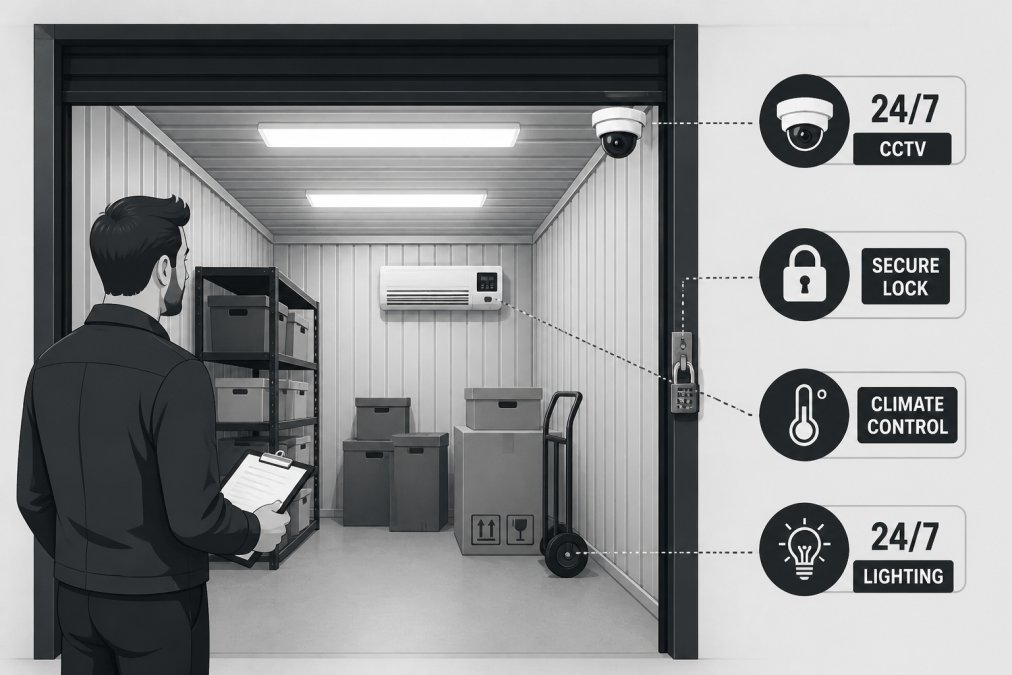
Climate-controlled storage protects sensitive inventory, electronics, and documents from humidity and temperature fluctuations, but it’s expensive and most businesses don’t need it. Evaluate whether your stored items actually require climate control or whether standard ventilation suffices.
24/7 CCTV surveillance is now standard across reputable providers. Ask whether footage is actively monitored or simply recorded, and how long it’s retained. Facilities retaining 30+ days of footage offer better security than those keeping 7 days.
Access hours matter significantly. If you need to retrieve items at 6 AM on a Sunday, a facility with restricted hours becomes useless. Urban Self Storage’s 24/7 access at multiple Bunbury area locations means you retrieve items when your business needs them.
Before committing, visit the facility in person and check for signs of moisture, pest activity, or poor maintenance.
Portable storage containers Australia: flexibility meets convenience
Mobile storage has transformed how businesses manage temporary storage needs. Instead of transporting items to a facility, the facility comes to you.
TAXIBOX’s model works like this: they deliver a storage container to your business premises. You pack it at your own pace. When finished, they collect it and store it at their secure facility. If you need items, you request retrieval and they deliver within 48 hours. Pricing starts at $149 monthly, with variations based on number of boxes, duration, and location.
gobox offers similar flexibility in Melbourne and Adelaide with steel containers that withstand weather and handling better than standard cardboard boxes.
When mobile storage makes sense for your business
Mobile storage excels in three scenarios: office relocations, renovation projects, and seasonal inventory management. Mobile storage underperforms when you need frequent access, as the 48-hour retrieval window creates delays if you need items mid-project.
Storage King vs National Storage: what sets alternatives apart
Direct comparison between Storage King and National Storage reveals their similarities more than differences. Both operate nationally with standardised facilities, moderate pricing, and basic security. The meaningful differences emerge in service layers. Some regional alternatives offer delivery management, document handling, or climate-controlled specialisation that national chains treat as premium add-ons.
Urban Self Storage differentiates through Western Australian focus, rapid move-in processes, and transparent pricing. The 24/7 CCTV surveillance and flexible access hours address real pain points that national chains often handle poorly.
Local providers versus national chains
Local providers understand regional business patterns and can recommend unit sizes and contract terms that fit local needs rather than applying a national template. Cost typically favours local providers due to lower overhead and reduced corporate structure.
Service responsiveness differs markedly. Local providers resolve facility issues quickly, while national chains route complaints through centralised systems, creating delays.
National chains often advertise “competitive pricing” but require contact for quotes. This opacity hides that their pricing may exceed local alternatives for comparable services. Always get written quotes from at least one local provider before comparing.
On-demand storage Australia: scalability for growing businesses
Scalable storage addresses a real problem: businesses grow, and their storage needs grow with them. Committing to a large facility lease when you might outgrow it in 18 months creates financial risk.
On-demand storage means you pay only for what you use, when you use it. Kennards explicitly positions themselves around scalability: no penalties for upsizing or downsizing, no lock-in contracts. TAXIBOX’s model scales differently. You order additional boxes as inventory grows, with each box billed separately.
Tax deductibility and business expense tracking
Storage costs for business inventory are tax-deductible in Australia. The Australian Taxation Office (ATO) permits businesses to deduct reasonable storage costs directly related to generating income.
Document your storage expenses meticulously. Invoices, receipts, and payment records must clearly link storage costs to business inventory. If you store personal items alongside business stock, allocate costs proportionally. Monthly invoicing matters for tracking.
Climate-controlled storage presents a deduction question. If the climate control protects business inventory from damage, it’s deductible. Keep records explaining why climate control was necessary for your specific inventory.
Consult an accountant about your specific situation. The ATO’s guidance on deductible business expenses provides the framework, but application varies by business type and storage use.
Create a simple spreadsheet tracking storage costs by month, facility, [unit size](/unit-size-guide/), and primary purpose (inventory, equipment, renovation, etc.). This documentation prevents audit disputes and makes tax filing straightforward.
National Storage alternatives rated: quick comparison
The following table summarises key attributes across leading alternatives.
| Provider | Service Model | Geographic Reach | Access Hours | Starting Price | Best For |
|---|---|---|---|---|---|
| Urban Self Storage | Traditional self-storage | Western Australia (Bunbury area) | 24/7 | See pricing page | WA businesses needing flexible, accessible storage with rapid move-in |
| Kennards Self Storage | Traditional self-storage | Australia-wide | 24/7 at most locations | From $30/month | Businesses needing flexible upsizing/downsizing without penalties |
| TAXIBOX Business | Mobile storage | Australia-wide | Facility access by arrangement | From $149/month | Relocations, renovations, seasonal inventory with on-site packing |
| gobox | Mobile storage | Melbourne, Adelaide | Facility access by arrangement | From $110/month | Businesses in VIC/SA needing flexible mobile storage |
| Compu-Stor | Document storage | Major Australian cities | Business hours | Contact for quote | Businesses with document-heavy archives requiring compliance |
| The DocShop | Document storage | Australia-wide | Business hours | Contact for quote | Sensitive document storage with digitisation options |
Feature comparison table
| Feature | Urban Self Storage | Kennards | TAXIBOX | gobox | Document Specialists |
|---|---|---|---|---|---|
| No long-term lease | Yes | Yes | Yes | Yes | Varies |
| 24/7 access | Yes | Most locations | By arrangement | By arrangement | No |
| Climate control | Available | Available | Not offered | Not offered | Yes |
| Delivery services | Not offered | Yes, at some locations | Included | Included | Not offered |
| Price lock guarantee | No | No | 12-month option | No | No |
| Geographic focus | WA Bunbury area | National | National | VIC/SA only | National |
Pricing and contract terms side-by-side
Pricing varies significantly based on unit size, location, and duration. National chains typically charge $50-$150 monthly for small to medium business units. Mobile storage providers charge per box or container, ranging from $100-$200 monthly depending on volume.
Urban Self Storage’s competitive pricing with discount offers provides flexibility without hidden renewal fees. TAXIBOX’s transparent pricing from $149 monthly removes uncertainty.
How to choose the right National Storage alternative for your business
Start by defining your requirements, then match them against what’s actually available.
Assessing your storage capacity and access needs
Begin with honest assessment of your current storage needs. How much square footage do you actually use? A standard storage unit is roughly 3m × 3m (9 square metres). Project forward: will your storage needs grow, shrink, or remain stable?
Access frequency is critical. If you access stored items weekly, you need convenient access hours and rapid retrieval. Document your access patterns for one month. This data reveals whether 24/7 access is essential or whether standard business hours suffice.
Climate control requirements depend on inventory type. Electronics, documents, and certain furniture benefit from climate control. Tools, equipment, and non-perishable stock typically don’t require it.
Integration with logistics and shipping workflows
If you’re managing e-commerce inventory, your storage provider needs to integrate with your shipping workflows. Can they accommodate frequent access for order fulfilment? Do they offer packing supplies?
TAXIBOX and gobox address this through mobile containers. You can keep containers on-site, pack orders directly into shipping boxes, and arrange collection. Traditional facilities like Kennards and Urban Self Storage require you to visit the unit to retrieve items.
Avoiding common mistakes when switching providers
The biggest mistake is switching without planning the transition. You’ll have a brief period where you’re paying for both facilities.
The second mistake is underestimating unit size. Oversizing by 20-30% is cheaper than multiple moves and rental increases.
The third mistake is ignoring contract terms during renewal. Rates often increase at renewal. Read renewal notices carefully and negotiate if increases are unreasonable.
The fourth mistake is failing to document inventory. Photograph and list items when you move them into storage. This prevents disputes about what you stored and simplifies insurance claims if damage occurs.
The fifth mistake is choosing based on price alone. A facility $20 cheaper monthly but with restricted access hours or poor security becomes expensive when you factor in inconvenience and risk.
Choosing the right storage solution for your business isn’t about finding the "best" provider, it’s about matching your specific needs to a provider’s actual capabilities. Most businesses discover that National Storage alternatives for business offer better flexibility, service, and often lower cost than assuming a national chain is the default choice. Urban Self Storage’s Western Australia focus, 24/7 access, rapid move-in process, and flexible contract options address the pain points that drive businesses away from larger operators. Evaluate your requirements systematically, get written quotes from at least two providers, and choose based on fit rather than brand recognition.
Frequently Asked Questions
What are the main National Storage alternatives for business in Australia?
Leading alternatives include Kennards Self Storage (offering flexible terms and delivery management), TAXIBOX Business (mobile storage units delivered to your door), gobox (portable containers in Melbourne and Adelaide), and local self-storage providers like Urban Self Storage. Each offers different advantages: Kennards provides 24/7 access and no lock-in contracts; TAXIBOX offers transparent pricing with 12-month rate locks; and local providers often deliver personalised service and competitive pricing tailored to regional markets.
How do portable storage containers compare to traditional self-storage for business?
Portable storage containers Australia offer convenience, they're delivered to your premises for packing at your own pace, but require advance booking (typically 48 hours) to access items at their facility. Traditional self-storage provides immediate 24/7 access to your unit but requires you to transport goods yourself. Portable solutions eliminate truck hire and double handling, ideal for relocations or renovations. Traditional self-storage suits businesses needing frequent, spontaneous access to inventory or equipment during operating hours.
What hidden costs should I watch for when comparing storage providers?
Common hidden costs include access fees for frequent visits, surcharges for peak times or weekends, administrative charges for contract changes, and insurance add-ons not included in base pricing. National chains sometimes charge for upsizing or downsizing units mid-contract. On-demand storage Australia providers may vary pricing by day of week and distance. Always ask about renewal fees, late payment penalties, and whether your first month includes setup costs. Request a full written quote before committing, and clarify what's included in the advertised rate.
Can I deduct business storage costs as a tax expense in Australia?
Yes, business storage expenses are generally tax-deductible in Australia if the storage is used to store business assets, inventory, or equipment. The Australian Taxation Office (ATO) allows deductions for expenses directly related to generating business income. Keep receipts and invoices documenting storage costs, and ensure the storage facility is used exclusively for business purposes. If you store personal items alongside business goods, only the business portion is deductible. Consult your accountant to ensure compliance with ATO requirements for your specific business structure.
Is local self-storage better than national chains for business?
Local providers often offer personalised service, flexible terms, and competitive pricing tailored to your region's market. They may provide faster customer support and willingness to negotiate terms. National chains offer consistency across locations, established infrastructure, and standardised security measures. For Western Australian businesses, local providers like Urban Self Storage combine modern facilities (24/7 CCTV, climate control) with personalised attention. The best choice depends on your priorities: if you value flexibility and local relationships, local providers excel; if you need multi-location access or standardised services, national chains may suit better.
This article was written using GrandRanker