
Table of Contents
- How to Calculate Storage Unit Size: Step-by-Step
- Storage Unit Size Guide: Common Items and Space Requirements
- How to Pack a Storage Unit Efficiently
- Common Storage Unit Sizes and Capacity
- Factors Affecting Your Storage Unit Size Decision
- Quick Reference: What Size Unit Do You Need?
- Frequently Asked Questions
How to Calculate Storage Unit Size: Step-by-Step
Calculating the right storage unit size prevents wasting money on excess space or cramming belongings into too little. Most people guess and end up with units that are either half-empty or so packed they can’t access anything without moving everything else first.
The good news: calculating your actual storage needs takes about an hour and follows a straightforward process. At Urban Self Storage, we’ve helped thousands of customers get this right by breaking it down into three simple steps: inventory everything, measure what you have, and convert those measurements to cubic metres. This guide walks you through exactly how to do it, whether you’re storing furniture for a renovation, business inventory, or a caravan.
Step 1: Create a Room-by-Room Inventory List
Start by listing everything you plan to store, organised by room. Walk through your home or business space and write down major items: bedroom furniture, kitchen appliances, office equipment, tools, boxes of personal items.
Use a simple format: room name, item description, approximate quantity. For example:
- Bedroom: 1 double bed frame, 1 mattress, 2 bedside tables, 1 wardrobe, 4 storage boxes
- Lounge: 1 three-seater sofa, 1 armchair, 1 coffee table, 1 TV stand, 8 boxes of books
- Kitchen: 1 dining table, 4 chairs, 1 microwave, 1 kettle, 3 boxes of crockery
This list prevents the common mistake of forgetting items until after you’ve signed a lease. For business inventory, group items by category: stock boxes, machinery, tools, shelving units.
Step 2: Measure Your Belongings and Furniture
Grab a tape measure and record three measurements for each major item: length, width, and height (or depth) in centimetres. For furniture, measure actual dimensions, a sofa that looks compact might be 2.2 metres long when measured properly.
For boxes and smaller items, measure one representative box, then count how many you have. If you’ve got 15 identical moving boxes, measure one and note the quantity rather than measuring each individually.
Measure awkward items carefully. A bicycle takes up more space than its frame suggests when you account for handlebars and pedals. A rolled-up carpet needs space around its diameter. Write everything down as you measure.
Step 3: Calculate Cubic Metres for Storage
The formula is simple: length × width × height = cubic metres. Convert all measurements to metres first (divide centimetres by 100), then multiply.
Example calculations:
- Double bed frame (2.0m long × 1.5m wide × 0.4m high) = 1.2 cubic metres
- Three-seater sofa (2.2m × 1.0m × 0.9m) = 1.98 cubic metres
- Single moving box (0.6m × 0.4m × 0.4m) = 0.096 cubic metres
For 15 identical boxes: 0.096 × 15 = 1.44 cubic metres
Add up all your items. If your bedroom furniture totals 4.5 cubic metres, your lounge furniture totals 6.2 cubic metres, and your boxes total 3.1 cubic metres, your total is 13.8 cubic metres.
Always round up. If your calculation shows 13.8 cubic metres, you need a unit rated for at least 14 cubic metres or larger. Rounding down means cramming, which damages items and makes access difficult.
Storage Unit Size Guide: Common Items and Space Requirements
Understanding how much space common items actually require helps you sense-check your calculations.
Household Furniture and Appliances
A standard bedroom set (bed, wardrobe, bedside tables, drawers) typically requires 4-6 cubic metres. A lounge suite with sofa, armchairs, and coffee table occupies 5-8 cubic metres. A dining table with six chairs takes 3-4 cubic metres.
Kitchen appliances vary widely. A refrigerator occupies roughly 1 cubic metre, a washing machine about 0.8 cubic metres, a microwave around 0.2 cubic metres. A double mattress occupies approximately 0.5 cubic metres; a queen about 0.6 cubic metres.
Boxes of household items, books, clothes, and personal effects average 0.1 cubic metres per standard moving box. Most households have 30-50 such boxes, which equals 3-5 cubic metres.
Business Equipment and Inventory
Stock boxes for e-commerce retailers typically occupy 0.08-0.12 cubic metres each, so 200 boxes of inventory require 16-24 cubic metres. A standard tool cabinet occupies 0.3-0.5 cubic metres; most tradespeople need 4-8 cubic metres for a complete toolkit and materials inventory.
Office equipment (desks, filing cabinets, chairs, printers) requires 2-4 cubic metres for a small office setup.
Vehicles and Oversized Items
A standard car occupies a dedicated vehicle bay (typically 2.5-3.5 metres long, 2.5 metres wide, 2.4 metres high), which translates to roughly 15-20 cubic metres of storage space. A small caravan (4-5 metres long) requires a unit roughly 6-8 metres long and 2.5 metres wide. A motorbike or jet ski occupies roughly 1-2 cubic metres if stored indoors in a climate-controlled unit.
Vehicles and oversized items often need dedicated storage bays rather than shared unit space. Urban Self Storage offers [vehicle storage specifically designed for caravans](/self-storage-bunbury/caravan-storage/), boats, and jet skis.
How to Pack a Storage Unit Efficiently
Once you’ve rented your space, how you pack it determines whether you can access your belongings and whether they stay in good condition.
Maximise Vertical Space and Stacking
The biggest mistake is packing horizontally, leaving wasted space above items. Stack boxes vertically, but safely. Heavier boxes go on the bottom; lighter boxes go on top. Stack to a height you can reach without a ladder (roughly 1.8 metres is practical for regular access).
Stand wardrobes vertically rather than laying them flat. Position sofas against walls with boxes stacked behind or beside them. A bed frame stood on its end occupies far less floor space than laid flat.
Leave a central pathway. You need to walk through your unit to access items at the back. A 1-metre-wide pathway costs space but saves time and prevents damage when retrieving things.
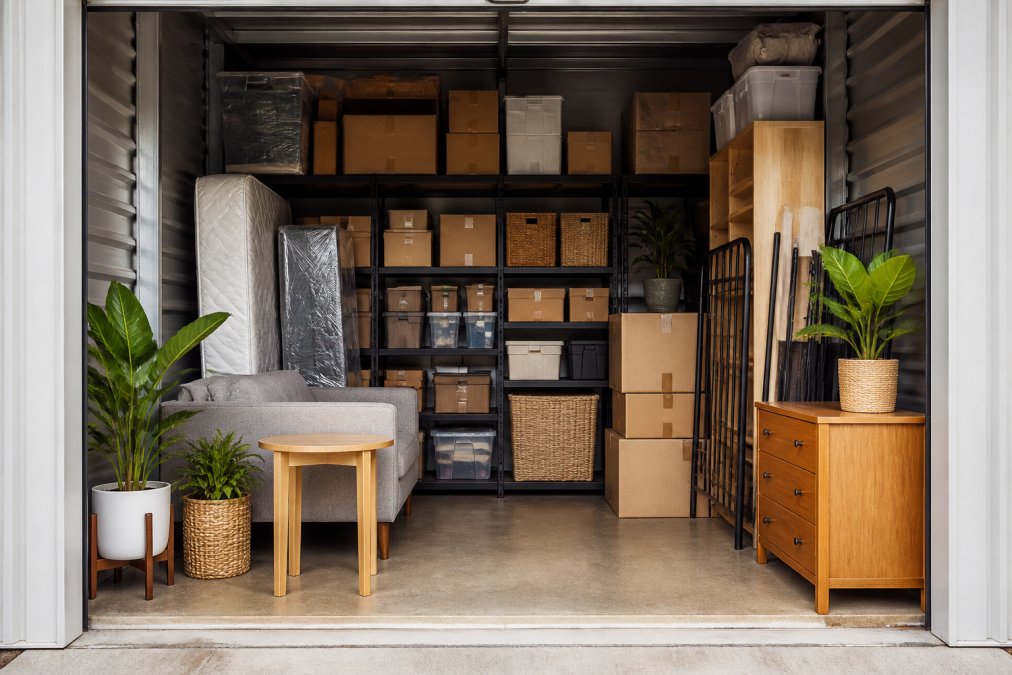
Load Heavy Items First
Start with the heaviest items on the floor: furniture, appliances, machinery. Protect furniture as you load it. Wrap sofas and chairs in blankets or furniture pads. Use cardboard corner guards on table legs and wardrobe corners.
Once heavy items are positioned, fill gaps with medium-weight boxes. Load lighter boxes last, on top of the medium-weight layer.
Use Packing Materials Strategically
Wrap breakables individually before placing them in boxes. Use sturdy boxes rated for stacking, not flimsy ones. Label everything clearly on at least two sides, including which room the items came from.
Don’t overload boxes. Aim for boxes you can carry with two hands comfortably, roughly 15-20 kilograms maximum.
Common Storage Unit Sizes and Capacity
A small storage unit (roughly 3×2 metres, or 6 cubic metres) suits short-term storage of a single room’s contents or a motorcycle. A medium storage unit (roughly 4×3 metres, or 12 cubic metres) accommodates a one-bedroom apartment’s contents or a caravan up to 5 metres long. A large storage unit (roughly 5×4 metres, or 20 cubic metres) holds a two-bedroom home’s contents or a larger boat or caravan.
Extra-large units (roughly 6×5 metres or larger, 30+ cubic metres) are for full-house contents, large business operations, or multiple vehicles.
Your calculated cubic metres should fit comfortably within your chosen unit size with room to spare. If your total is 11 cubic metres, a 12-cubic-metre unit works; a 6-cubic-metre unit does not.
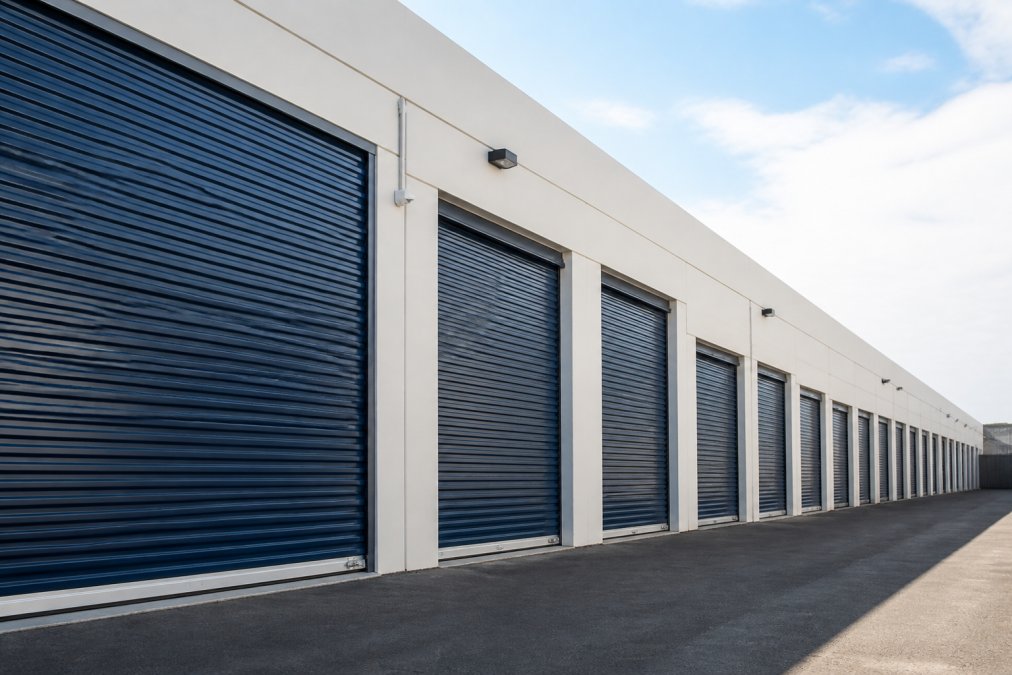
Choosing a unit too small for your needs is a false economy. You’ll spend more time trying to fit everything, risk damaging items, and end up frustrated when you can’t access what you need. A slightly larger unit costs a bit more but saves time, stress, and potential damage.
Factors Affecting Your Storage Unit Size Decision
Beyond your calculated cubic metres, several other factors influence which size unit you actually need.
Climate Control Considerations
If you’re storing items sensitive to temperature and humidity, electronics, wooden furniture, artwork, business inventory, climate control matters. Climate-controlled units maintain stable temperature and humidity, protecting items and allowing slightly more efficient packing.
Standard units require extra protection for sensitive items, which takes up additional space. Budget an extra 10-15% on your calculated cubic metres to account for protective materials. Urban Self Storage offers climate-controlled options for customers storing sensitive items.
Access Requirements and Frequency
If you’re accessing your unit weekly, you need a unit 15-20% larger than your calculated cubic metres to maintain clear pathways and logical organisation. If you’re accessing rarely, your calculated size is your actual size.
Business customers who need frequent access benefit from larger units that let them maintain organised sections.
Quick Reference: What Size Unit Do You Need?
For residential storage:
Storing one room’s contents = small unit (6-8 cubic metres). Storing a one-bedroom apartment = medium unit (12-15 cubic metres). Storing a two-bedroom home = large unit (20-25 cubic metres). Storing a full three-bedroom house = extra-large unit (30+ cubic metres).
For business storage:
Small retail inventory (under 100 boxes) = small unit (6-8 cubic metres). Medium retail inventory (100-300 boxes) = medium unit (12-15 cubic metres). Large inventory or equipment-heavy business = large unit (20-25 cubic metres) or multiple units.
For vehicle and oversized storage:
Motorcycle or jet ski = small unit (6-8 cubic metres). Caravan up to 5 metres = medium unit (12-15 cubic metres). Caravan 5-7 metres or small boat = large unit (20-25 cubic metres). Larger boat or multiple vehicles = extra-large unit or dedicated vehicle bay.
For short-term storage (under three months):
You can use one size smaller than your calculated cubic metres because you’re packing tightly and accessing infrequently.
For long-term storage (over six months):
Use your calculated cubic metres or go one size up. Long-term storage benefits from extra space for organisation and protection.
Calculating your storage unit size accurately saves money, prevents damage, and eliminates frustration. The three-step process, inventory, measure, calculate cubic metres, takes an hour and gives you a precise number to work with.
Urban Self Storage provides flexible short- and long-term storage options across Western Australia, with units ranging from small (ideal for single-room contents or seasonal items) to extra-large (suitable for full-house relocations or business inventory). Our facilities feature 24/7 CCTV surveillance, climate-controlled options for sensitive items, and convenient access. Whether you’re undergoing a renovation, relocating with household goods, or need secure storage for business equipment, the right unit size, calculated using the method above, ensures your items stay protected and accessible. Book online now to reserve your unit in less than 10 minutes.
Frequently Asked Questions
How do I calculate how much storage space I need for a 3-bedroom house?
Start by listing all items room-by-room (furniture, boxes, appliances). Measure each piece’s length, width, and height in centimetres, then convert to metres. Multiply length × width × height to get cubic metres per item. Add 20% extra for packing materials and access space. Most 3-bedroom households require 10-15 cubic metres. If you’re storing climate-sensitive items, add extra space for air circulation.
What is the formula for calculating storage unit cubic metres?
The formula is: length (m) × width (m) × height (m) = cubic metres. For example, a box measuring 1 metre long, 0.5 metres wide, and 0.4 metres high equals 0.2 cubic metres. Add the cubic metres of all items, then multiply by 1.2 to account for packing materials, gaps between items, and access space. This gives your total storage unit capacity needed.
How do I pack a storage unit to maximise space?
Place heavy furniture and large appliances first, creating a stable base. Stack boxes vertically against walls to maximise vertical storage. Leave narrow aisles for access. Use smaller items to fill gaps and hollow spaces (inside wardrobes, under tables). Keep frequently needed items near the door. Avoid stacking items too high, maintain stability and safe access. Wrap furniture to protect from dust and damage.
Does the height of a storage unit matter for capacity?
Yes. Height directly affects total cubic metres available. A unit with higher ceiling height lets you stack vertically, maximising capacity without needing a larger floor footprint. Most standard storage units are 2.4-2.7 metres tall. Climate-controlled units may have slightly lower ceilings due to HVAC systems. Always confirm ceiling height before booking, especially for tall furniture or equipment.
This article was written using GrandRanker