
Table of Contents
- What Are Storage Unit Access Hours?
- Standard Hours vs. 24/7 Access: Key Differences
- How Storage Facility Gate Access Codes Work
- Benefits of 24 Hour Storage Access
- After Hours Storage Unit Access: Security and Liability
- How to Check and Understand Your Facility’s Access Policy
- Troubleshooting Common Access Issues
- Conclusion
Last Updated: August 16, 2026
What Are Storage Unit Access Hours?
Storage unit access hours are the times during which you’re permitted to enter your storage facility and access your rented unit. These hours determine when you can retrieve items, drop off belongings, or perform maintenance on your stored goods. Access hours vary significantly between facilities, some operate strictly during business hours (typically 8 AM to 6 PM), whilst others offer extended or 24/7 access to accommodate different customer needs.
Understanding your facility’s access policy is crucial before signing a rental agreement. Many renters assume they’ll have round-the-clock access only to discover their facility closes at 5 PM on weekdays. This can create genuine hardship if you need to retrieve something urgently outside those windows. At Urban Self Storage, we recognise that access flexibility directly impacts customer satisfaction, which is why we offer extended access options at both our East Bunbury and Picton locations.
Access hours typically fall into three categories: standard business hours, extended hours (early morning to late evening), and 24/7 access. Your specific needs, whether you’re storing business inventory that requires frequent access, household items for a renovation project, or recreational equipment, should guide which facility and access tier you select.
Standard Hours vs. 24/7 Access: Key Differences
Standard storage facility hours typically operate Monday through Friday from 8 AM to 6 PM, with reduced weekend access (often 9 AM to 4 PM on Saturday and Sunday). This model suits homeowners storing seasonal items or those undergoing short-term renovations who don’t need frequent access. The trade-off is convenience, if you need something at 7 PM on a Tuesday, you’re out of luck.
24/7 access, by contrast, allows you to enter your unit at any time, day or night. This model is essential for tradespeople storing tools and materials, e-commerce retailers managing inventory, and business owners who need flexible access to stock or equipment. The security infrastructure required to support 24/7 access, automated gate systems, CCTV surveillance, and access control technology, typically results in slightly higher rental costs, but many businesses find the flexibility justifies the expense.
The key difference isn’t just about timing. Standard-hours facilities often have on-site staff during operating hours to assist with move-in, answer questions, and monitor the property. 24/7 facilities rely on automated access systems and remote monitoring via security cameras. This means you’re self-sufficient when accessing your unit outside standard hours, no staff member will be present to help if you encounter issues.
Some facilities offer a middle ground: extended hours (6 AM to 10 PM) or hybrid access where you get 24/7 gate access but office hours remain standard. This approach provides flexibility for after-hours retrieval whilst maintaining daytime staffing for customer support. Understanding which model your facility uses is important before committing to a lease.
How Storage Facility Gate Access Codes Work
Most modern storage facilities use automated gate access systems controlled by key-code entry, key cards, or mobile app integration. When you rent a unit, you’ll receive a unique access code (typically a 4-6 digit PIN) that you enter on a keypad mounted at the facility’s main gate. The system recognises your code, verifies that your rental agreement is current and in good standing, and unlocks the gate to allow entry.
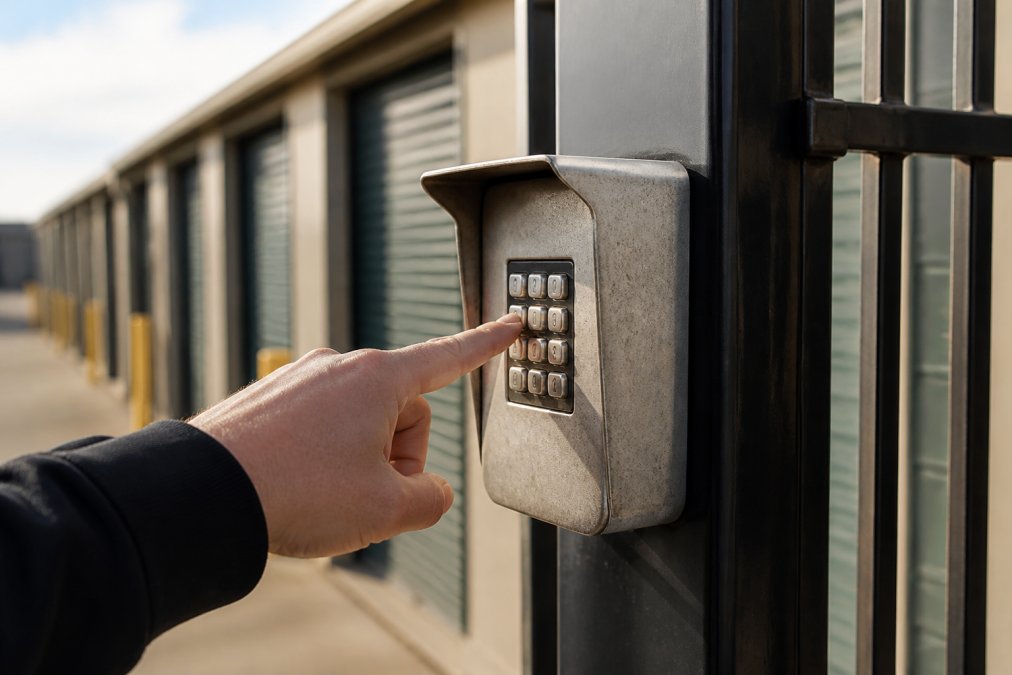
Behind the scenes, the facility’s management system maintains a database linking your rental unit number to your access credentials. If your rental lapses or you fail to pay rent, the system can instantly deactivate your code, preventing unauthorised access. This automated approach eliminates the need for staff to manually unlock gates for every entry, making 24/7 access economically viable for facilities.
Many facilities now integrate mobile app access alongside traditional key codes. Instead of remembering a PIN, you unlock the gate using your smartphone. This technology offers several advantages: you can share temporary access codes with family members or contractors without revealing your permanent code, and facility managers can track entry times and frequency for security purposes. Some systems even send notifications when your unit is accessed, providing an additional layer of security monitoring.
The access control system is the backbone of facility security. A malfunctioning keypad or software glitch can lock legitimate renters out of their units. This is why reputable facilities maintain redundant systems, if the primary keypad fails, a backup entry method (such as a manual key or temporary override code) allows access whilst repairs are made. Urban Self Storage’s systems are designed with reliability in mind, ensuring that technical failures don’t prevent you from accessing your belongings.
Benefits of 24 Hour Storage Access
Extended and 24/7 storage unit access hours offer distinct advantages for specific customer types. For tradespeople and contractors, the ability to access tools and materials at 6 AM before a job site opens or at 8 PM after work finishes is transformative. You’re not constrained by facility operating hours, you work on your schedule, not the storage facility’s.
E-commerce retailers and small business owners benefit significantly from flexible access. If you’re managing inventory across multiple sales channels, you may need to restock products at irregular times. A customer surge on Saturday evening might require you to pull additional stock from storage on Sunday morning. 24/7 access eliminates the frustration of waiting until Monday morning to fulfil orders, directly impacting your business’s responsiveness and customer satisfaction.
For homeowners undertaking renovations, extended access hours reduce stress. You’re not racing against the clock to retrieve furniture or items before the facility closes. If you’re working late on a Saturday and need to grab something from storage, you can do so without worrying about access restrictions.
The security aspect of 24/7 access is often overlooked. Facilities offering round-the-clock access typically invest in more strong security infrastructure, advanced CCTV systems, automated gate controls, and remote monitoring, to manage the increased vulnerability of after-hours access. These security enhancements benefit all renters, regardless of when they access their units. You’re storing your belongings in a facility designed to handle high-security standards.
Flexibility also means you’re not paying for access you don’t use. Some facilities offer tiered pricing: standard-hours access costs less than extended-hours access, which costs less than 24/7 access. You can choose the access tier that matches your actual needs, optimising your rental cost. At Urban Self Storage, we provide flexible options so you’re not subsidising access levels you don’t require.
After Hours Storage Unit Access: Security and Liability
Accessing your storage unit outside standard business hours introduces security considerations that differ from daytime access. When staff are present during business hours, there’s inherent monitoring, someone is on-site to notice suspicious activity or assist if something goes wrong. After-hours access relies entirely on automated systems and remote surveillance.
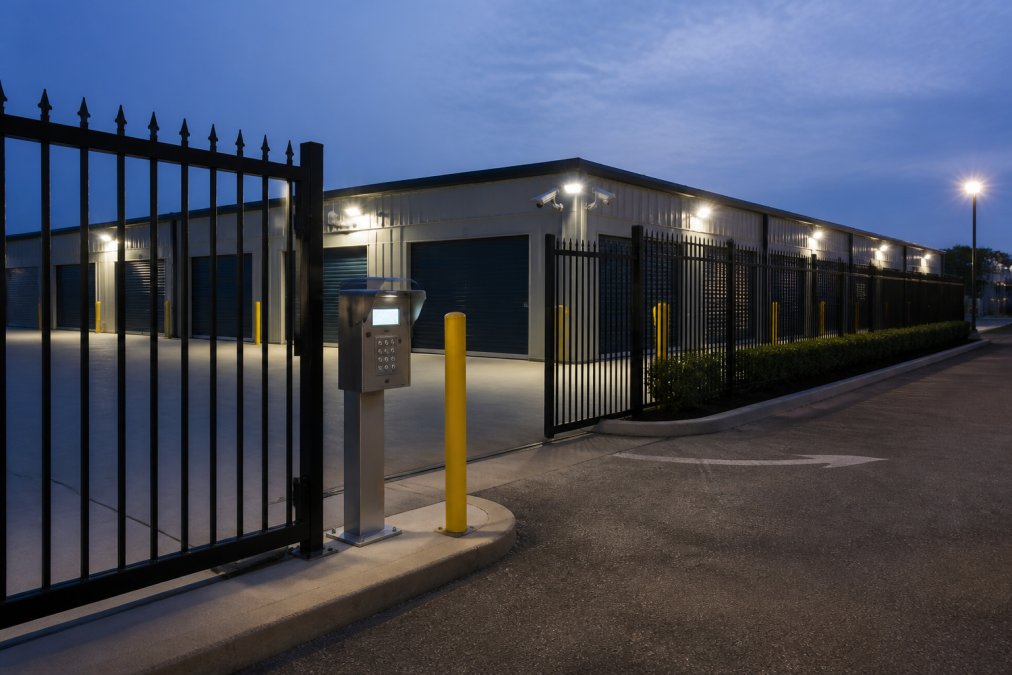
Reputable facilities mitigate after-hours security risks through comprehensive CCTV coverage. Multiple cameras positioned around the perimeter, at entry points, and throughout the facility corridors create a continuous visual record of all activity. These recordings are typically retained for 30-90 days, providing evidence if theft or damage occurs. Many facilities now offer real-time monitoring where security personnel watch live feeds during after-hours periods, allowing immediate response if suspicious activity is detected.
Your rental agreement typically includes liability provisions addressing after-hours access. Most facilities explicitly state that they’re not liable for theft, damage, or loss occurring outside business hours, even if security measures are in place. This distinction is important: the facility has taken reasonable precautions (surveillance, automated access control, secure perimeter), but you assume additional risk by accessing your unit when staff aren’t present. Understanding this liability framework before renting is essential.
Insurance implications are significant for after-hours access. Your standard homeowners or renters insurance may not cover items stored off-premises, particularly if accessed at irregular hours. Business owners storing inventory or equipment should verify that their commercial insurance covers stored goods and whether after-hours access affects coverage terms. Some insurers require additional riders or higher premiums for 24/7 access scenarios. It’s worth discussing these details with your insurance provider before committing to a facility with after-hours access.
Personal safety during after-hours access is another consideration. Accessing a storage facility alone at 10 PM carries inherent risks. Well-designed facilities minimise these through adequate lighting, clear sightlines, emergency call systems, and proximity to populated areas. Poor lighting or isolated locations increase personal safety risks. When evaluating a facility offering after-hours access, visit during evening hours to assess lighting, visibility, and overall safety perception.
How to Check and Understand Your Facility’s Access Policy
Before signing a rental agreement, explicitly confirm the facility’s access hours and what access options are included in your rental tier. Don’t assume, ask directly. Many customers discover unexpected limitations only after renting. Request written confirmation of your specific access rights, including whether you have 24/7 gate access, whether office hours differ from gate access hours, and any restrictions on access frequency or duration.
Understand the technical access method. Will you use a key code, key card, or mobile app? Ask what happens if you forget your code or lose your key card. Are replacement codes issued immediately, or is there a waiting period? What’s the process for granting temporary access to family members, contractors, or movers? These practical details matter significantly when you actually need to access your unit.
Clarify any additional fees or restrictions tied to access. Some facilities charge extra for 24/7 access. Others restrict access during certain maintenance windows or weather emergencies. Ask whether access can be suspended if your rent is overdue, and how quickly access is restored once payment is received. Understanding these conditions prevents surprises later.
Request documentation of the facility’s security measures. Ask about CCTV coverage, monitoring protocols, and how long recordings are retained. If the facility offers after-hours access, confirm what security infrastructure supports it. Don’t rely on vague assurances, request specific details about camera placement, lighting, and monitoring procedures. At Urban Self Storage, we’re transparent about our security systems and encourage renters to understand exactly what protections are in place.
Visit the facility during your intended access hours. If you plan to access your unit at 7 PM, visit the facility at 7 PM. Assess lighting, visibility, safety, and overall conditions during the times you’ll actually be there. This real-world observation reveals whether the facility’s access hours truly suit your needs.
Troubleshooting Common Access Issues
Access code problems are among the most common issues renters encounter. If your code isn’t working, first verify you’re entering it correctly, key codes are case-sensitive and require precise entry. If you’re certain the code is correct, contact the facility immediately. The issue may be a temporary system glitch, a deactivated code due to payment issues, or a malfunctioning keypad. Reputable facilities provide alternative access methods (manual key, temporary override code) whilst the primary system is repaired.
Key card or mobile app access failures require different troubleshooting. If your key card isn’t recognised, the card may be damaged or demagnetised. Mobile app access failures often stem from connectivity issues, if the gate’s system can’t communicate with the app server, access won’t work. Move closer to the gate, ensure your phone has a strong signal, and try again. If problems persist, contact the facility’s support line.
Forgotten access codes are easily resolved by contacting the facility during business hours. Most facilities will provide your code over the phone or issue a replacement immediately. If you’re locked out after hours, check your rental agreement for an emergency contact number. Reputable facilities maintain 24/7 support lines for access emergencies.
Gate malfunction is rare but inconvenient. If the gate won’t open despite correct code entry, check whether the gate is undergoing maintenance, facilities sometimes close gates temporarily for repairs. If maintenance isn’t scheduled, contact the facility immediately. A malfunctioning gate is a serious issue affecting all renters, and facilities typically respond quickly to restore access.
Liability disputes sometimes arise when renters claim they were denied access outside stated hours. This is why written confirmation of your access rights is essential. If you believe your access was improperly restricted, refer to your rental agreement and contact the facility’s management. Document the incident (date, time, attempted access method) and keep records of all communications with the facility.
Conclusion
Storage unit access hours are far more nuanced than simply choosing between "open" and "closed." The right access tier depends on your specific needs, whether you’re a homeowner storing seasonal items, a tradesperson requiring early-morning tool access, or a business managing inventory. Understanding the differences between standard hours, extended hours, and 24/7 access, along with the security and liability implications of each, ensures you select a facility that genuinely serves your situation rather than one that frustrates you weekly.
Urban Self Storage offers flexible access options at both our East Bunbury and Picton locations, with advanced 24/7 CCTV surveillance, automated gate access systems, and a hassle-free move-in process completed in less than 10 minutes. Whether you need standard business-hours access or round-the-clock flexibility, we’ve designed our facilities to accommodate diverse storage scenarios. Book online now to explore access options that match your needs and secure your storage solution today.
Frequently Asked Questions
What is the difference between standard and 24/7 storage access?
Standard access hours typically operate during business hours, usually 7am to 6pm on weekdays and limited weekend hours. With 24/7 access, you can enter your storage unit any time, day or night, using your access credentials. The choice depends on your schedule and how frequently you need to retrieve items. Businesses with irregular hours or those needing urgent access often prefer 24/7 options, whilst homeowners with predictable schedules may find standard hours sufficient.
Do storage facilities charge extra for 24 hour storage access?
Many facilities offer 24/7 access as a premium feature with higher monthly rental rates. However, some facilities include extended access in their standard rental agreement. When comparing storage unit rental pricing, check whether 24/7 access is included or if it's an optional add-on. Ask your facility directly about the cost difference and whether short-term rentals qualify for extended access options, as policies vary considerably.
How do storage facility gate access codes keep my unit secure?
Gate access codes work alongside other security measures including CCTV surveillance, perimeter fencing, and individual unit locks. Your unique access code prevents unauthorised entry to the facility. Many modern systems log each entry with timestamps, creating an audit trail. Combined with 24/7 monitoring and security cameras, these systems help ensure only authorised users can access the property. Always keep your code confidential and change it if you suspect compromise.
What happens if I need to access my storage unit after hours?
If your facility offers 24/7 access, you can enter using your key code or access card at any time. For facilities with restricted hours, after-hours access may require advance notice or permission from management. Some facilities offer emergency after-hours access for genuine urgent situations. Always review your rental agreement to understand your specific access rights and any procedures for accessing your unit outside standard operating hours.
This article was written using GrandRanker